

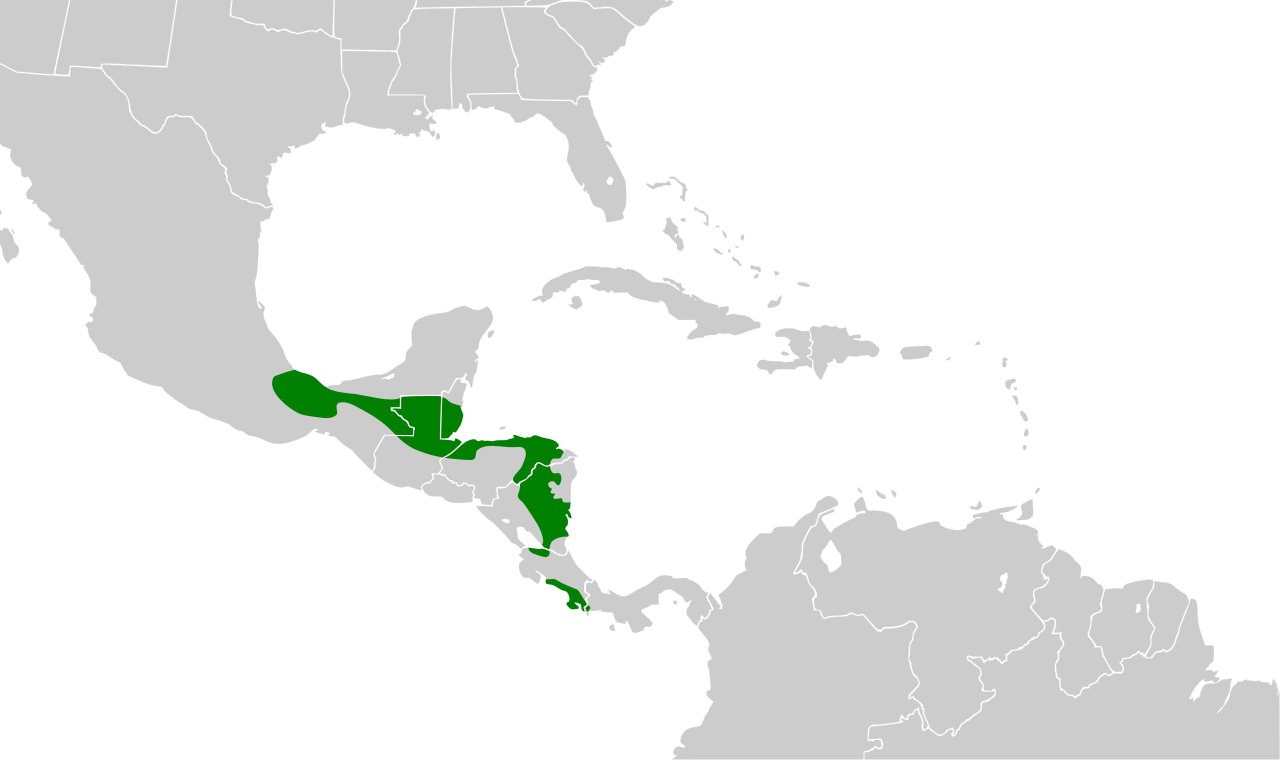
The yellow-bellied tyrannulet is a species of bird in subfamily Elaeniinae of family Tyrannidae, the tyrant flycatchers. It is found in Belize, Costa Rica, Guatemala, Honduras, Mexico, Nicaragua, and Panama.
Region
Mesoamerica
Typical Environment
Occurs from southeastern Mexico through Belize, Guatemala, Honduras, Nicaragua, and Costa Rica to western Panama. Favors humid and semi-humid lowland and foothill forests, forest edges, and second-growth, including wooded plantations. Most often forages in the mid to upper canopy but will use edges and riparian corridors. Tolerates disturbed habitats if some tall trees remain.
Altitude Range
Sea level to 1200 m
Climate Zone
Tropical
Ease of Keeping
Beginner friendly: 1/5
A tiny canopy flycatcher, the yellow-bellied tyrannulet is active and often joins mixed-species flocks in humid forests. It builds a suspended, purse-like nest of plant fibers with a side entrance. Its sharp, high-pitched calls often reveal it long before it is seen. Despite its small size, it ranges widely across Mesoamerica and is considered of low conservation concern.


Temperament
social and active
Flight Pattern
short rapid wingbeats with quick, fluttery sallies
Social Behavior
Typically seen singly or in pairs, often associating with mixed-species flocks in the canopy. Pairs maintain small territories during breeding. The nest is a suspended, pouch-like structure of fibers and spider silk with a side entrance; both sexes participate in nesting duties.
Migratory Pattern
Resident
Song Description
Gives sharp, high-pitched tsip and tsee notes, often delivered in quick series. The song is a thin, repetitive sequence of squeaky notes and short trills that carry through the canopy but can be easily masked by insect noise.
Plumage
Olive-green upperparts with bright yellow underparts, paler throat, and two narrow whitish wingbars; small, neat-headed appearance.
Diet
Primarily hunts small insects and other arthropods, including flies, beetles, and caterpillars. Forages by hover-gleaning from foliage and by making short sallies to snatch prey from the air. Occasionally takes tiny berries, especially in the non-breeding season, but animal prey dominates.
Preferred Environment
Feeds mostly in the mid to upper canopy of humid forest, edges, and tall second-growth. Also uses riparian trees and shade-tree plantations where continuous cover is available.


