

The white-winged fairywren is a species of passerine bird in the Australasian wren family, Maluridae. It lives in the drier parts of Central Australia; from central Queensland and South Australia across to Western Australia. Like other fairywrens, this species displays marked sexual dimorphism and one or more males of a social group grow brightly coloured plumage during the breeding season. The female is sandy-brown with light-blue tail feathers; it is smaller than the male, which, in breeding plumage, has a bright-blue body, black bill, and white wings. Younger sexually mature males are almost indistinguishable from females and are often the breeding males. In spring and summer, a troop of white-winged fairywrens has a brightly coloured older male accompanied by small, inconspicuous brown birds, many of which are also male. Three subspecies are recognised. Apart from the mainland subspecies, one is found on Dirk Hartog Island, and another on Barrow Island off the coast of Western Australia. Males from these islands have black rather than blue breeding plumage.
Region
Australian arid zone
Typical Environment
Occurs across the drier interior from central Queensland and South Australia west to Western Australia, including coastal islands such as Dirk Hartog and Barrow. Favors chenopod shrublands with saltbush and bluebush, acacia scrub, spinifex sandplains, and coastal dune thickets. Typically keeps close to ground-level cover, moving through low shrubs and grasses. Frequently found around saline flats, salt lakes, and semi-arid rangelands with scattered shrubs.
Altitude Range
Sea level to 800 m
Climate Zone
Arid
Ease of Keeping
Beginner friendly: 1/5
White-winged fairywrens live in cooperative social groups with a brightly colored dominant breeding male and several brown-plumaged helpers, many of which are younger males. Island subspecies on Dirk Hartog and Barrow Islands have striking black males with white wings, unlike the cobalt-blue males on the mainland. They keep low in shrubs and often fan their tails while foraging, giving brief, darting flights between cover.
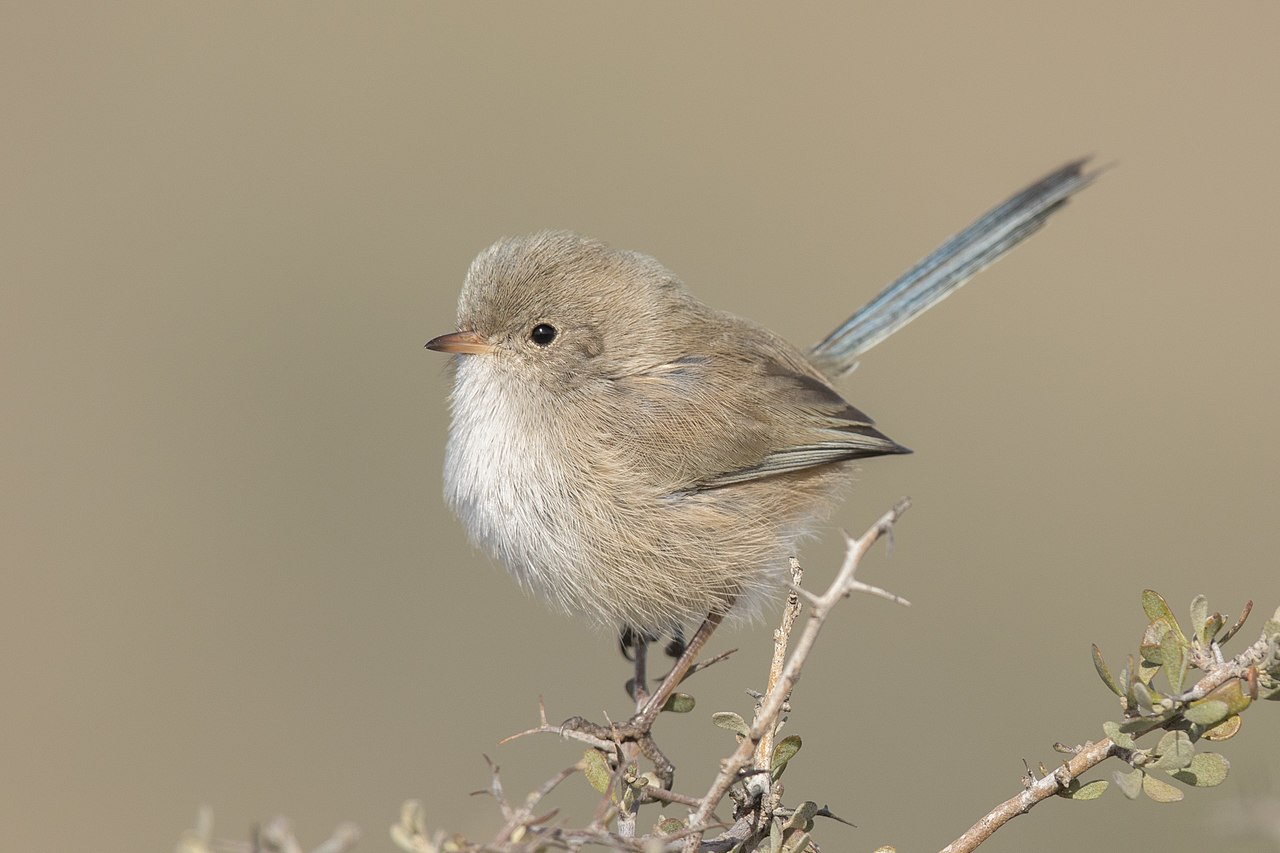


Near Port Augusta, South Australia

Male (ssp. leuconotus) in partial breeding plumage, Coolmunda Dam, Queensland
Temperament
social and active
Flight Pattern
short rapid wingbeats with low, darting flights between shrubs
Social Behavior
Lives in small cooperative groups with one brightly colored dominant male and several helpers. Pairs form strong social bonds, but extra-pair mating is common. Nests are dome-shaped structures placed low in dense shrubs.
Migratory Pattern
Resident
Song Description
Song is a soft, sweet warble interspersed with thin, high trills delivered from exposed perches atop shrubs. Calls include rapid contact chips and scolding chatters when alarmed.
Plumage
Marked sexual dimorphism: breeding mainland males are vivid cobalt-blue with crisp white wings; females and non-breeding males are sandy-brown with a bluish tail. Island males (some subspecies) are black with white wings. Feathers are sleek and close, with a long, expressive tail often held cocked.
Diet
Primarily takes small insects and other arthropods such as beetles, ants, caterpillars, and spiders. Forages by gleaning from leaves, stems, and ground litter, often in quick, agile hops. Will occasionally consume small seeds, flower parts, or berries, especially in dry periods.
Preferred Environment
Feeds within low shrubs, spinifex clumps, and saltbush/bluebush, rarely venturing far from cover. Often works along shrub edges and beneath canopies where insects concentrate.


