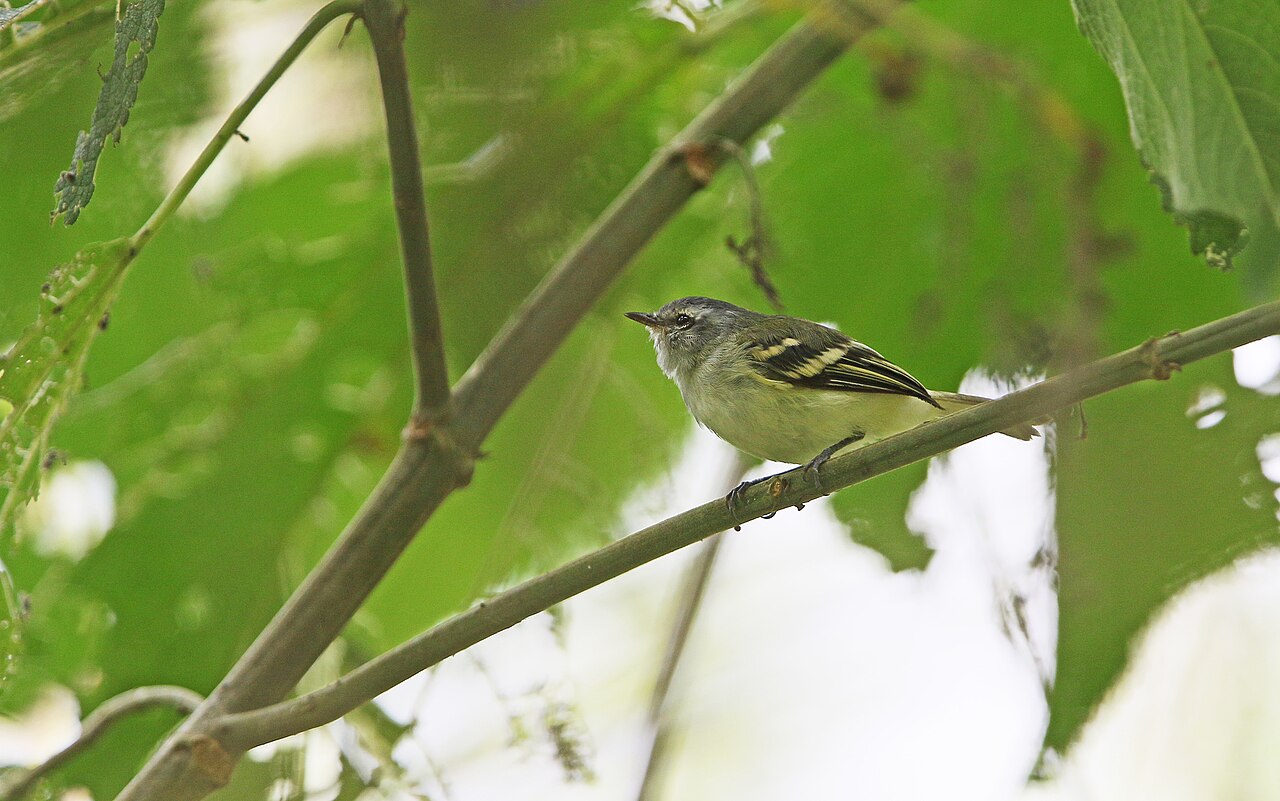
The white-tailed starfrontlet is a species of hummingbird in the "brilliants", tribe Heliantheini in subfamily Lesbiinae. It is endemic to the Sierra Nevada de Santa Marta of northeastern Colombia.
Region
Northern Colombia (Sierra Nevada de Santa Marta)
Typical Environment
Occurs in humid montane and elfin forests, forest edges, and shrubby clearings with abundant flowering plants. It frequents ravines, streamside thickets, and forest borders where ericaceous shrubs, bromeliads, and melastomes are common. The species is most often seen at mid to upper elevations, where it forages from midstory to canopy level. It also visits flowering gardens and roadside vegetation near forest.
Altitude Range
1200–3600 m
Climate Zone
Highland
Ease of Keeping
Beginner friendly: 1/5
This medium-sized hummingbird is restricted to the isolated Sierra Nevada de Santa Marta massif of northern Colombia. Males are notably striking with bold white in the tail that flashes in flight, a key field mark even in dim cloud-forest light. It patrols flowering shrubs aggressively, often defending rich nectar sources from other hummingbirds. Like many high-Andean hummingbirds, it also supplements its diet with small arthropods for protein.


Temperament
territorial and active
Flight Pattern
short rapid wingbeats with agile hovering
Social Behavior
Typically solitary when foraging and strongly territorial at rich flower patches, where males chase intruders. Courtship involves aerial chases and display flights near favored blossoms. Nests are small, cup-shaped structures placed on sheltered branches or in shrubs, often near streams.
Migratory Pattern
Resident
Song Description
Vocalizations are high, thin chips and short twitters delivered from perches or while foraging. The rapid wing hum is audible at close range, especially during aggressive chases.
Plumage
Male with glittering green to bronzy-green body, bright iridescent throat and forehead sheen, and a contrasting mostly white tail; female duller with green upperparts and buffy to grayish underparts spotted with green, also showing white in the tail. Both sexes have a straight, medium-length bill and slightly forked tail.
Diet
Primarily feeds on nectar from a variety of tubular flowers, including ericaceous shrubs, bromeliads, and melastomes. It supplements nectar with small insects and spiders, which provide essential proteins, especially during breeding. Arthropods are taken by aerial hawking and gleaning from foliage.
Preferred Environment
Forages along forest edges, clearings, and streamside thickets where flowers are abundant. Often visits midstory to canopy blossoms but will also feed at eye level in shrubby growth and gardens near forest.