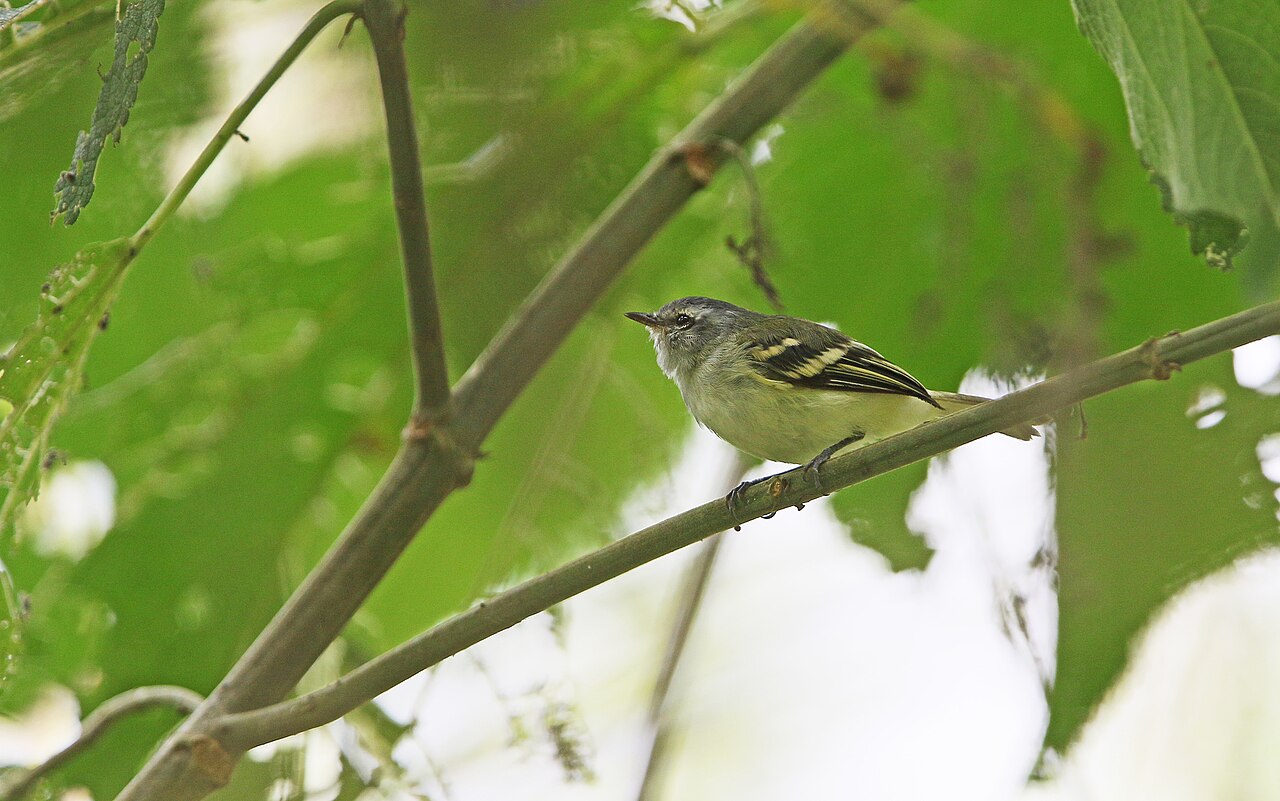
The white-tailed swallow is a small swallow belonging to the family Hirundinidae and is endemic to Oromia, Ethiopia. It is commonly referred to as "Benson's swallow" after the ornithologist Constatine Walter Benson, who named the species. This small bird is classified as a vulnerable species by the International Union for Conservation of Nature (IUCN), as there is a progressive declination of the species which now consists of less than 10,000 adult individuals worldwide. It has a surprisingly small range for a swallow, as it is wholly dependent on a cooler "bubble" surrounding its small range, likely for proper breeding success. It is one of the most threatened bird species by climate change and a massive range reduction is projected in the future.
Region
Horn of Africa
Typical Environment
This swallow is confined to the Borana Zone of southern Ethiopia, centered on the towns of Mega and Yabelo, with scattered records in nearby areas such as Arero and Negele. It uses open acacia savanna and lightly wooded grasslands, especially near human settlements and water points. Nesting frequently occurs inside traditional thatched huts, on rafters of buildings, and in culverts and bridges. Foraging is typically low over pastures and along tracks, often concentrating where insects are abundant after rains. Its range appears limited by a relatively cool microclimate that supports breeding success.
Altitude Range
1200–1900 m
Climate Zone
Highland
Ease of Keeping
Beginner friendly: 1/5
Also called Benson's swallow, it is restricted to a small area of southern Ethiopia around Mega and Yabelo. It often nests in traditional pastoralist huts, bridges, and culverts, building neat mud cup nests. The species depends on a relatively cool microclimate within its limited range, making it highly vulnerable to climate change. It is currently assessed as Vulnerable due to its tiny range and small, declining population.


Temperament
social and active
Flight Pattern
agile flier with short rapid wingbeats and quick glides
Social Behavior
Usually seen in small groups, sometimes mixed with other swallows over feeding areas. Breeds in loose colonies or scattered pairs, constructing mud cup nests on sheltered beams, hut rafters, or culverts. Both sexes incubate and feed the young. Breeding is timed with seasonal rains when flying insects peak.
Migratory Pattern
Resident
Song Description
Soft twittering and rapid chips typical of Hirundo swallows, interspersed with short trills. Vocalizations are most frequent around nesting sites and during active aerial foraging.
Plumage
Glossy blue-black upperparts with clean white underparts and a strongly forked tail. Outer tail feathers are conspicuously white, giving the tail a pale appearance in flight. The overall look is sleek with a smooth, glossy sheen above.
Diet
An aerial insectivore that catches small flying insects such as flies, beetles, winged ants, and termites on the wing. It often concentrates over grazed pastures, near livestock, and above puddles and roads where insects are flushed. After rains, it exploits termite emergences and other insect swarms. Foraging is typically low to mid-height above the ground with quick, agile sallies.
Preferred Environment
Open acacia savanna, lightly wooded grasslands, and edges of settlements. Frequently forages along tracks, water points, and around traditional homesteads where insect activity is high.