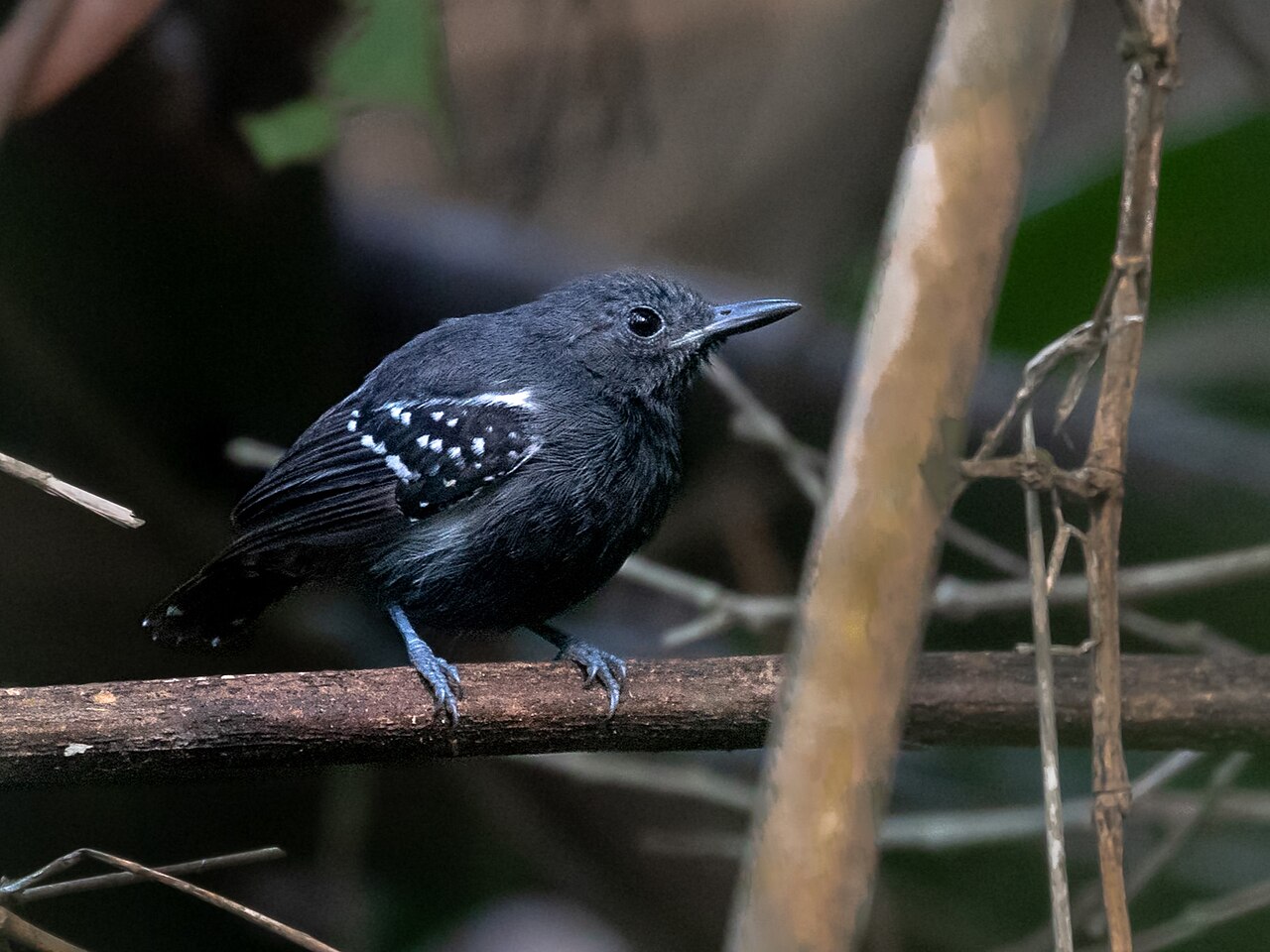
The white-faced starling is a member of the starling family of birds. It is an endemic resident breeder in Sri Lanka.
Region
Southwestern Sri Lanka
Typical Environment
This species inhabits lowland and mid-elevation evergreen rainforests, favoring primary forest but also using mature secondary growth and forest edges. It forages mainly in the canopy and subcanopy, frequently visiting fruiting trees. It may occur in small groups and occasionally ventures into adjacent gardens or plantations near intact forest. Protected rainforest reserves hold the most reliable populations. Overall, its range is patchy and tied to blocks of wet-zone forest.
Altitude Range
Sea level to 1500 m
Climate Zone
Tropical
Ease of Keeping
Beginner friendly: 1/5
The white-faced starling is the sole member of the genus Sturnornis and is confined to Sri Lanka’s wet-zone forests. It spends much of its time in the canopy, where its pale face contrasts with its otherwise slate-grey body. Habitat loss has made encounters increasingly uncommon, so it is best looked for at protected sites like Sinharaja. It often joins mixed-species flocks at fruiting trees.

Temperament
social and active
Flight Pattern
strong, direct flight with rapid wingbeats
Social Behavior
Often seen in pairs or small groups, and frequently joins mixed-species flocks around fruiting trees. During the breeding season it forms monogamous pairs and likely nests in tree cavities or concealed sites. Outside breeding, small flocks move through the canopy while foraging.
Migratory Pattern
Resident
Song Description
Vocalizations include varied whistles, chatters, and metallic notes typical of starlings. Calls carry through the canopy and are used to keep contact within groups and at fruiting trees.
Plumage
Overall slate- to ashy-grey body with a distinctly paler, whitish face and forehead; smooth, glossy feathering typical of starlings.
Diet
Feeds primarily on fruits and berries, including figs and other canopy fruit. Supplements this with insects and other small invertebrates gleaned from foliage and bark. Will occasionally take nectar or soft plant matter when available. Diet composition shifts with seasonal fruiting patterns.
Preferred Environment
Forages high in the canopy and subcanopy of mature rainforest, especially at fruiting trees. Also uses forest edges and tall trees in nearby gardens or plantations adjacent to intact forest.