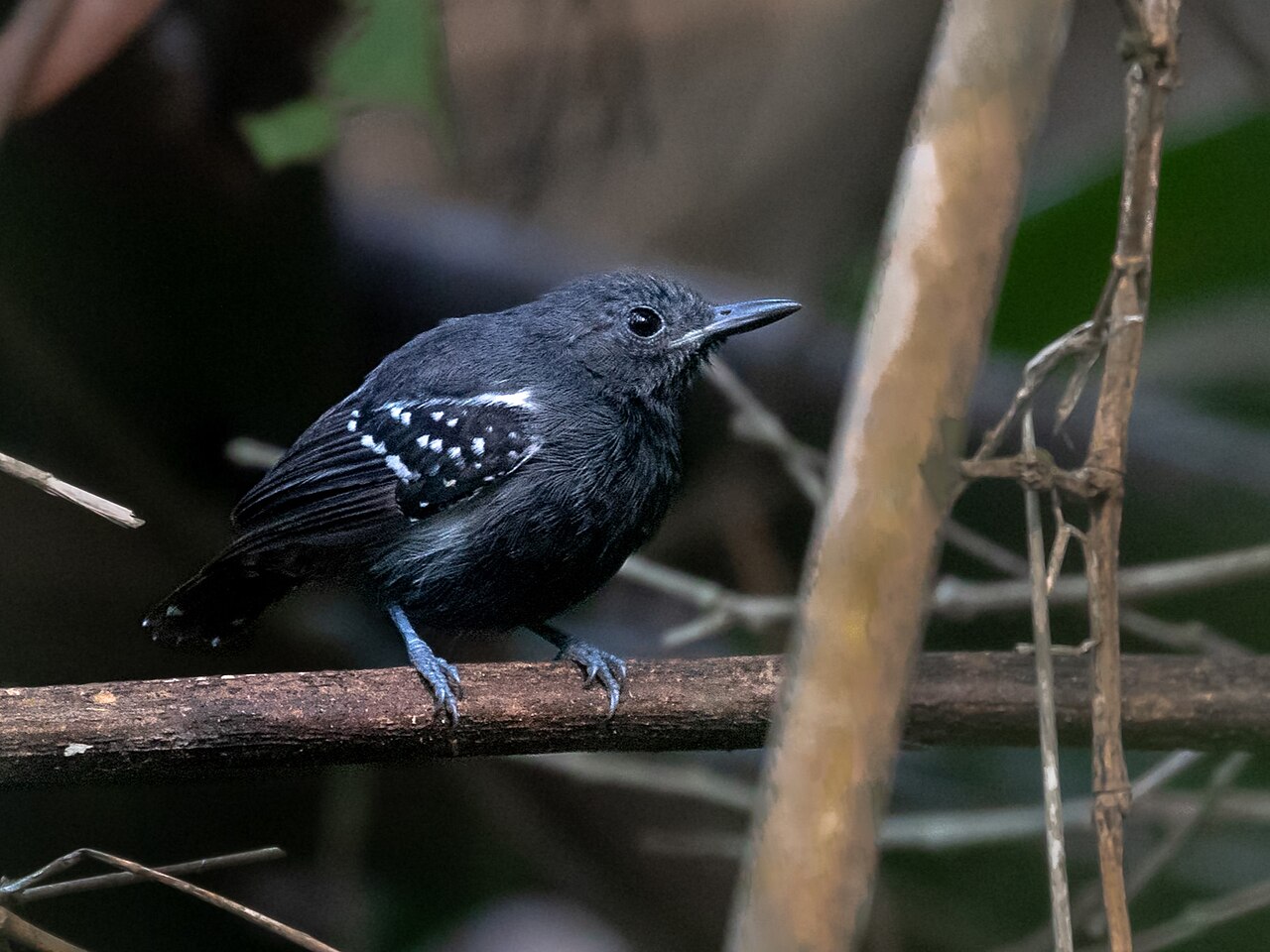
The white-faced robin is a species of bird in the family Petroicidae. It is found in New Guinea and eastern Cape York Peninsula of Queensland, Australia. Its natural habitats are subtropical or tropical moist lowland forest and subtropical or tropical moist montane forest.
Region
New Guinea and Cape York Peninsula
Typical Environment
Occurs throughout lowland and foothill rainforests of New Guinea (both Indonesian Papua and Papua New Guinea) and extends to the eastern Cape York Peninsula of Queensland, Australia. It favors shaded primary and mature secondary forests, often near gullies and along streams. Birds keep to the lower to mid-understorey, occasionally venturing into edges and well-vegetated forest margins. It is generally sedentary, with some local movements tracking food availability and microhabitat.
Altitude Range
Sea level to 1800 m
Climate Zone
Tropical
Ease of Keeping
Beginner friendly: 1/5
The white-faced robin is a shy understorey specialist whose striking white face stands out in dim rainforest light. It typically forages quietly in pairs or small family groups and often remains motionless between short sallies for prey. Nests are neat, cup-shaped structures bound with spider silk and placed on horizontal branches or forks. Male and female look very similar, showing little sexual dimorphism.

Temperament
solitary and territorial
Flight Pattern
short rapid wingbeats
Social Behavior
Usually found singly or in pairs, maintaining small territories in dense understorey. Pairs are monogamous during the breeding season and cooperatively defend nest sites. The nest is a small cup of plant fibers and moss bound with spider web, placed low to mid-level. Juveniles may accompany adults for a short period after fledging.
Migratory Pattern
Resident
Song Description
Song consists of thin, high-pitched whistles and clear, descending notes delivered at intervals from a shaded perch. Calls include soft seee notes and sharp ticks used for contact and alarm. Vocalizations carry well in dense foliage despite their softness.
Plumage
Olive-brown to grey-olive upperparts with a clean white face and throat, contrasting with a grey crown and nape. Underparts are pale grey to buffy, sometimes washing to yellowish on the belly. Feathers are smooth and plain, lacking wing bars or strong patterning aside from the facial contrast.
Diet
Primarily feeds on small insects and other arthropods, gleaned from leaves, twigs, and bark or taken in short sallies. It occasionally drops to the ground to pick prey from leaf-litter. Foraging is deliberate, with frequent pauses and short dashes between perches. Small spiders, beetles, and caterpillars form much of the diet.
Preferred Environment
Feeds in shaded understorey and along forest edges, especially near streams and gullies. Often uses low horizontal branches and vine tangles as hunting perches. Avoids open habitats and rarely ventures into the canopy.