
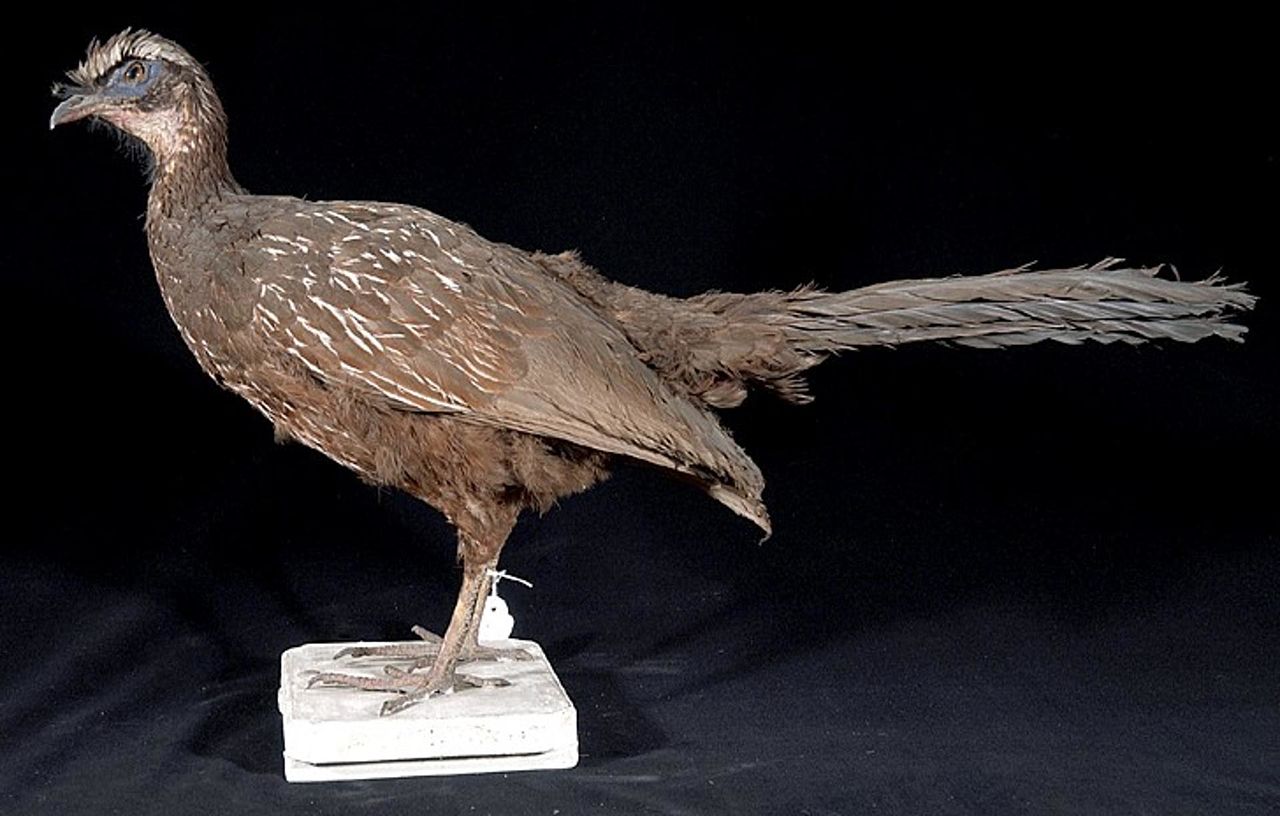
The white-browed guan is a species of bird in the chachalaca, guan, and curassow family Cracidae. It is endemic to northeastern Brazil.
Region
Northeastern Brazil
Typical Environment
Occurs patchily in the Caatinga domain from Ceará and Piauí south to Pernambuco and Bahia, with populations tied to dry forest and thorny scrub mosaics. Prefers semi-arid woodland, gallery forests along seasonal rivers, and edges of secondary forest. It uses dense cover for roosting and nesting but forages in both mid-canopy and on the ground. Avoids heavily cleared farmland and areas with intense human disturbance.
Altitude Range
0–1200 m
Climate Zone
Arid
Ease of Keeping
Beginner friendly: 2/5
The white-browed guan is a shy cracid of the semi-arid Caatinga, where it plays an important role dispersing seeds of native trees and cacti. It is heavily affected by habitat loss and hunting, which have fragmented its range. Groups often roost communally in trees and give resonant, booming calls at dawn and dusk.


Temperament
shy and wary
Flight Pattern
short rapid wingbeats followed by glides
Social Behavior
Usually seen in pairs or small family groups; larger loose flocks may form at fruiting trees. Roosts in trees and builds a platform nest of twigs and leaves above ground. Clutch size is small, and both parents are attentive around the nest. Territorial vocal displays are most common at dawn and dusk.
Migratory Pattern
Resident
Song Description
Gives deep booming notes and low honks that carry far through dry forest, often delivered from a perch. Also produces gruff chattering calls and a distinctive wing-whirr during display or flushes.
Plumage
Mostly dark brown to blackish with fine whitish speckling on the neck and upperparts; feathers have a slight glossy sheen. Long, broad tail and relatively slender body typical of guans.
Diet
Primarily consumes fruits and berries from native trees and shrubs, including cacti, dispersing seeds over long distances. Supplements diet with leaves, buds, and seeds when fruit is scarce. Occasionally takes small invertebrates incidentally while foraging.
Preferred Environment
Feeds in the mid-canopy at fruiting trees and along forest edges, as well as on the ground beneath trees where fallen fruit accumulates. Often forages along riparian corridors and in secondary growth where fruit availability is high.


