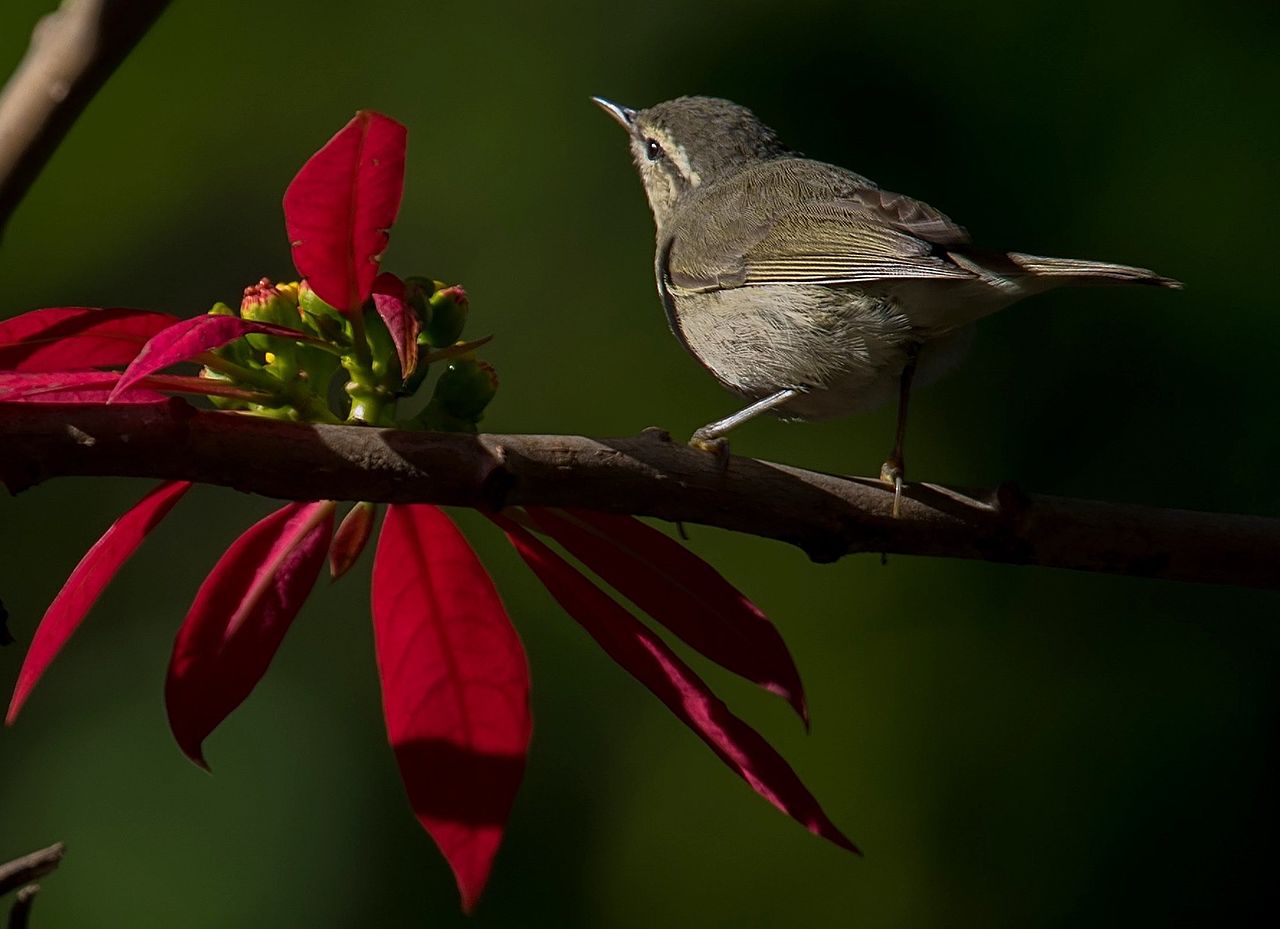
The two-barred warbler is a bird of the leaf warbler family (Phylloscopidae). The species was first described by Robert Swinhoe in 1861. It was formerly included in the "Old World warbler" assemblage. It is closely related to the greenish warbler, to which it was formerly considered conspecific.
Region
East Palearctic to Southeast Asia
Typical Environment
Breeds from central and eastern Siberia through Mongolia and northeastern China, with occurrence in the Russian Far East. During the non-breeding season it moves south into southern China and mainland Southeast Asia, including Myanmar, Thailand, Laos, Vietnam, and parts of Malaysia. Prefers mixed coniferous and birch/aspen forests, forest edges, and riparian woodland in the breeding range. In winter it frequents evergreen and secondary forests, wooded parks, and scrub. Often uses edges and gaps where insect prey is abundant.
Altitude Range
Sea level to 2500 m
Climate Zone
Other
Ease of Keeping
Beginner friendly: 1/5
The two-barred warbler is a small leaf warbler distinguished by its two clear wingbars and dark, lead-colored legs (reflected in its scientific name). It is closely related to the greenish warbler but typically shows stronger wingbars and subtle vocal differences. It breeds across the East Palearctic and migrates to spend the non-breeding season in Southeast Asia. Its quick, restless foraging among foliage often gives only brief views, so voice and wingbars are key field marks.


In Hong Kong
Temperament
active and restless
Flight Pattern
short rapid wingbeats
Social Behavior
Breeds in solitary pairs, defending small territories within suitable woodland. The nest is usually a domed cup placed low in dense vegetation or ground cover. Clutch size is typically modest, and both adults participate in rearing the young. Outside the breeding season it often joins mixed-species foraging flocks.
Migratory Pattern
Seasonal migrant
Song Description
Song is a high-pitched, fast series of thin trills and tinkling phrases. Calls include sharp, sibilant notes that carry well in foliage. Vocalizations are subtly different from the greenish warbler, often slightly faster and more tinkling.
Plumage
Olive-green upperparts with pale whitish to yellowish underparts, two distinct pale wingbars, and a long whitish supercilium over a darker eyestripe.
Diet
Feeds primarily on small insects and their larvae, including caterpillars, aphids, and beetles. Also takes spiders and other small arthropods gleaned from leaves and twigs. Occasionally hawks briefly for flying insects and may take a little fruit in winter when insects are scarce.
Preferred Environment
Forages in the canopy and mid-story of trees and shrubs, especially along edges, clearings, and riparian corridors. In winter, uses secondary growth, gardens, and wooded parks as well as forest interiors. Often participates in mixed-species flocks to improve foraging efficiency.