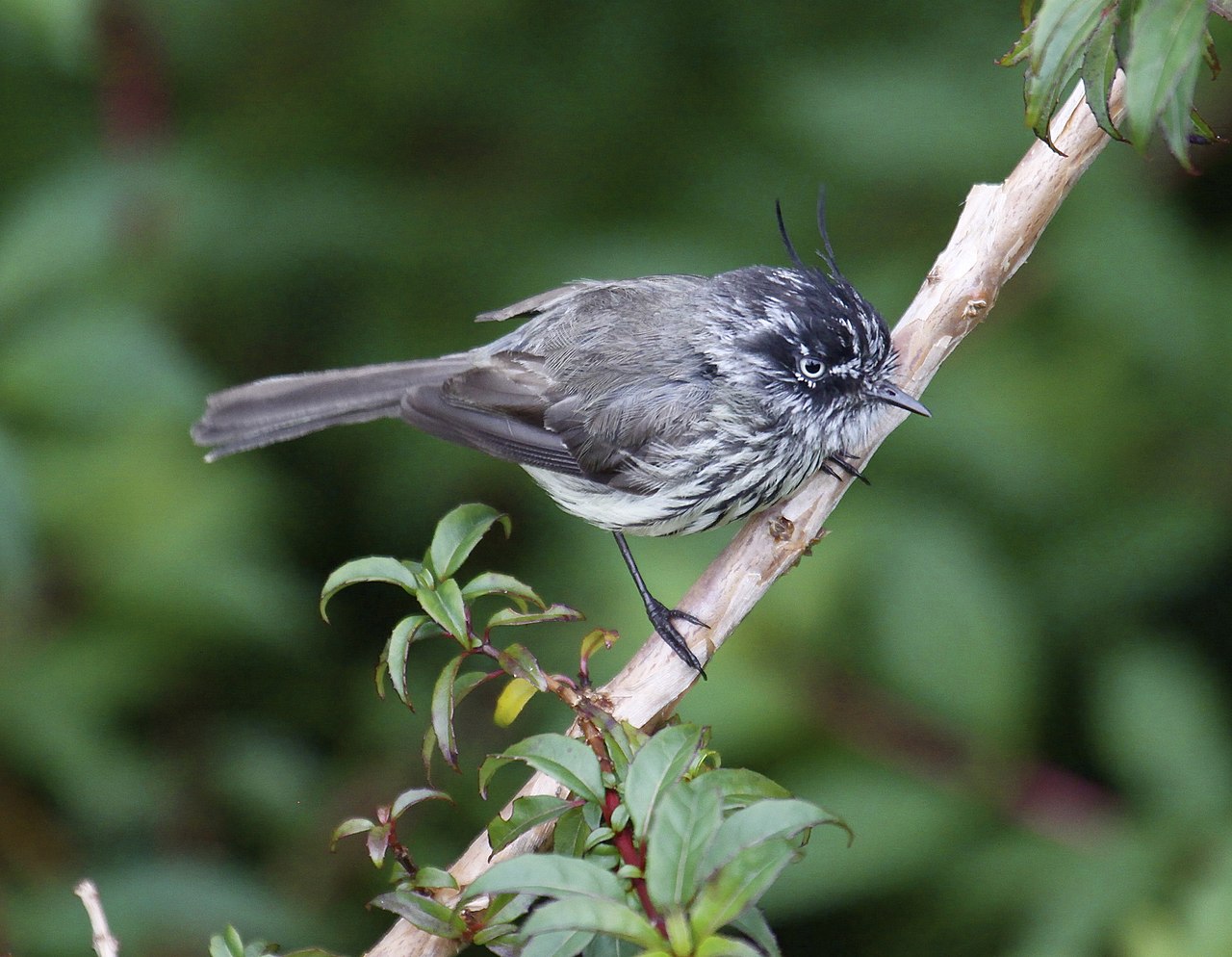
The tufted coquette is a tiny hummingbird that breeds in eastern Venezuela, Trinidad, Guiana, and northern Brazil. It is an uncommon but widespread species, and appears to be a local or seasonal migrant, although its movements are not well understood.
Region
Northern South America and Trinidad
Typical Environment
Found in eastern Venezuela, the Guianas (Guyana, Suriname, French Guiana), Trinidad, and northern Brazil. It frequents humid lowland forests, forest edges, riverine thickets, clearings with flowering plants, and cultivated areas with gardens and plantations. The species favors patches of abundant blossoms and often follows flowering peaks across the landscape. It can occur in both primary and secondary habitats, especially where Heliconia and other nectar sources are common.
Altitude Range
Sea level to 1000 m
Climate Zone
Tropical
Ease of Keeping
Beginner friendly: 1/5
The tufted coquette is one of the smallest hummingbirds, famed for the male’s flamboyant rufous crest and cheek tufts. It often visits gardens and forest edges where flowering shrubs are abundant. Despite local or seasonal movements, it remains widespread across the Guianas, Trinidad, eastern Venezuela, and northern Brazil. Its rapid, insect-like flight can make it surprisingly easy to overlook.


Figure 48 from The Descent of Man, and Selection in Relation to Sex by Charles Darwin
Temperament
social and active
Flight Pattern
short rapid wingbeats with agile hovering
Social Behavior
Males perform aerial displays at favored flowering sites and do not assist with nesting. Females build a tiny cup nest of plant down and spider silk on a slender twig or branch. Clutches are typically two white eggs, and breeding often coincides with peaks in flower availability.
Migratory Pattern
Partial migrant
Song Description
Vocalizations are soft, high-pitched chips and thin trills, given intermittently while foraging. The rapidly beating wings produce a faint, insect-like buzz that can be as noticeable as the calls.
Plumage
Tiny, compact hummingbird with glittering green upperparts and a contrasting pale rump band; underparts buffy to rufous with some green spotting on the sides.
Diet
Primarily feeds on nectar from small tubular flowers, including Heliconia, verbena, and other flowering shrubs. Supplements its diet with tiny arthropods such as gnats and small spiders, which provide essential protein. It often visits a circuit of flowering plants and may defend rich nectar sources for short periods.
Preferred Environment
Forages at forest edges, clearings, secondary growth, gardens, and along streams where blossoms are concentrated. Typically feeds at low to mid-level vegetation but will also probe higher canopy flowers when available.