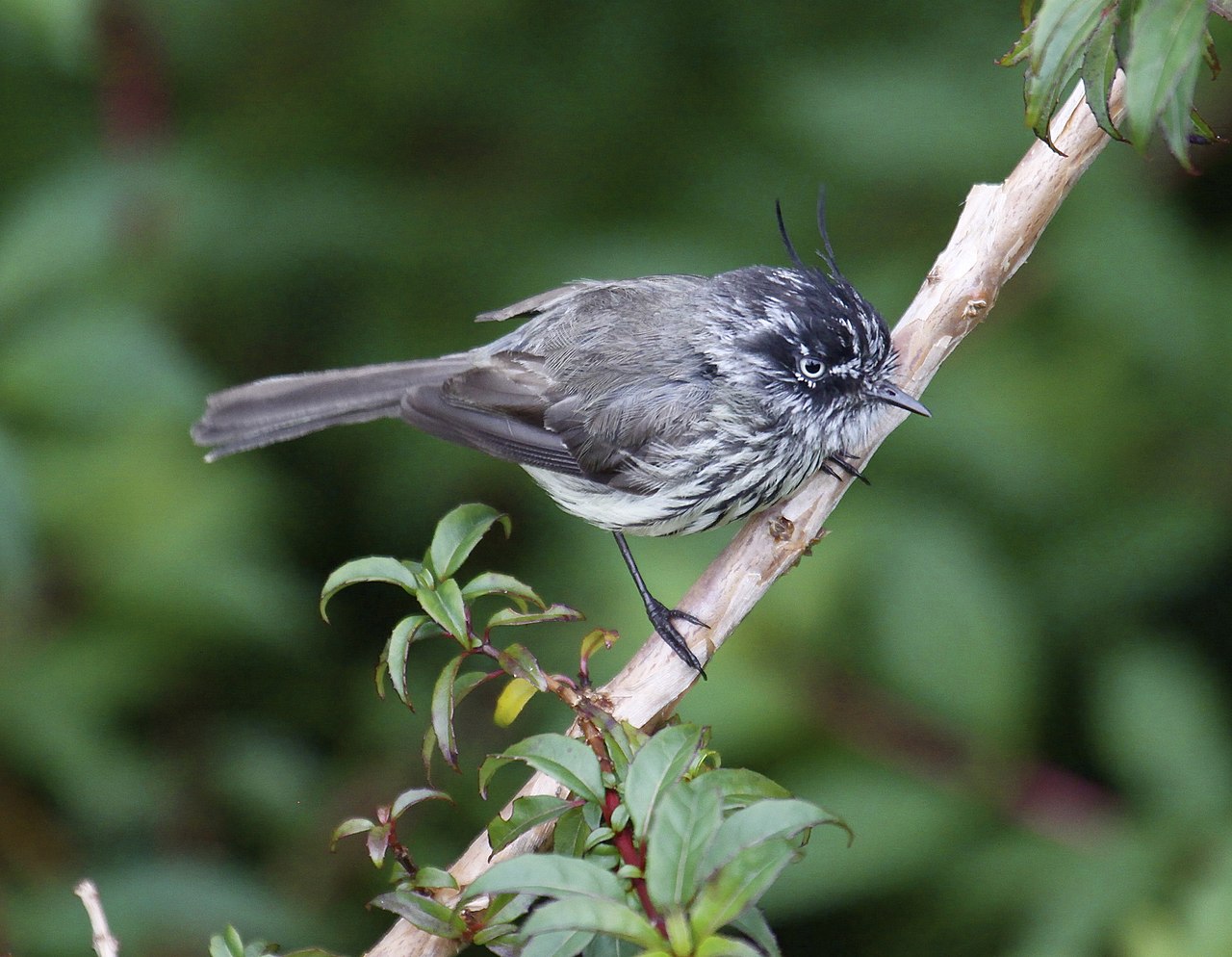
The tufted antshrike is a species of bird in subfamily Thamnophilinae of family Thamnophilidae, the "typical antbirds". It is found in Argentina, Brazil, and Paraguay.
Region
Atlantic Forest of southeastern South America
Typical Environment
Occurs in humid evergreen and semideciduous Atlantic Forest from southeastern Brazil into eastern Paraguay and far northeastern Argentina (Misiones). It favors dense understory, vine tangles, and bamboo thickets in primary and well-developed secondary forest. Birds are typically found in ravines, along forested streams, and on shaded slopes, but also persist in larger forest fragments. It is generally absent from open country and highly degraded habitats.
Altitude Range
Sea level to 1400 m
Climate Zone
Subtropical
Ease of Keeping
Beginner friendly: 1/5
The tufted antshrike is a skulking understory specialist of the Atlantic Forest, often detected more by its duet than by sight. Males have a distinctive shaggy crest that gives the species its name. It forages methodically in dense tangles, occasionally attending army-ant swarms to catch flushed prey. Forest loss in the Atlantic Forest is its main long-term threat, though it currently remains relatively widespread.


Temperament
solitary and territorial
Flight Pattern
short rapid wingbeats, low through understory
Social Behavior
Usually seen in pairs that maintain territories year-round. They move deliberately through dense cover, often keeping low and close to thickets. Nests are typically placed low to mid-level in dense vegetation; pairs are thought to be monogamous and may duet to maintain pair bonds.
Migratory Pattern
Resident
Song Description
Song is a series of clear, ringing whistles that may rise and then fall, often delivered as coordinated duets between mates. Calls include harsh scolds and sharp notes given when alarmed or during territorial interactions.
Plumage
Male is mostly glossy black with a long, shaggy crest and small contrasting white spots on the wings/shoulders; female is rich rufous-brown with subtler barring and a smaller crest. Both sexes have a heavy, hooked bill and relatively long tail for an antshrike.
Diet
Primarily eats arthropods such as beetles, spiders, and orthopterans, taken by gleaning from leaves and twigs. It also snaps prey from bark and occasionally makes short sallies to the ground or to foliage. Larger insects are subdued with the strong, hooked bill; small vertebrates are rarely taken.
Preferred Environment
Forages in dense understory, vine tangles, and bamboo stands within mature or well-regenerated forest. Often keeps to shaded ravines and along streamside thickets where cover is thick.