The thick-billed seed finch is a species of bird in the family Thraupidae, but was until recently placed in Emberizidae. It is found widely in shrubby and grassy areas from southern Mexico, through Central America, to the Chocó in Colombia and Ecuador. It is replaced by the closely related chestnut-bellied seed finch in South America east of the Andes, as well as the valleys of Cauca and Magdalena in Colombia. The two have often been considered conspecific as the lesser seed-finch.
Region
Mesoamerica and the Chocó (W Mexico to W Colombia and W Ecuador)
Typical Environment
Occurs from southern Mexico through Central America to the Pacific lowlands of Colombia and Ecuador, especially in the Chocó. It inhabits shrubby fields, grassy clearings, canal and marsh edges, riparian thickets, second-growth, and agricultural margins including rice fields. The species readily uses disturbed and early-successional habitats. Often found near water and in mosaics of grass and scrub. Perches conspicuously to sing and forage among seed heads.
Altitude Range
Sea level to 1200 m
Climate Zone
Tropical
Ease of Keeping
Beginner friendly: 2/5
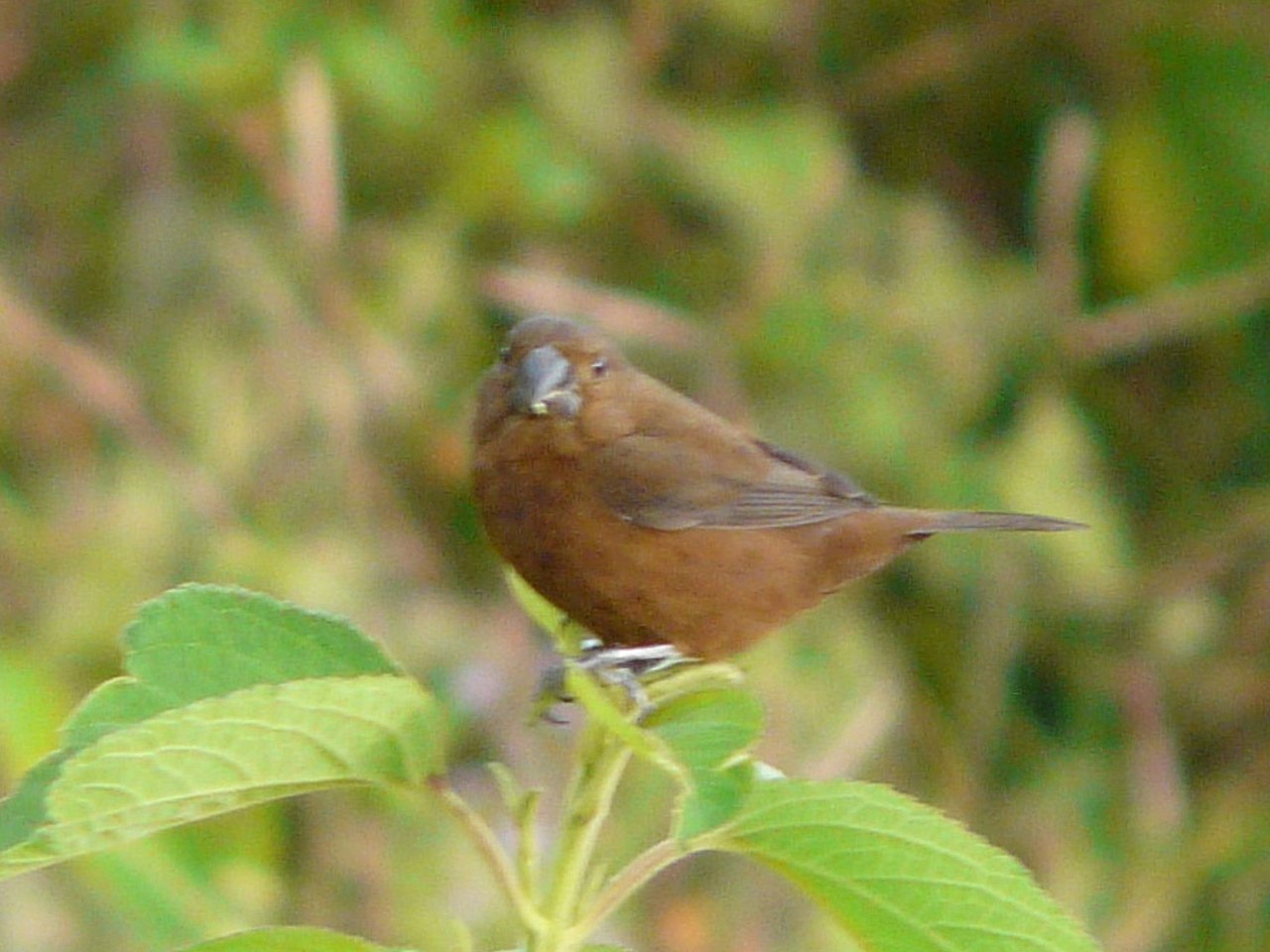
A robust-billed seed specialist of the genus Sporophila, it was formerly placed in Emberizidae but is now within Thraupidae (tanagers). Males are glossy black, while females are warm brown, both sporting a massive pale bill adapted for cracking tough grass and sedge seeds. It favors disturbed, brushy habitats and can be locally common near wetlands and agricultural edges. It is replaced east of the Andes by the closely related chestnut-bellied seed-finch.


Temperament
generally wary but can be confiding in disturbed habitats
Flight Pattern
short rapid wingbeats with low, direct flights between cover
Social Behavior
Typically in pairs or small groups; forms looser flocks outside the breeding season where food is abundant. Nests are small open cups placed low in shrubs or grasses. Clutches are usually two to three eggs, with both parents involved in care. Males sing from exposed perches to defend territories in the breeding season.
Migratory Pattern
Resident
Song Description
The male delivers a loud series of clear, sweet whistles and brief trills, often repeated from a prominent perch. Calls include sharp metallic chips and twinks used in contact and alarm. Songs can vary locally but retain a strong, ringing quality.
Plumage
Males are uniformly glossy black with a contrasting pale, very deep bill; females are warm brown to cinnamon-brown with paler underparts and subtle streaking or edging on the wings. Both sexes show a compact, big-headed look due to the oversized bill.
Diet
Primarily consumes grass and sedge seeds, which it cracks with its exceptionally strong bill. Also takes rice and other cultivated grains at field edges. It may supplement with small fruits and occasionally small invertebrates, especially during the breeding season for added protein.
Preferred Environment
Feeds in weedy fields, along marsh and canal edges, in rice paddies, and within scrubby second-growth. Often forages low, clinging to seed heads or hopping on the ground to pick fallen seeds.