
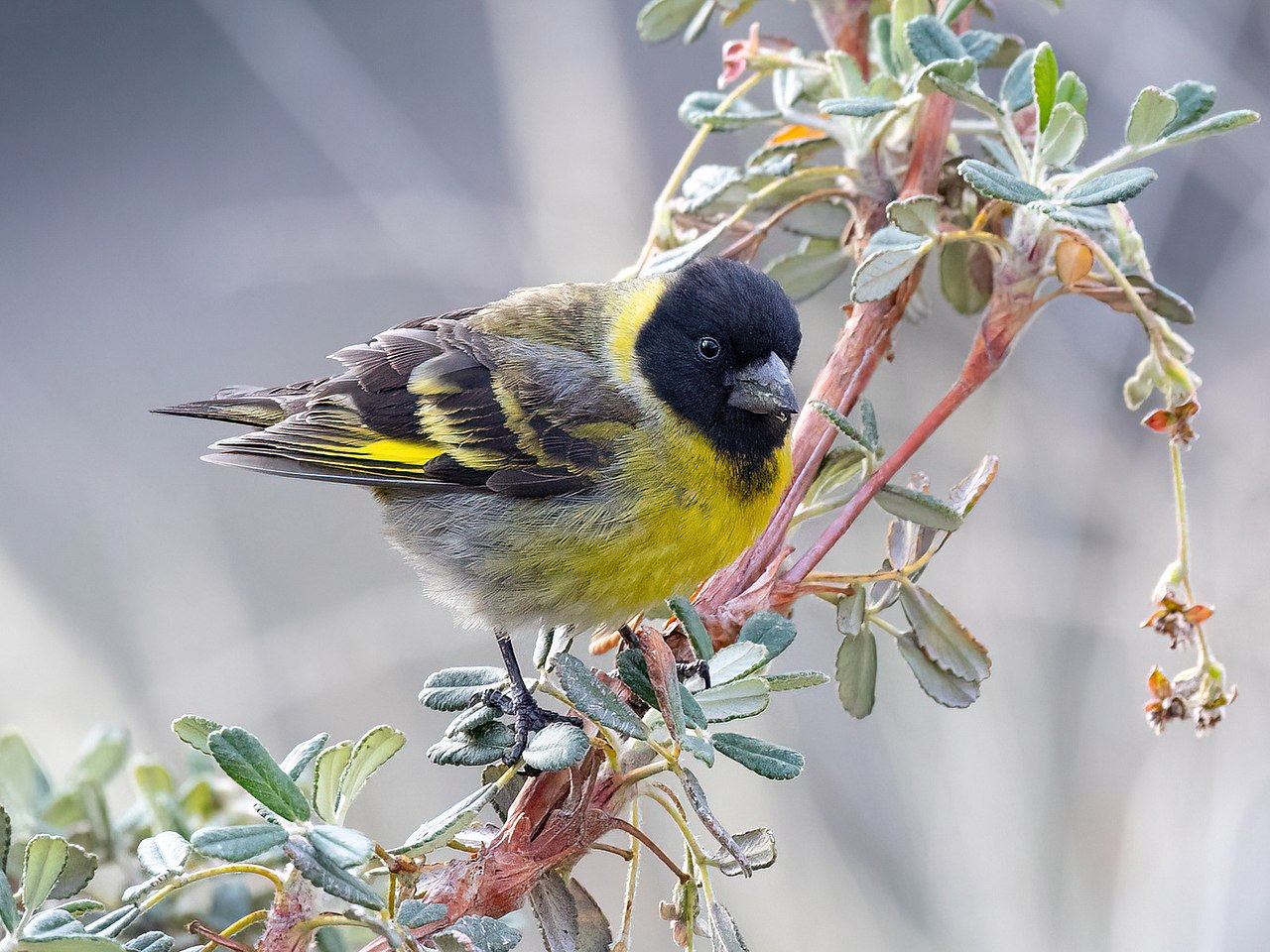
The thick-billed siskin is a species of finch in the family Fringillidae. Found in Argentina, Bolivia, Chile, and Peru, its natural habitats are subtropical or tropical moist montane forests and subtropical or tropical high-altitude shrubland.
Region
Andes Mountains
Typical Environment
Occurs along the central Andes of Peru, Bolivia, northern Chile, and northwestern Argentina. It favors subtropical and tropical moist montane forests, Polylepis woodlands, and adjacent high-altitude shrublands. The species also uses rocky slopes, forest edges, and puna scrub where seed-bearing plants are abundant. Outside the breeding season it may descend slightly to lower elevations in search of food.
Altitude Range
2500–4500 m
Climate Zone
Highland
Ease of Keeping
Beginner friendly: 2/5
A high-Andean finch, the thick-billed siskin is adapted to cool, thin-air environments and often associates with Polylepis woodlands and montane scrub. Its stout, deep-based bill helps crack tough seeds at high elevations where food can be seasonal. It sometimes forms mixed flocks with other Andean siskins and finches. Local altitudinal movements occur as it tracks flowering and seeding plants.


Temperament
social and active
Flight Pattern
short rapid wingbeats with undulating flight
Social Behavior
Often in small flocks, especially outside the breeding season, and may join mixed-species foraging groups. Pairs form during the breeding season; nests are compact cups placed in shrubs or small trees. Both sexes participate in territorial defense near the nest.
Migratory Pattern
Partial migrant
Song Description
A rapid, twittering series of trills and buzzy notes typical of siskins. Calls are sharp and tinkling contact notes given frequently in flight and while foraging.
Plumage
Small finch with a stout, deep-based bill; plumage generally olive to gray-olive with yellow highlights in the wings and tail. Males show stronger contrast with darker head tones and brighter yellow wing patches; females are duller with more subdued olive-brown tones and light streaking. Both sexes show a thick conical bill that appears proportionally large for a siskin.
Diet
Primarily seeds from high-Andean shrubs, herbs, and grasses, including composites and thistles. Also takes buds and soft plant material when available. Insects and other small arthropods are consumed opportunistically, especially during the breeding season to feed growing chicks.
Preferred Environment
Forages in shrublands, Polylepis patches, forest edges, and open slopes with seeding plants. Will feed in weedy patches and along roadsides or agricultural fringes at high elevation.


