

The thick-billed warbler breeds in the temperate east Palearctic, from south Siberia to west Mongolia. It is migratory, wintering in tropical South Asia and South-east Asia. It is a very rare vagrant to western Europe.
Region
East Palearctic to South and Southeast Asia
Typical Environment
Breeds from southern Siberia through the Russian Far East, northern Mongolia, and northeast China in scrubby wetlands and tall reedbeds. During migration it passes through eastern China and the Korean Peninsula. In winter it occupies dense undergrowth, reedbeds, and scrub across the Indian Subcontinent and Southeast Asia, including lowland plantations and secondary growth. It favors waterside thickets, marsh edges, and overgrown riverbanks with abundant cover.
Altitude Range
Sea level to 2000 m
Climate Zone
Temperate
Ease of Keeping
Beginner friendly: 1/5
The thick-billed warbler is a large, robust acrocephaline warbler placed in the monotypic genus Arundinax. It breeds across the temperate east Palearctic and winters in tropical South and Southeast Asia, and is a rare vagrant to western Europe. Its strong, broad-based bill and loud, chattering song help distinguish it from similar reed warblers.


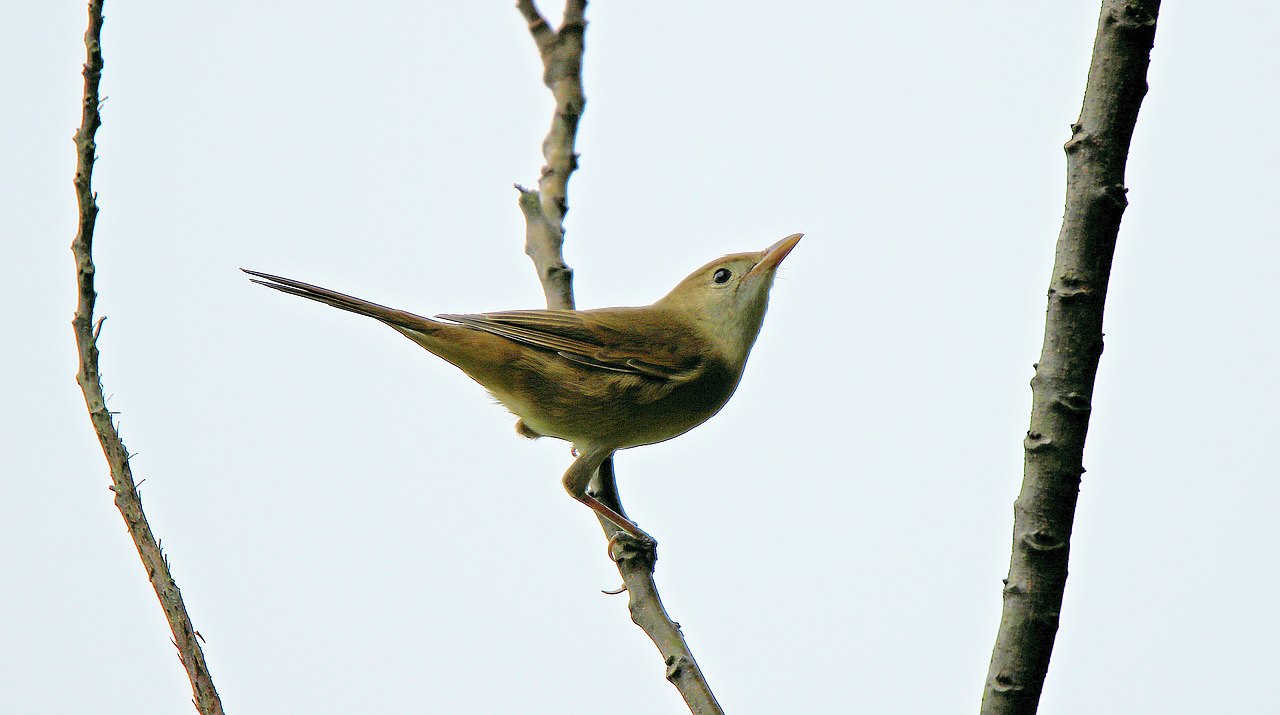
Thick-billed warbler

Arundinax aedon aedon - MHNT
Temperament
skulking but active
Flight Pattern
short rapid wingbeats, usually low over vegetation
Social Behavior
Breeds solitarily in defended territories, with pairs nesting in dense reeds or shrubs close to the ground or water. The nest is a deep cup suspended or wedged in stems; clutches typically contain 3–6 eggs. Both adults feed the nestlings, and family groups may remain together briefly after fledging.
Migratory Pattern
Seasonal migrant
Song Description
A loud, fast, chattering warble with harsh scolds and rattles, often including mimicry of other species. Delivered from within cover or from a low song perch; the call is a sharp tak or tchack.
Plumage
Plain brown upperparts with warmer rufous tones in the tail, and buffy to whitish underparts. A strong, pale supercilium contrasts with a relatively plain face. Feathers are smooth and unpatterned, giving a clean, uniform look in most lights.
Diet
Primarily takes insects and other small invertebrates such as beetles, caterpillars, spiders, and flies. It gleans prey from leaves, reed stems, and low twigs, and occasionally sallies to catch flying insects. In the non-breeding season it may supplement its diet with small berries and seeds. Foraging is deliberate but persistent, often within dense cover.
Preferred Environment
Feeds in dense reedbeds, rank grasses, and scrub along marshes, rivers, and lakes. In winter it also uses hedgerows, gardens, plantations, and overgrown field margins. It keeps close to cover, rarely venturing into open ground.


