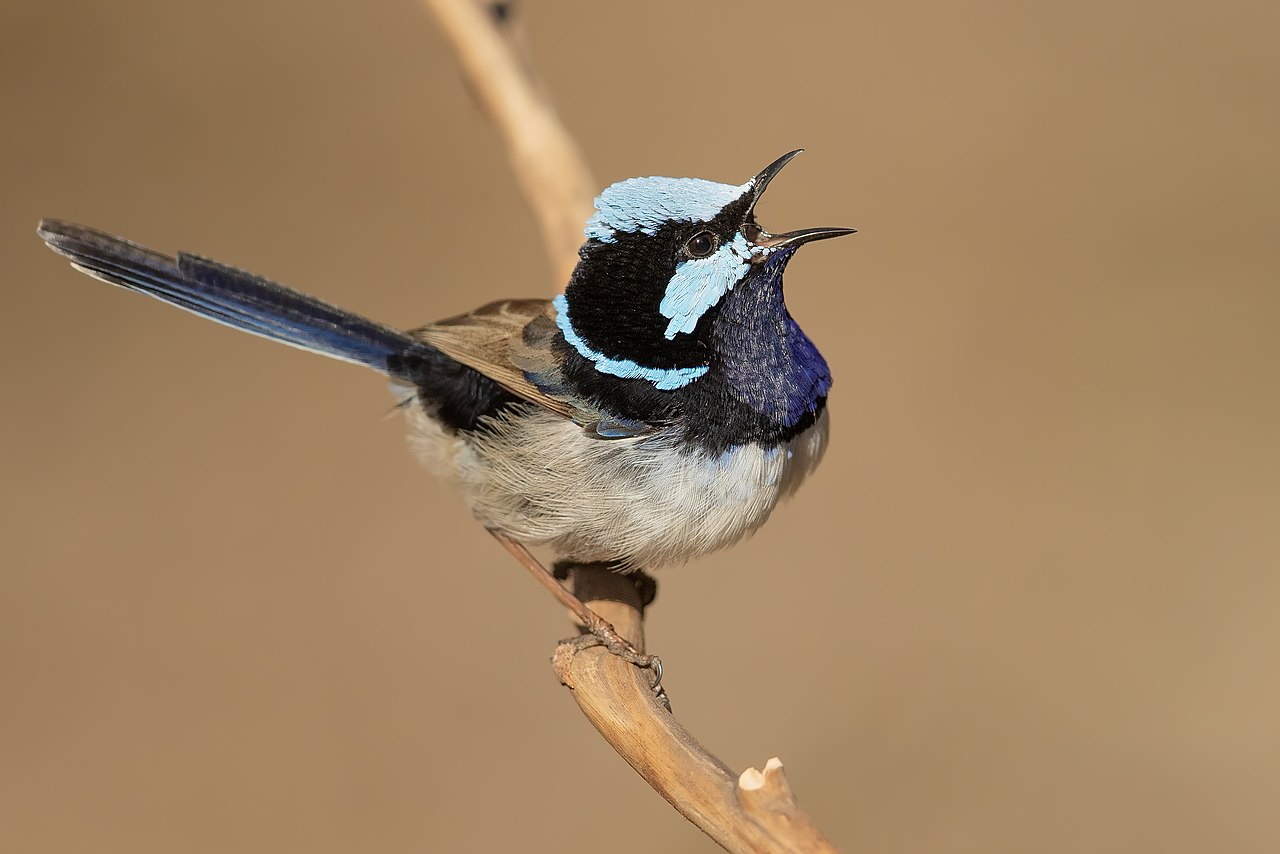
The Sunda warbler is a species of Old World warbler in the family Phylloscopidae. It is found only in Indonesia.
Region
Greater Sunda Islands
Typical Environment
Occurs in montane and submontane evergreen forests of Sumatra and Java, with a preference for cool, moist slopes and ridges. It uses forest interiors, edges, and mature secondary growth, and will forage along trails and in bamboo thickets. The species is most common in mid to upper strata but also drops into the understory while following mixed flocks. It tolerates some habitat disturbance where sufficient canopy and midstory remain.
Altitude Range
600–2400 m
Climate Zone
Highland
Ease of Keeping
Beginner friendly: 1/5
The Sunda warbler is a small leaf-warbler of the Old World warbler family, confined to the Indonesian Sunda Islands. It is often detected by its high, thin song as it forages restlessly through foliage. Like many Phylloscopus warblers, it can be tricky to identify, relying on subtle head stripes and overall tone. It frequently joins mixed-species flocks in montane forest.

Temperament
active and somewhat skulking
Flight Pattern
short rapid wingbeats with quick darts between perches
Social Behavior
Often travels singly or in pairs, frequently joining mixed-species flocks with other small insectivores. Nests are cup-shaped and placed low in shrubs or dense vegetation. Breeding pairs defend small territories during the nesting season, with the male singing from mid-canopy perches.
Migratory Pattern
Resident
Song Description
Song is a series of thin, high-pitched whistles and trills delivered in short phrases. Calls include sharp seep notes and soft tics used while foraging with flocks.
Plumage
Olive-green upperparts with yellowish wash to underparts, cleaner whitish belly, and a pale, well-defined supercilium over a darker eye-line. Wings show faint to narrow wingbars and slightly duskier flight feathers. Fine, pointed bill and relatively short tail typical of leaf-warblers.
Diet
Feeds primarily on small arthropods, including caterpillars, beetles, flies, and spiders. Gleans from the surfaces and undersides of leaves and twigs, often hanging briefly to reach prey. Occasionally makes short sallies to snatch flying insects and will probe into rolled leaves for hidden larvae.
Preferred Environment
Forages in midstory to canopy of humid montane forest, along edges, and in bamboo or dense secondary growth. Frequently exploits mixed-species flocks to flush insects and access a broader range of microhabitats.