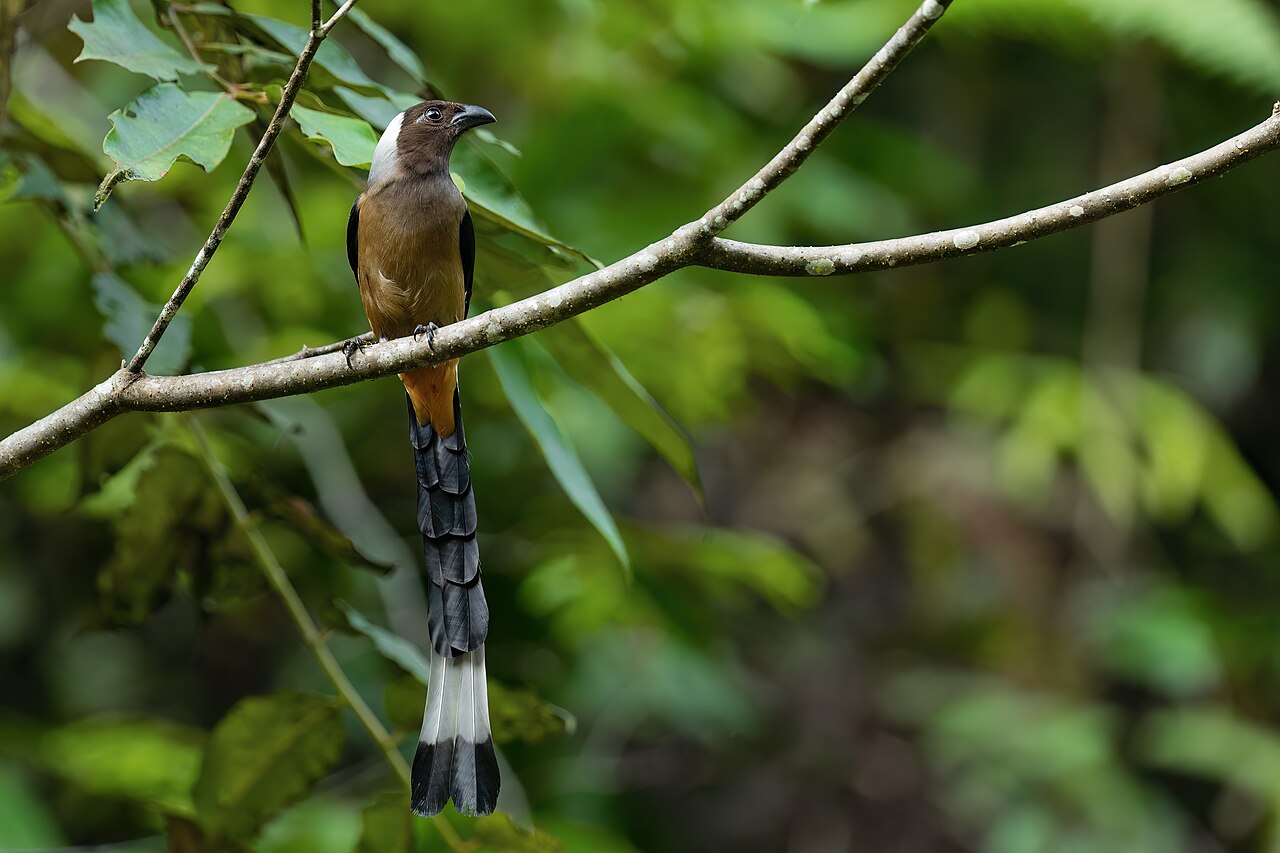
The Sumatran ground cuckoo is a large, terrestrial species of cuckoo endemic to the forests of Sumatra in Indonesia. It was first described in 1879 and, despite being identified as a separate species in the 1880s, was formerly considered conspecific with the Bornean ground cuckoo until recently being returned to the status of a unique species. Considered a critically endangered species by the IUCN Red List, it was initially known from just eight specimens and evaded notice from 1916 until 1997, when it was rediscovered and photographed. The Sumatran ground cuckoo's diet is thought to consist of invertebrates, small mammals, and reptiles.
Region
Sumatra, Indonesia (Sundaland)
Typical Environment
Confined to remaining tracts of primary and mature secondary rainforest across Sumatra, especially on the foothills and lower montane slopes of the Barisan Range. It frequents dense understory, damp ravines, and streamside thickets where cover is abundant. The species is highly patchy in occurrence due to widespread habitat loss and fragmentation. It avoids open or heavily degraded habitats and is rarely seen away from intact forest.
Altitude Range
Sea level to 1400 m
Climate Zone
Tropical
Ease of Keeping
Beginner friendly: 1/5
One of Southeast Asia’s most elusive birds, it was long known from just a handful of specimens and went unrecorded for decades until its rediscovery in 1997. It is a largely terrestrial cuckoo that prefers to run rather than fly and is extremely sensitive to forest disturbance. Ongoing deforestation on Sumatra is the primary threat to its survival.

Temperament
solitary and skulking
Flight Pattern
prefers running; short rapid wingbeats when flushed
Social Behavior
Usually encountered alone or in pairs and believed to maintain large, secretive territories. Nesting biology is poorly known but, unlike many cuckoos, members of this genus are thought to rear their own young. Activity is concentrated on the forest floor, where it forages methodically through leaf litter.
Migratory Pattern
Resident
Song Description
Vocalizations are low, resonant hoots delivered in spaced series, sometimes giving deep booming notes that carry through dense forest. It may also produce clacking or snapping sounds, especially when alarmed or during close-range interactions.
Plumage
Dark olive-green upperparts with a slight metallic sheen, rufous-brown wings, and a long blackish tail with paler tips; underparts are buff to greyish. The throat is paler, often forming a noticeable white patch, and the face shows a contrasting dark mask with areas of bare skin.
Diet
Feeds on large invertebrates such as beetles, cockroaches, millipedes, and earthworms, as well as small vertebrates including frogs, lizards, and small mammals. It hunts by walking quietly along the forest floor, probing and flicking aside leaf litter with its bill. Opportunistic prey capture is common when animals are flushed from cover.
Preferred Environment
Dense primary or older secondary rainforest, especially shaded ravines and along forest streams where invertebrate prey is abundant. Often keeps close to thick understory and tangles that provide both cover and foraging opportunities.