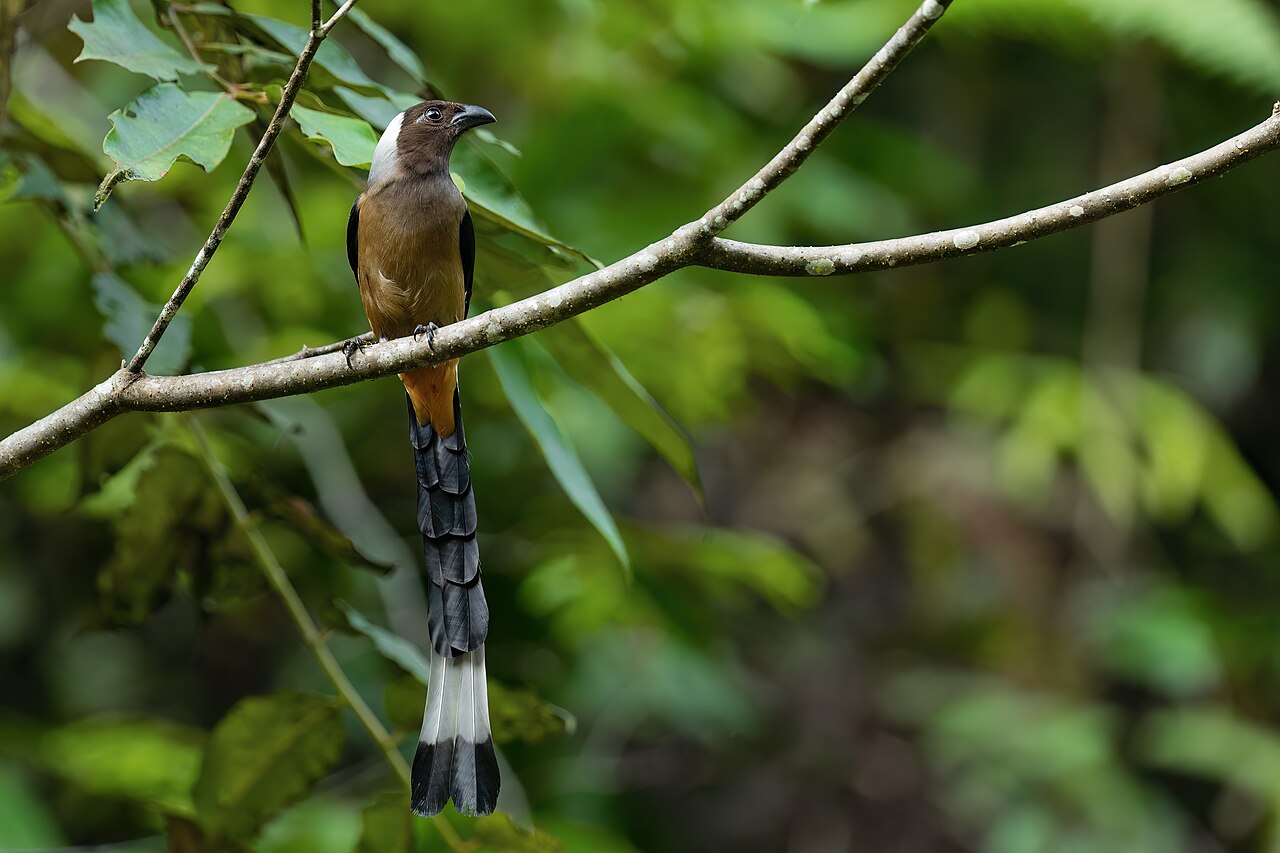
The Sumatran shortwing is a species of bird in the Old World flycatcher family Muscicapidae. It is endemic to the island of Sumatra in western Indonesia where it favours montane forest.
Region
Sumatra, Indonesia
Typical Environment
Endemic to the Barisan Range of western Sumatra, it inhabits cool, wet montane evergreen and mossy forests. It favors dense undergrowth, thickets along ravines and streams, and forest edges with thick ground cover. The species keeps close to the forest floor, using root tangles, ferns, and bamboo understory for cover. It is rarely seen in open or disturbed habitats, though it may visit adjacent secondary growth if understorey remains intact.
Altitude Range
900–2600 m
Climate Zone
Highland
Ease of Keeping
Beginner friendly: 1/5
The Sumatran shortwing is a secretive understory bird of high montane forest and was split from the former White-browed Shortwing complex. Males are dusky to deep blue while females are rich brown, and both prefer to skulk in dense, mossy vegetation. Its clear, melodious song often gives away its presence long before the bird is seen.

Temperament
shy and skulking
Flight Pattern
short rapid wingbeats, low to the ground
Social Behavior
Typically solitary or in pairs within well-defined territories. Nests are usually domed or cup-like, built low in banks, root tangles, or dense shrubs using moss and fibers. Both parents are thought to participate in care, remaining close to cover when disturbed.
Migratory Pattern
Resident
Song Description
A rich, clear series of fluted whistles delivered from concealed perches, especially at dawn and dusk. Calls include thin, high chips and soft tiks when alarmed.
Plumage
Compact, short-winged with a short tail; feathers appear dense and soft. Male is dark indigo to blue-black above with slightly paler bluish tones below; female is warm rufous-brown overall with a buffy throat and belly. Both sexes show a subtle pale eye-ring and very short, rounded wings adapted to life in dense cover.
Diet
Primarily feeds on small invertebrates such as beetles, ants, caterpillars, and other arthropods gleaned from leaf litter and low vegetation. It occasionally takes small berries or soft fruits, especially when insect prey is scarce. Foraging is mostly deliberate, with short hops and pauses while probing moss, rotting logs, and damp ground.
Preferred Environment
Dense, shaded understory on steep slopes, along streams, and in ravines where leaf litter stays moist. Often forages under ferns, bamboo, and tangled roots, rarely venturing into open areas.