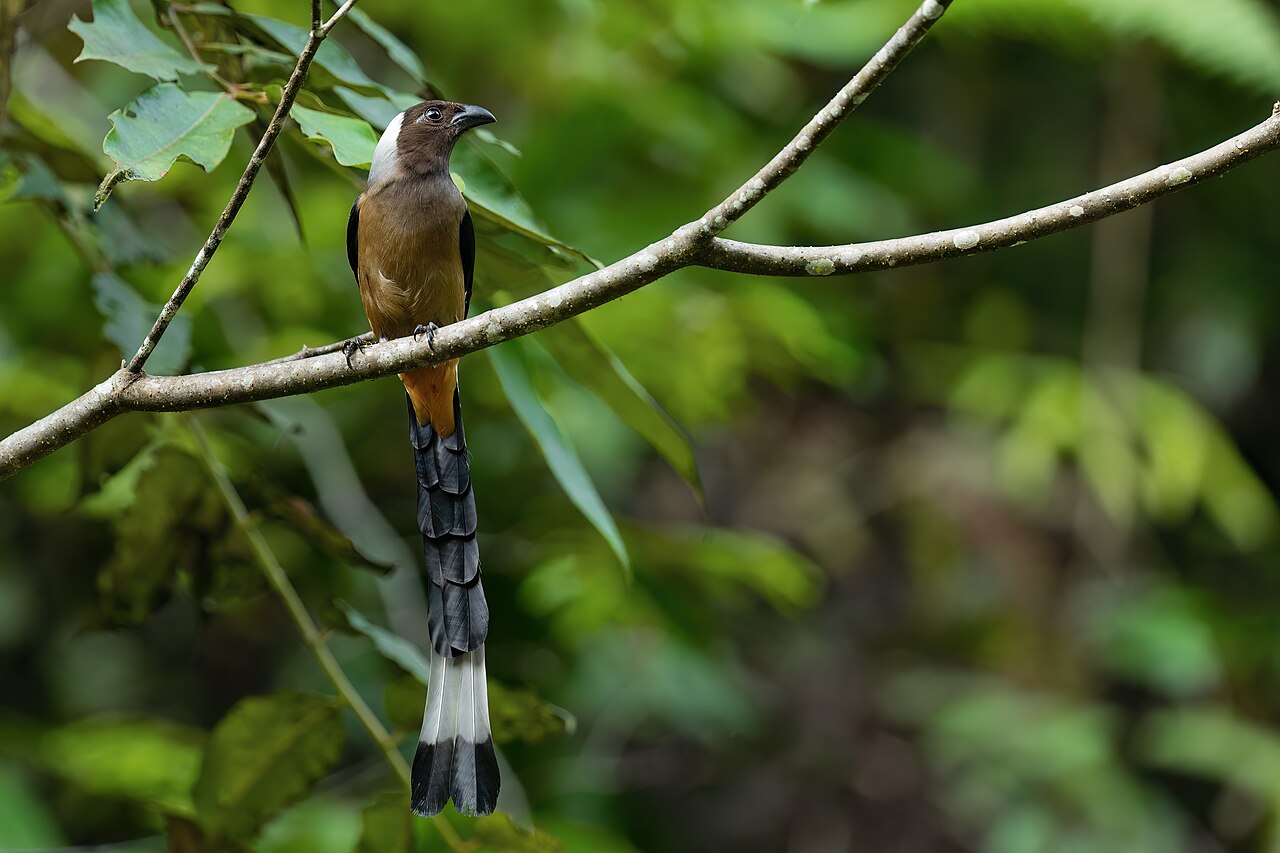
The Sumatran laughingthrush, also known as the black-and-white laughingthrush, is a member of the family Leiothrichidae. It was formerly treated as a subspecies of the white-crested laughingthrush, but unlike that species the plumage of the Sumatran laughingthrush is blackish-brown and white.
Region
Sunda Islands (Sumatra), Southeast Asia
Typical Environment
Occurs in the Sumatran montane belt, favoring mature evergreen hill and montane forests as well as forest edges and secondary growth. It uses dense understorey, bamboo thickets, and vine tangles along slopes and ridgelines. Birds often move through midstorey strata but descend to the ground to forage in leaf litter. Though tolerant of some habitat disturbance, it is highly vulnerable to trapping pressure. Remaining populations are patchy and localized.
Altitude Range
800–2500 m
Climate Zone
Highland
Ease of Keeping
Beginner friendly: 2/5
Also called the black-and-white laughingthrush, this species is endemic to the island of Sumatra. It is heavily impacted by trapping for the songbird trade, leading to rapid declines. It lives in montane forests where it moves in noisy groups and delivers loud, cackling choruses.

Temperament
social and noisy
Flight Pattern
short rapid wingbeats
Social Behavior
Typically travels in pairs or small family parties that keep contact with chatter and whistles. Territorial groups move together through dense vegetation and may engage in cooperative vigilance. Nests are cup-shaped and placed in shrubs or low trees; clutches are small and both parents care for the young.
Migratory Pattern
Resident
Song Description
Loud, laughing choruses with bubbling notes, cackles, and harsh scolds. Groups often duet or chorus at dawn and during active foraging, creating a carrying, synchronized racket.
Plumage
Striking contrast of blackish-brown upperparts with clean white head, throat, and underparts; feathers appear smooth with a slightly loose crest on the crown. Wings and tail are dark with a glossy sheen, and the face shows a dark mask through the eye. The overall pattern is bold and sharply demarcated.
Diet
Takes a wide range of invertebrates such as beetles, caterpillars, ants, and other insects gleaned from foliage and leaf litter. Supplements with fruits and berries, especially when insect prey is less abundant. Will occasionally pick small snails or other soft-bodied prey.
Preferred Environment
Forages in dense understorey and midstorey, along forest trails, clearings, and edges. Often probes leaf litter and dead wood and hops among tangles and low branches.