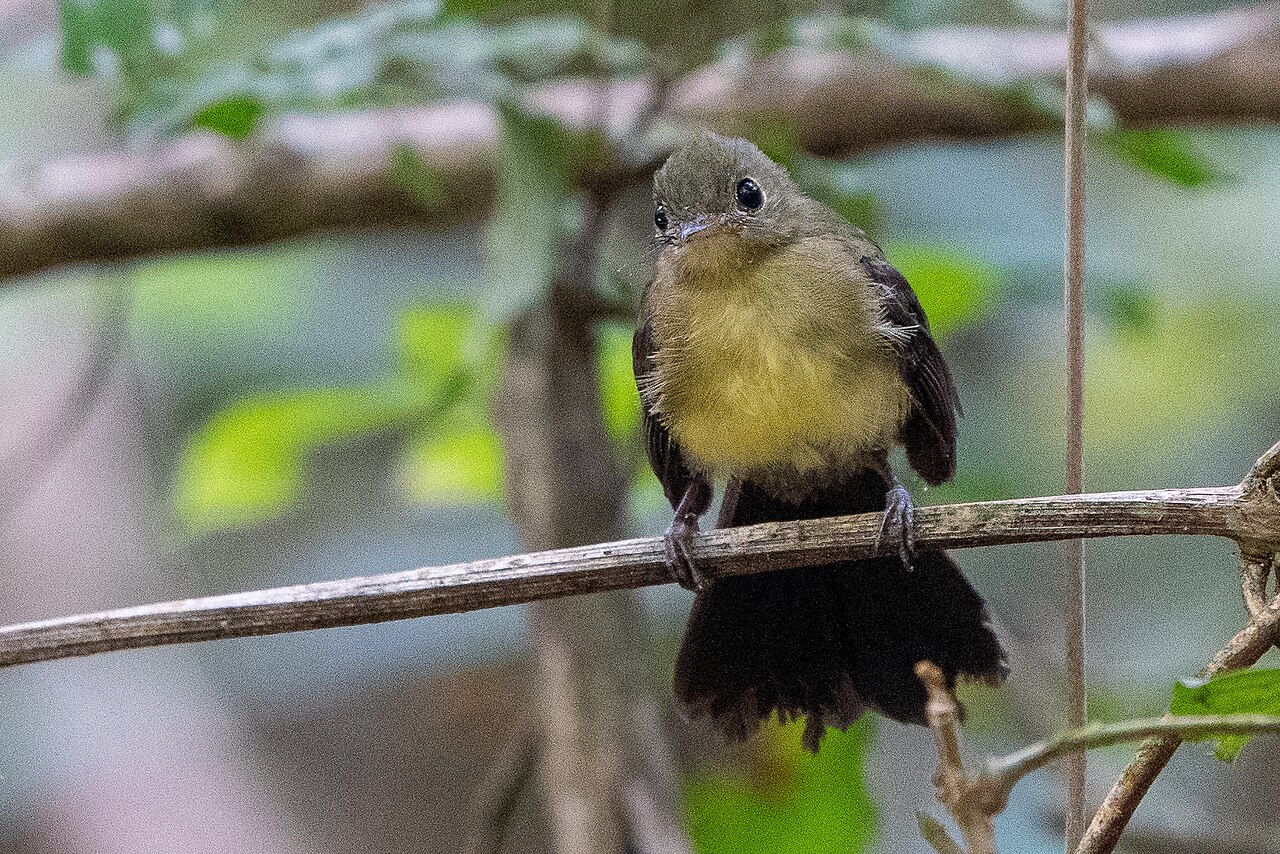
The sulphur-bellied warbler is a species of leaf-warbler found in the Palearctic region. It was earlier also known by the name of olivaceous leaf-warbler.
Region
Central Asia and the Indian Subcontinent
Typical Environment
Breeds in the mountains of Central Asia, including the Pamir, Tian Shan, and Hindu Kush, using rocky slopes with scattered shrubs and open juniper or birch scrub. During migration it passes through the western Himalayas and adjoining foothills. In winter it disperses widely across peninsular India and Sri Lanka, frequenting dry scrub, rocky hillsides, forest edges, and thorny thickets. It tolerates fairly open terrain with scattered bushes and low canopy where it can glean insects from foliage and rocks.
Altitude Range
0–3800 m
Climate Zone
Highland
Ease of Keeping
Beginner friendly: 1/5
A long-distance migrant, the sulphur-bellied warbler breeds in high, arid mountains of Central Asia and winters across the Indian subcontinent. It often flicks its tail and wings while foraging, a helpful field clue. The bright sulphur-yellow wash on the underparts and a strong pale supercilium help separate it from similar drab leaf-warblers.


Temperament
active and restless
Flight Pattern
short rapid wingbeats
Social Behavior
Usually solitary or in pairs while foraging, joining loose mixed flocks in winter occasionally. Nests in the breeding range on or near the ground in a small cup concealed among rocks or low shrubs. Pairs are territorial on breeding grounds and both adults attend the brood.
Migratory Pattern
Seasonal migrant
Song Description
Song is a series of thin, high-pitched trills and tinkling phrases delivered from low perches or while moving through shrubs. Calls include sharp chips and a soft, high seep note.
Plumage
Olive-brown to grey-brown upperparts with clean, yellow-suffused underparts and whitish throat; lacks strong wing bars. Shows a long, pale supercilium and a dusky eye-stripe; underparts can appear more sulphur-yellow on the belly and vent.
Diet
Primarily small insects and other arthropods, including beetles, caterpillars, and spiders. Gleans prey from leaves, twigs, and rock surfaces, and occasionally hawks short distances to snatch flying insects. May take small berries opportunistically in winter when insects are scarce.
Preferred Environment
Forages in open scrub, rocky slopes with scattered bushes, and edges of light woodland. Often feeds low to mid-levels, moving quickly through foliage and along rock faces.