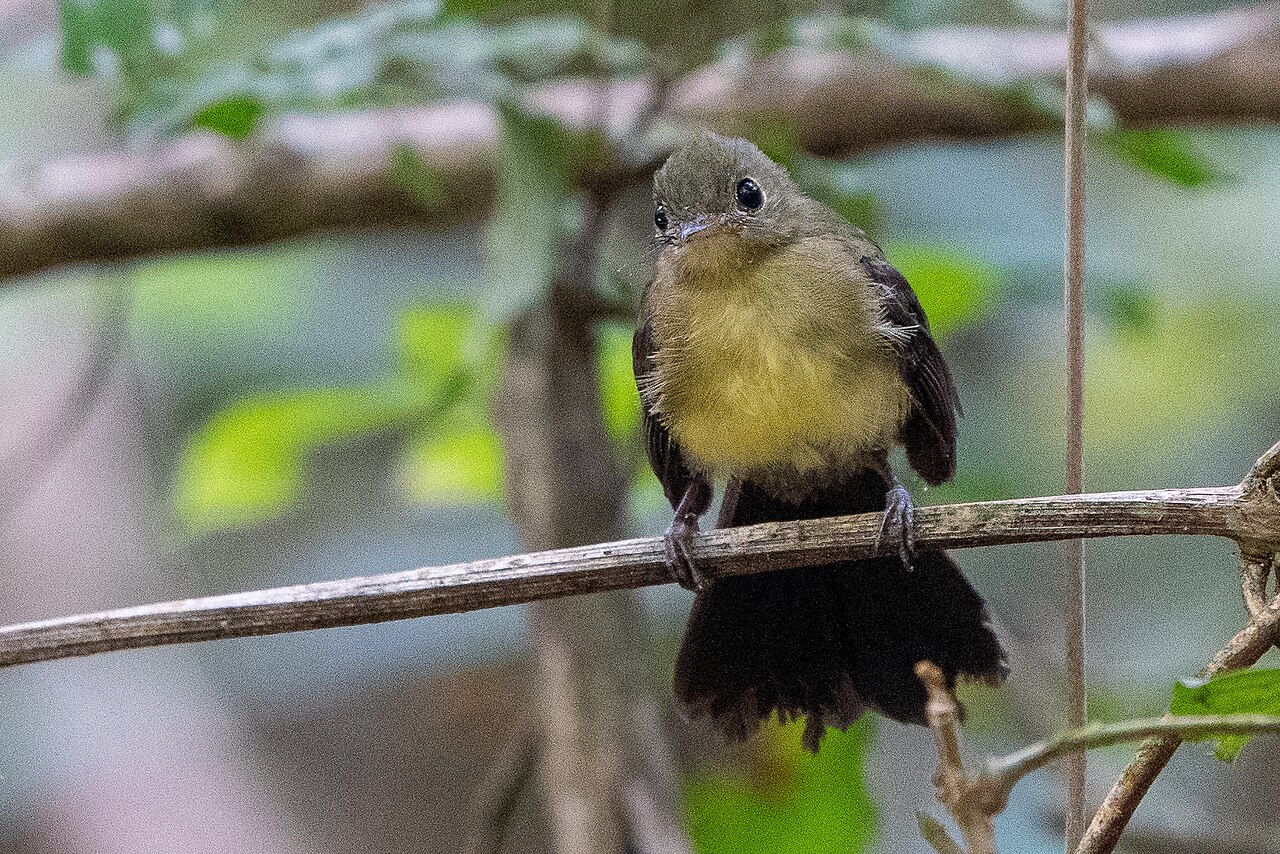
The sulphur-billed nuthatch is a species of bird in the family Sittidae. It is endemic to the Philippines. Its natural habitats are tropical moist lowland forest and tropical moist montane forest. It is commonly found in mixed flocks along with Blue-headed fantails, sunbirds, flowerpeckers and other small forest birds.
Region
Philippine archipelago
Typical Environment
Occurs in primary and secondary tropical moist forests on larger northern and central Philippine islands, favoring areas with substantial tree cover. It forages from the mid-canopy to the upper canopy on trunks and large branches. The species uses forest edges and lightly logged stands but is most frequent in intact forest. Often joins mixed-species flocks moving rapidly through the forest strata, especially along ridges and in montane zones.
Altitude Range
Sea level to 2000 m
Climate Zone
Tropical
Ease of Keeping
Beginner friendly: 1/5
The sulphur-billed nuthatch is a tiny, energetic bark-gleaner that moves acrobatically along trunks and branches, often hanging upside down to probe crevices. Its name comes from its distinctive sulphur-yellow bill. It regularly travels in mixed-species flocks with fantails, sunbirds, and flowerpeckers, which helps it find food and avoid predators. Endemic to the Philippines, it adapts to both lowland and montane forests where mature trees are available.

Temperament
social and active
Flight Pattern
short rapid wingbeats
Social Behavior
Frequently travels in small groups and readily joins mixed-species flocks, moving quickly through the canopy. Nests in tree cavities, often using natural holes or old woodpecker/natural crevices, and may line them with plant fibers. Pairs are typically territorial during breeding, with cooperative foraging outside the breeding season.
Migratory Pattern
Resident
Song Description
Gives sharp, thin notes and short trills, often a series of high, nasal sit-sit or tsee calls exchanged within flocks. Vocalizations are brief but frequent while foraging, helping individuals maintain contact.
Plumage
Bright bluish upperparts with a slightly purplish sheen and warm buff to cinnamon underparts; clean, contrasting look typical of nuthatches. The face shows a subtle dark eye-line, and the underparts are plain without heavy streaking.
Diet
Primarily consumes small arthropods such as insects and their larvae, beetles, ants, and spiders. It gleans prey from bark and probes into fissures and lichens, sometimes hammering lightly to dislodge hidden insects. May occasionally take small fruits or other invertebrates encountered while moving with flocks.
Preferred Environment
Feeds on trunks and larger limbs in the mid to upper canopy of moist forest, including edges and selectively logged areas. It favors mature trees with textured bark offering crevices and epiphytes.