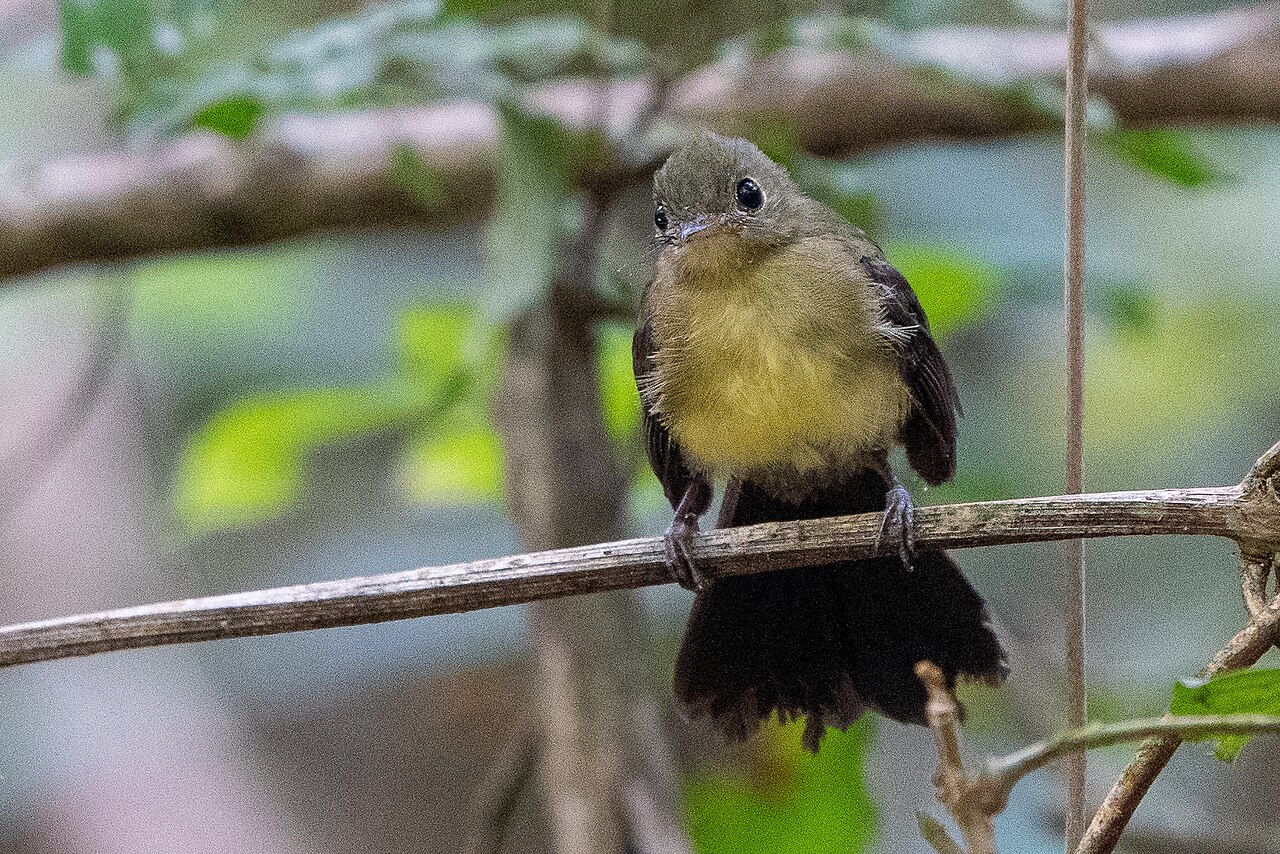
The sulphur-breasted warbler is a species of Old World warbler in the family Phylloscopidae. It breeds in China; it winters to Laos, Thailand and Cambodia. Its natural habitats are temperate forests and subtropical or tropical moist lowland forests.
Region
East and Southeast Asia
Typical Environment
Breeds in central and southern China, using temperate and subtropical broadleaf forests, edges, and secondary growth. In the non-breeding season it migrates to Laos, Thailand, and Cambodia, frequenting lowland and foothill evergreen forests. It forages from the midstory to the canopy, often along forest edges and in bamboo or scrubby thickets. It tolerates lightly disturbed habitats but relies on tree cover for feeding and shelter.
Altitude Range
200–2500 m
Climate Zone
Subtropical
Ease of Keeping
Beginner friendly: 1/5
This small leaf warbler is named for its bright sulphur-yellow underparts, which help separate it from many similar greenish warblers. It breeds in China and winters in mainland Southeast Asia, often joining mixed-species foraging flocks. It is agile and often detected by its sharp, high-pitched calls while it forages in the canopy and midstory.

Temperament
active and somewhat skulking
Flight Pattern
short rapid wingbeats between perches
Social Behavior
Generally solitary or in pairs during the breeding season, with a domed or cup-like nest placed low in dense vegetation. In winter it often joins mixed-species flocks, moving methodically through foliage while gleaning insects. Likely monogamous with both sexes involved in parental care.
Migratory Pattern
Seasonal migrant
Song Description
Song is a series of thin, high-pitched trills and sweet, slightly buzzy phrases delivered from mid to upper canopy. Call is a sharp, high tsee-tsee that carries well and helps maintain contact while foraging.
Plumage
Greenish-olive upperparts with two pale wingbars and bright sulphur-yellow throat, breast, and belly; clean whitish to yellowish vent.
Diet
Feeds primarily on small insects and other arthropods, including caterpillars, beetles, and flies. Gleans prey from leaves and twigs and occasionally makes short sallies to snatch airborne insects. May take small spiders and soft-bodied larvae when abundant.
Preferred Environment
Forages in the midstory to canopy of broadleaf forest, edges, and secondary woodland. Also uses bamboo stands and shrubby thickets along streams and trails.