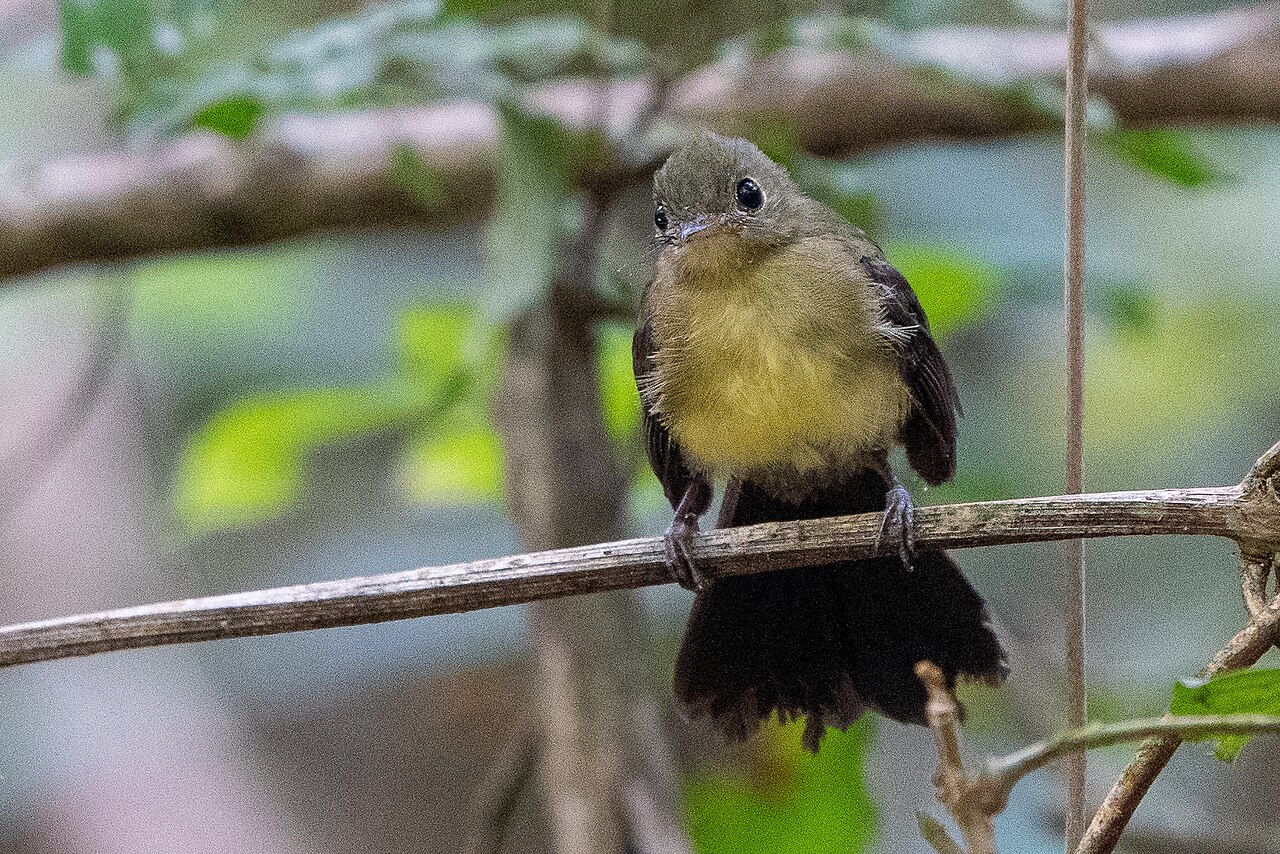
The sulphur-breasted myzomela, also known as the orange-breasted myzomela or orange-breasted honeyeater, is a species of bird in the family Meliphagidae.
Region
South Pacific (Fiji Islands)
Typical Environment
Occurs across major and some smaller Fijian islands in a variety of wooded habitats. It frequents lowland and foothill forests, forest edges, mangroves, coastal scrub, plantations, and village gardens. Often associates with flowering trees and shrubs where nectar is abundant, and will also forage in coconut groves. Tolerant of disturbed habitats provided flowering resources remain available.
Altitude Range
Sea level to 1200 m
Climate Zone
Tropical
Ease of Keeping
Beginner friendly: 1/5
Endemic to Fiji, this tiny honeyeater is an active nectar-feeder and a likely pollinator of many native flowering plants. Males show striking dark upperparts contrasting with a vivid orange to sulphur-yellow breast, while females are more subdued and olive-brown with yellowish underparts. It readily visits gardens and coconut groves as well as forest edges. Its quick, buzzy calls are a common sound around blooming trees.


male, Caqalai Island, Ovalau, Fiji Isles

male, De Voeux Peak, Taveuni, Fiji Isles
Temperament
active and somewhat territorial
Flight Pattern
short rapid wingbeats with quick, darting movements
Social Behavior
Typically seen singly, in pairs, or small loose groups at flowering trees. Defends rich nectar sources from other small birds. Nests are small cups placed in forks of shrubs or trees; pairs are likely monogamous during the breeding period.
Migratory Pattern
Resident
Song Description
High, thin tseet notes and buzzy, chattering phrases delivered rapidly while foraging. Calls often accelerate around flowering trees and can carry surprisingly far for such a small bird.
Plumage
Male with glossy dark (blackish) head and upperparts contrasting with a bright orange to sulphur-yellow breast and belly; wings and tail dark. Female olive-brown above with yellowish to buff underparts and a paler throat; overall duller and more streaked/washed than the male. Both sexes have a slender, slightly downcurved bill adapted for nectar feeding.
Diet
Feeds primarily on nectar from a variety of native and introduced flowers, including hibiscus, erythrina, and coconut inflorescences. Supplements diet with small insects and spiders gleaned from foliage and bark. Occasionally takes soft fruits or sap when available.
Preferred Environment
Forages in the canopy and midstory of forest edges, gardens, and plantations with abundant blossoms. Frequently visits flowering shrubs and trees in villages and coastal groves.