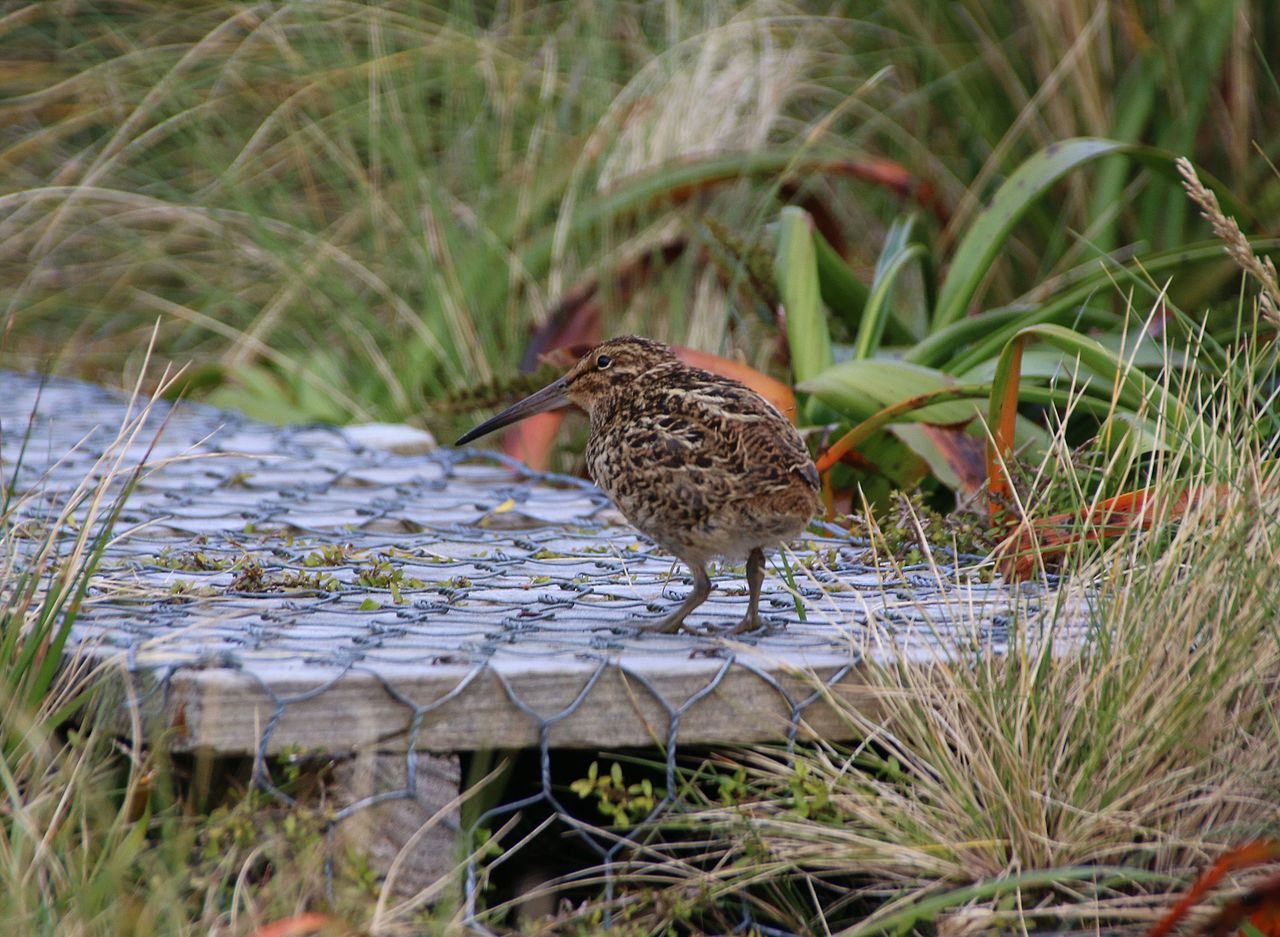
The subantarctic shearwater is a small bird species which breeds in Tristan da Cunha, islands of the southern Indian Ocean and New Zealand Subantarctic Islands.
Region
Southern Ocean and Subantarctic Islands
Typical Environment
Breeds on remote, predator-poor islands with tussock grass, low shrubland, and rocky slopes suitable for burrowing. At sea it occupies cold-temperate to subantarctic waters, often along productive fronts and shelf edges. Birds commute between offshore feeding areas and colonies, arriving after dark. Outside the breeding season, they disperse broadly across the southern oceans, remaining strictly pelagic.
Altitude Range
Sea level to 400 m
Climate Zone
Temperate
Ease of Keeping
Beginner friendly: 1/5
The Subantarctic shearwater is a small, burrow-nesting tubenose that breeds on remote islands in the southern oceans, including Tristan da Cunha, subantarctic New Zealand islands, and the southern Indian Ocean. Outside the breeding season it disperses widely over the open sea, often ranging far from land. Like other shearwaters, it returns to colonies at night to avoid predators and relies on a strong sense of smell to locate its burrow. Its taxonomy has been treated variably, sometimes as part of the Little Shearwater complex.

Temperament
social and active
Flight Pattern
low over waves with rapid wingbeats and brief glides
Social Behavior
Breeds in dense colonies, nesting in burrows or rock crevices. Pairs are monogamous and often reunite for multiple seasons, sharing incubation and chick-rearing duties. Adults arrive and depart colonies at night to reduce predation risk. Chicks are fed oily stomach contents that promote rapid growth.
Migratory Pattern
Seasonal migrant
Song Description
At colonies, gives soft, cooing trills and chattering calls, mostly at night from within burrows. Vocalizations include duet-like sequences between mates and low moans during courtship displays.
Plumage
Compact shearwater with dark slate-brown upperparts and clean white underparts, a sharp demarcation along the sides. The cap and nape are dark with a contrasting paler face and white throat; underwings mostly white with a narrow dark border.
Diet
Feeds mainly on small schooling fish, squid, and crustaceans such as krill. Captures prey by surface-seizing and shallow pursuit dives, often in association with upwellings. Frequently forages in mixed-species flocks and may follow predatory fish or marine mammals that drive prey to the surface.
Preferred Environment
Cold-temperate pelagic waters, especially near productive shelf breaks and oceanic fronts. Also forages over convergences where prey concentrates near the surface.