
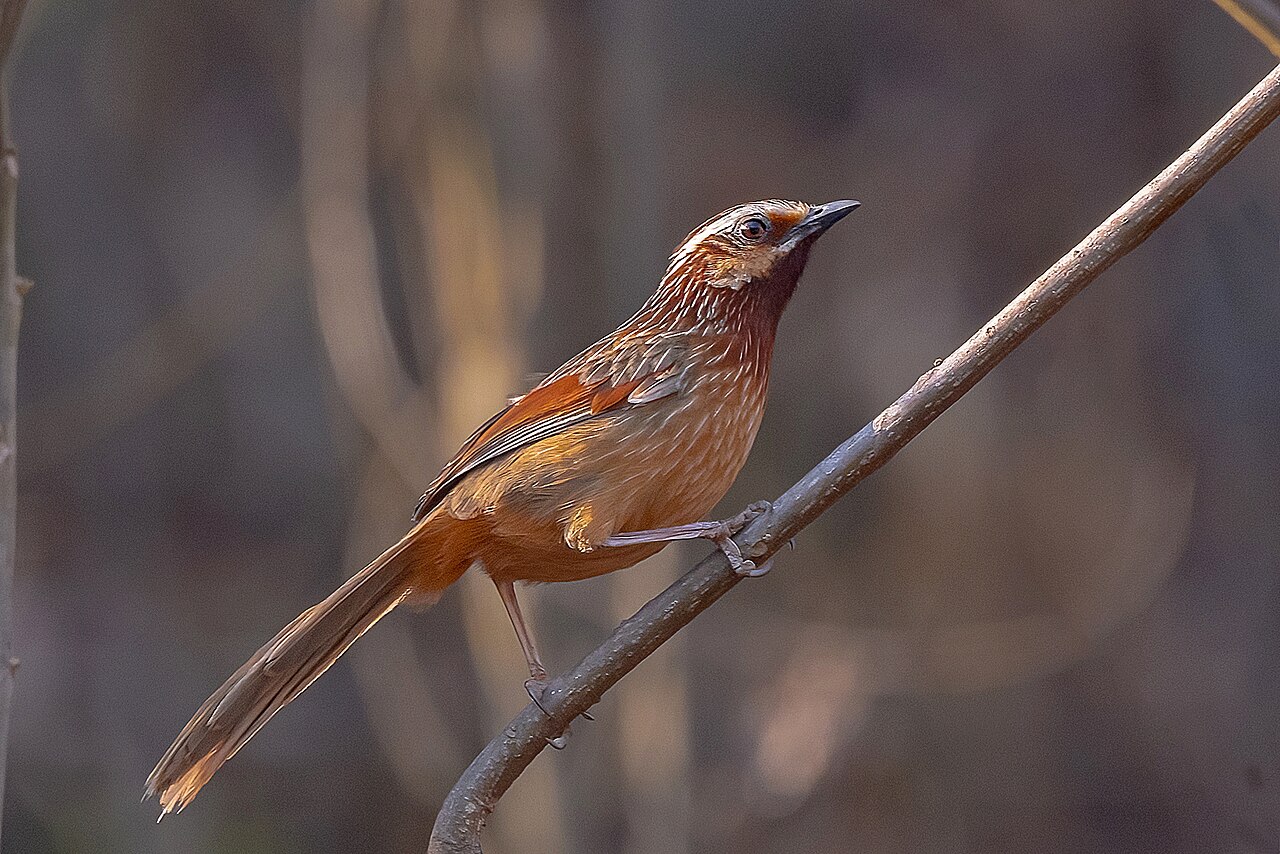
The striped laughingthrush is a species of bird in the family Leiothrichidae.
Region
Eastern Himalayas and Southwest China
Typical Environment
Found in montane evergreen broadleaf and mixed forests, dense bamboo and rhododendron thickets, and forest edge. It prefers tangled understory and secondary growth where it can forage under cover. Often keeps to mid-elevation slopes, moving along gullies and shrubby ridgelines. Occurs locally in southwestern China with populations centered in the Hengduan ranges and adjacent uplands.
Altitude Range
1200–3400 m
Climate Zone
Highland
Ease of Keeping
Beginner friendly: 2/5
The striped laughingthrush is a shy but vocal member of the family Leiothrichidae, often heard before it is seen as it moves through dense montane thickets. Its name refers to the bold streaking across the head and body, which helps it blend into shadowy understory. Pairs or small family groups keep close contact with a repertoire of chuckles and whistles. It is generally a highland resident with only short local movements.


Gould's painting
Temperament
skulking yet noisy
Flight Pattern
short rapid wingbeats between cover
Social Behavior
Usually seen in pairs or small family parties, occasionally joining loose mixed flocks in the nonbreeding season. Nests are cup-shaped and placed low in shrubs or dense thickets. Breeding pairs are territorial and communicate frequently with contact calls while foraging.
Migratory Pattern
Resident
Song Description
A varied series of chuckles, scolds, and fluty whistles delivered in short bursts, often as antiphonal duets. Alarm calls are harsh churring notes; contact calls are softer chups from within cover.
Plumage
Warm brown to rufous-brown with bold whitish to buff streaking on the crown, face, mantle, and underparts; wings and tail slightly richer rufous-brown. Feathers appear finely barred and streaked, giving a striped effect across the body. Underparts are paler with continued streaking; tail often shows subtle darker subterminal shading.
Diet
Takes insects and other small invertebrates gleaned from foliage, bark, and leaf litter. Supplements animal prey with berries, small fruits, and seeds, especially outside the breeding season. Will occasionally probe mossy trunks and turn over leaves on the ground.
Preferred Environment
Feeds in dense understory, bamboo clumps, and along forest edges where cover is abundant. Frequently forages near thickets, fallen logs, and along trails or streamside tangles.


