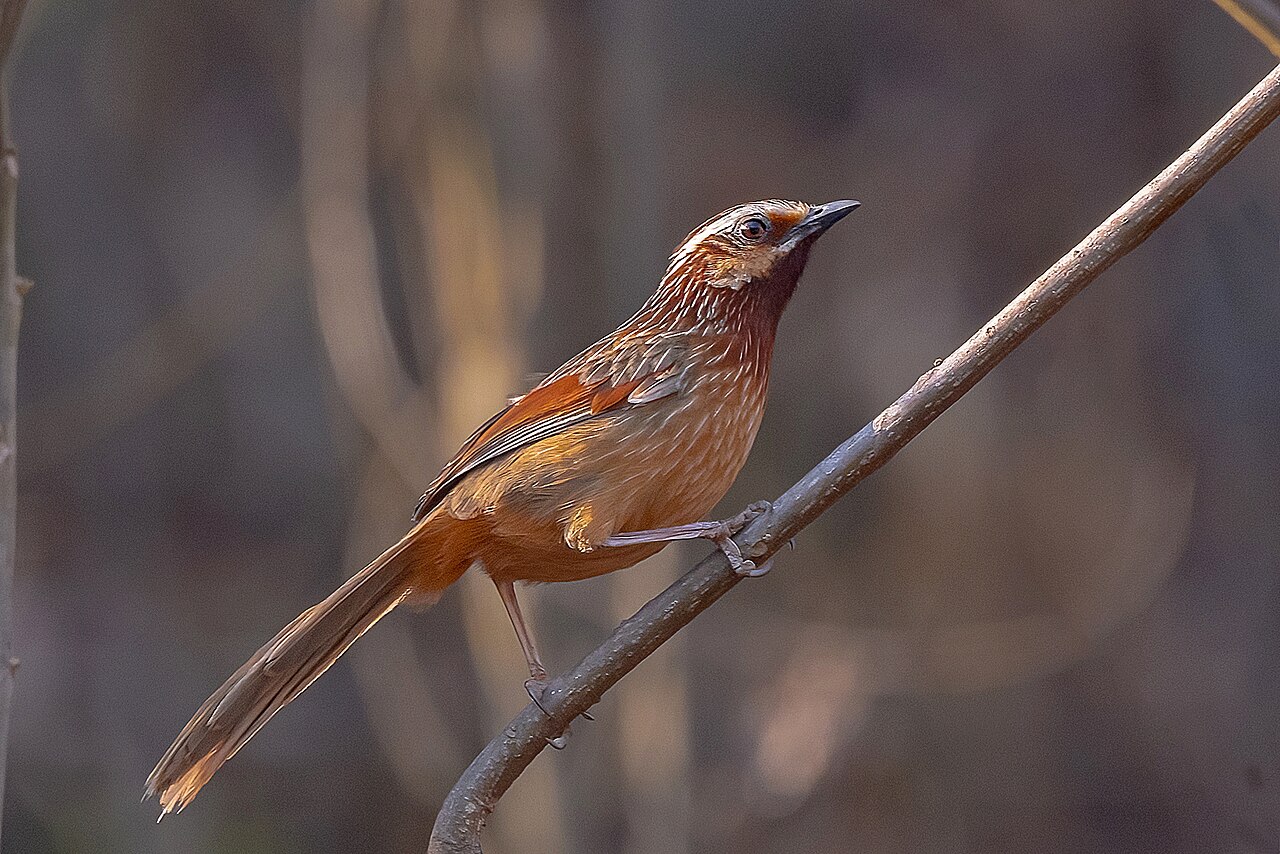
The striped kingfisher is a species of bird in the tree kingfisher subfamily. It was first described by Edward, Lord Stanley, in Salt's Voyage to Abyssinia in 1814 as "Chelicut kingfisher" Alaudo Chelicuti.
Region
Sub-Saharan Africa
Typical Environment
Occurs widely from Senegal and the Sahel through East Africa to southern Africa, avoiding dense rainforest and hyper-arid deserts. Prefers open to lightly wooded habitats such as acacia and miombo woodland, thornscrub, dry riverine edges, and agro-mosaic landscapes. Often found along field margins, termitaria-studded savannas, and village groves. Frequently perches on exposed twigs, fences, or wires overlooking open ground.
Altitude Range
0–2400 m
Climate Zone
Tropical
Ease of Keeping
Beginner friendly: 1/5
A small tree kingfisher of open savannas and dry woodland, the striped kingfisher often perches quietly before sallying to the ground for prey. It was first described from northern Ethiopia; the species name chelicuti refers to Chelekot (historically 'Chelicut'). Pairs frequently duet with a distinctive trilling whistle and often nest in arboreal termite mounds or tree cavities.


Juvenile H. c. chelicuti, Uganda

Holotype of Alaudo chelicuti Stanley (NML-VZ D2304b) held at World Museum, National Museums Liverpool

Striped Kingfisher (juv.) in The Gambia
Temperament
solitary and territorial
Flight Pattern
short rapid wingbeats
Social Behavior
Usually seen singly or in pairs that maintain territories year-round. Nests are typically excavated in arboreal termite mounds or soft dead wood; both sexes participate in excavation and incubation. Breeding timing varies with regional rains, and pairs perform duets and display flights at territory boundaries.
Migratory Pattern
Resident
Song Description
A clear, ringing series of whistled notes that accelerates into a trilling, descending chatter; pairs often duet antiphonally. Calls carry well over open savanna and are most frequent at dawn and late afternoon.
Plumage
Neatly patterned with grey-brown upperparts and pale underparts showing fine dark streaking on the sides of the breast. The head has a bold black eye-stripe and clean whitish supercilium; throat and belly are whitish. A blue panel in the wing and bluish tail are conspicuous in flight.
Diet
Primarily takes large insects such as grasshoppers, beetles, and crickets, also consuming spiders and occasionally small lizards or other small vertebrates. Hunts from a low to mid-level perch, dropping to the ground or making short sallies to seize prey. Prey is typically beaten against the perch before swallowing.
Preferred Environment
Edges of open woodland, thornveld, and lightly wooded savanna with scattered perches. Also uses agricultural fields, pastures, and village trees where open ground is available for foraging.