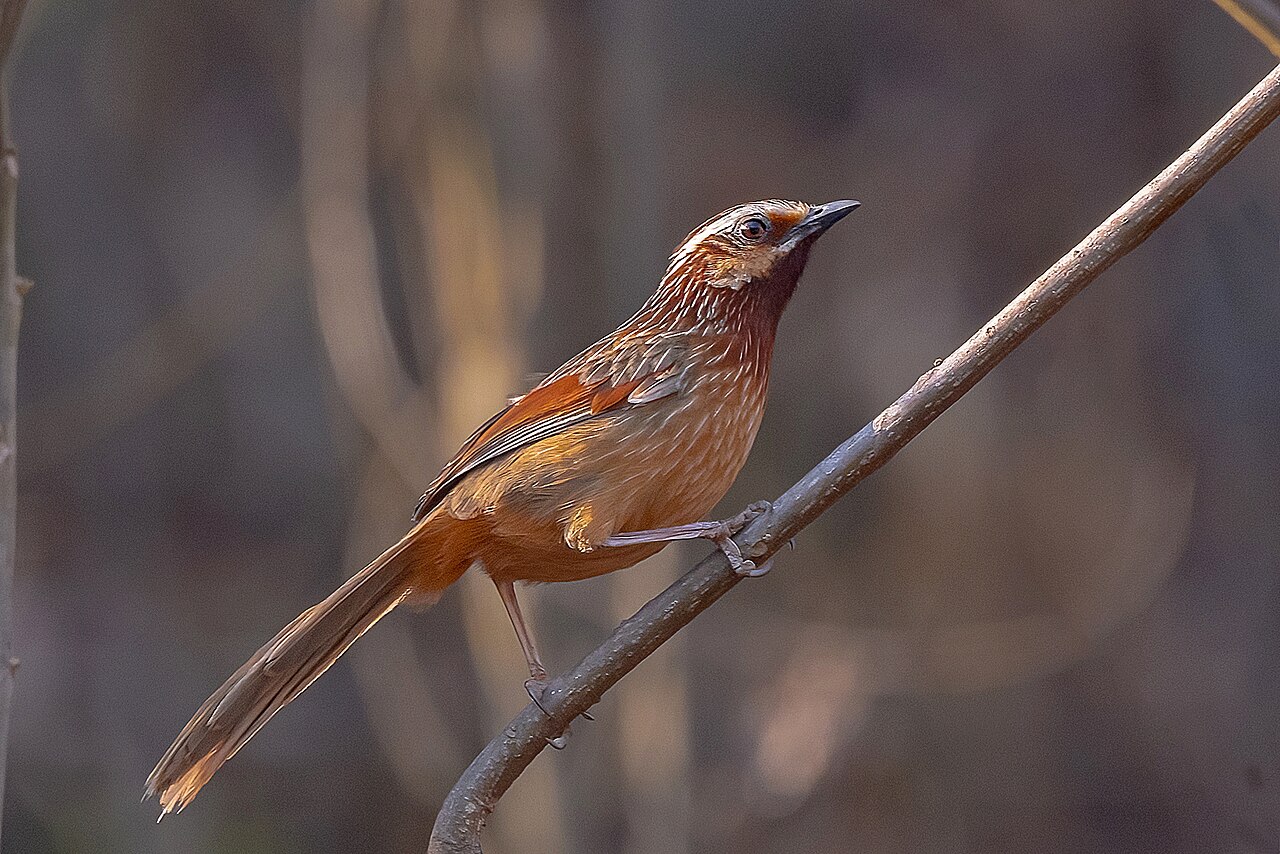
The striped cuckoo is a near-passerine bird, the only member of the genus Tapera. This resident cuckoo is found from Mexico and Trinidad south to Bolivia and Argentina and Colombia.
Region
Neotropics
Typical Environment
Occurs from southern Mexico and Trinidad south through much of Central America and northern–central South America to Bolivia and northern Argentina, including Colombia and the Amazon basin. It favors open and semi-open habitats such as savannas with scattered bushes, pastures with hedgerows, scrubby second growth, and forest edges. Often associated with areas of low to moderate canopy and patchy understory near water or clearings. It adapts well to human-altered landscapes provided there is shrub cover for perching and foraging.
Altitude Range
Sea level to 2000 m
Climate Zone
Tropical
Ease of Keeping
Beginner friendly: 1/5
The striped cuckoo is the sole member of its genus, Tapera, and is well known for its loud, whistled song and erectile crest. Like many cuckoos, it is a brood parasite, laying its eggs in the nests of other small birds. It frequents scrub, forest edges, and second growth, where it often perches conspicuously while calling. Its voice carries far and is often heard after rains or at dawn.


Temperament
solitary and territorial
Flight Pattern
short rapid wingbeats between perches
Social Behavior
Typically solitary or in pairs, perching conspicuously on shrubs or low trees to sing and scan for prey. It is a brood parasite, depositing its eggs in nests of small passerines such as wrens and ovenbirds, leaving host species to raise the young. Courtship involves vocal displays and crest-raising, and territories are advertised with persistent whistled calls.
Migratory Pattern
Resident
Song Description
A clear, far-carrying series of mellow whistles that rise and fall, often rendered as spaced pee-pee-piu notes. Calls are frequently given at dawn and after rain, with a ventriloquial quality that can make the source hard to locate.
Plumage
Heavily streaked brown and buff upperparts with dark striping, and buffy underparts marked with fine dark streaks. Long, graduated tail often showing pale or whitish tips and spots. Prominent buffy supercilium and an erectile, dark-streaked crest.
Diet
Feeds primarily on large insects such as grasshoppers, cicadas, beetles, and caterpillars, gleaned from foliage or taken from the ground. It may occasionally take small lizards or other invertebrates when available. Foraging is methodical, with short sallies from low perches and brief hops through low vegetation.
Preferred Environment
Edges of scrub, hedgerows, and second-growth thickets where prey is abundant and cover is patchy. Often hunts from exposed perches along clearings, fence lines, and roadsides, dropping to the ground or into shrubs to seize prey.