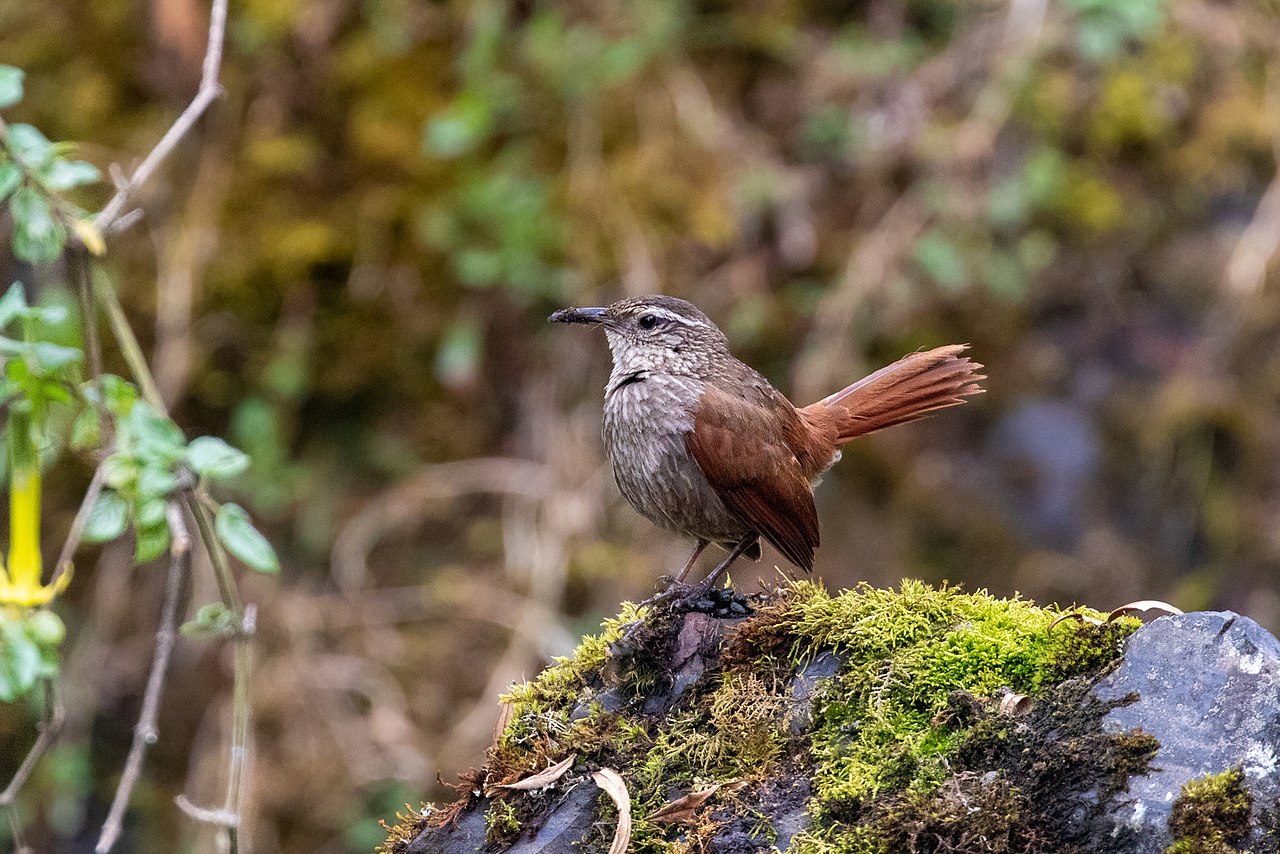
The striated antbird is a species of bird in subfamily Thamnophilinae of family Thamnophilidae, the "typical antbirds". It is found in Bolivia, Brazil, Colombia, Ecuador, and Peru.
Region
Western Amazon Basin and Andean foothills
Typical Environment
Occurs from the foothills and adjacent lowlands of southeastern Colombia and eastern Ecuador through eastern Peru and northern Bolivia, extending into far western Brazil (e.g., Acre and adjacent Amazonas/Rondônia). Strongly associated with dense bamboo (especially Guadua) in humid forest, edges, and along rivers. Usually keeps to the understory and midstory of bamboo thickets, moving methodically through tangles. Local distribution can be patchy, tracking the availability and growth cycles of bamboo.
Altitude Range
200–1200 m
Climate Zone
Tropical
Ease of Keeping
Beginner friendly: 1/5
The Striated Antbird is a bamboo specialist that frequents dense Guadua thickets in the western Amazon. Males and females look quite different, with males boldly streaked and females warmer, rufous-toned. It forages low, gleaning insects from stems and leaves, and only rarely follows army-ant swarms. Because it is closely tied to bamboo, its presence often signals extensive bamboo stands in the area.


Temperament
secretive and territorial
Flight Pattern
short rapid wingbeats, low and direct through bamboo
Social Behavior
Typically found in pairs or small family groups that maintain territories year-round within bamboo patches. Nests are placed low in dense vegetation, often within bamboo tangles; both sexes participate in nesting duties. It occasionally joins mixed-species flocks at forest edges but generally keeps to bamboo thickets.
Migratory Pattern
Resident
Song Description
Song is a clear, whistled series that may accelerate or slightly descend, carrying well through dense bamboo. Calls include sharp chips and scolds used for contact between pair members and alarm.
Plumage
Male is dark with crisp whitish streaks on the crown, mantle, and underparts; female is warmer rufous-brown with dusky streaking, especially below. Both sexes show a relatively long, graduated tail suited to maneuvering in bamboo.
Diet
Feeds primarily on arthropods, including insects and spiders, gleaned from bamboo culms, leaves, and dead leaf clusters. It probes crevices and peels back leaf sheaths to extract hidden prey. Seldom pursues flying insects and only occasionally attends army ant swarms.
Preferred Environment
Forages within dense Guadua bamboo stands, usually 0.5–3 m above ground. Also uses bamboo along forest edges, riverbanks, and canopy gaps where light promotes thick bamboo growth.