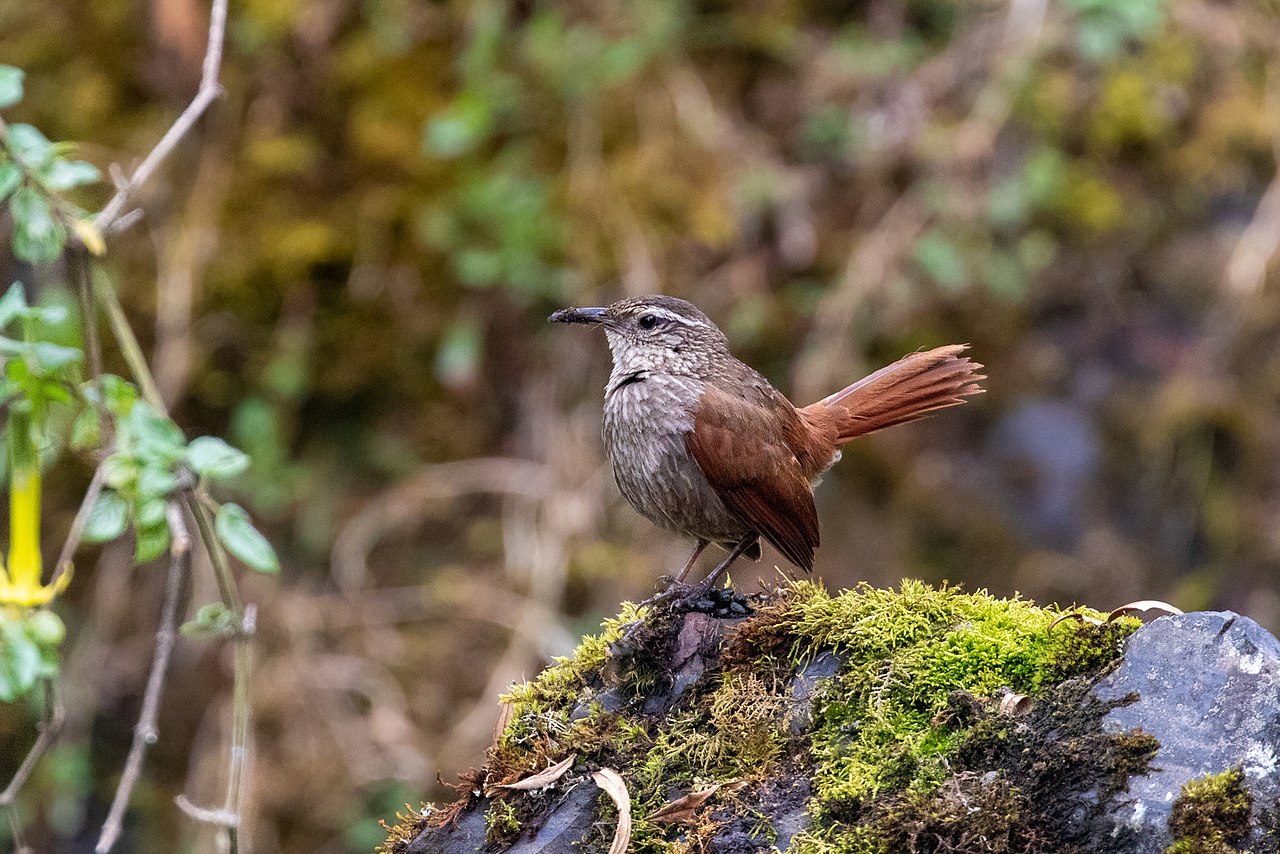
The striated babbler is a species of bird in the family Leiothrichidae. It is found in southern Asia from Pakistan to Myanmar.
Region
South Asia (extending to western Myanmar)
Typical Environment
Occurs from Pakistan across the Gangetic–Brahmaputra plains of northern India and Nepal to Bangladesh and into western Myanmar. Prefers extensive reedbeds, tall riverine grasslands, and scrub along marshes, oxbow lakes, and slow-flowing rivers. Often uses sugarcane fields, fallows, and other tall-crop edges near wetlands. Avoids closed forest and very open, treeless farmland. It is typically patchy but can be locally common where suitable cover is continuous.
Altitude Range
0–1200 m
Climate Zone
Subtropical
Ease of Keeping
Beginner friendly: 2/5
The striated babbler is a skulking reedbed and tall-grass specialist that moves in noisy groups. Family members often cooperate to raise young, with helpers defending territories and feeding chicks. It gives loud, chattering scolds that carry through marshes, making groups easier to detect than to see. Drainage of wetlands and conversion of floodplain grasslands can impact local populations.


Temperament
social and active, often skulking in dense cover
Flight Pattern
short rapid wingbeats, low bounding flights between cover
Social Behavior
Lives in small, noisy parties that maintain territories year-round. Pairs are typically monogamous and may receive help from other group members when breeding. Nests are placed low in reeds or dense shrubs, usually well-concealed above water or damp ground.
Migratory Pattern
Resident
Song Description
A loud, chattering medley of scolds, rattles, and bubbling notes delivered antiphonally by group members. Contact calls are harsh and repeated, aiding cohesion in tall vegetation.
Plumage
Warm brown to rufous-brown upperparts with heavy dark streaking extending onto the mantle and underparts; feathers can look shaggy in fresh plumage. Underparts buffy with bold, dark streaks; long, graduated tail often held cocked. Throat paler, sometimes lightly streaked; a faint pale supercilium may be visible at close range.
Diet
Takes a wide range of invertebrates including beetles, grasshoppers, caterpillars, and spiders. Also consumes seeds, small berries, and occasionally grains from adjacent croplands. Forages by gleaning from reed stems, grass tussocks, and the ground, often probing leaf litter and detritus.
Preferred Environment
Feeds within dense reedbeds, tall riverine grasses, and scrubby wetland margins. Frequently works along edges of paths, ditches, and field margins where cover meets open ground.