
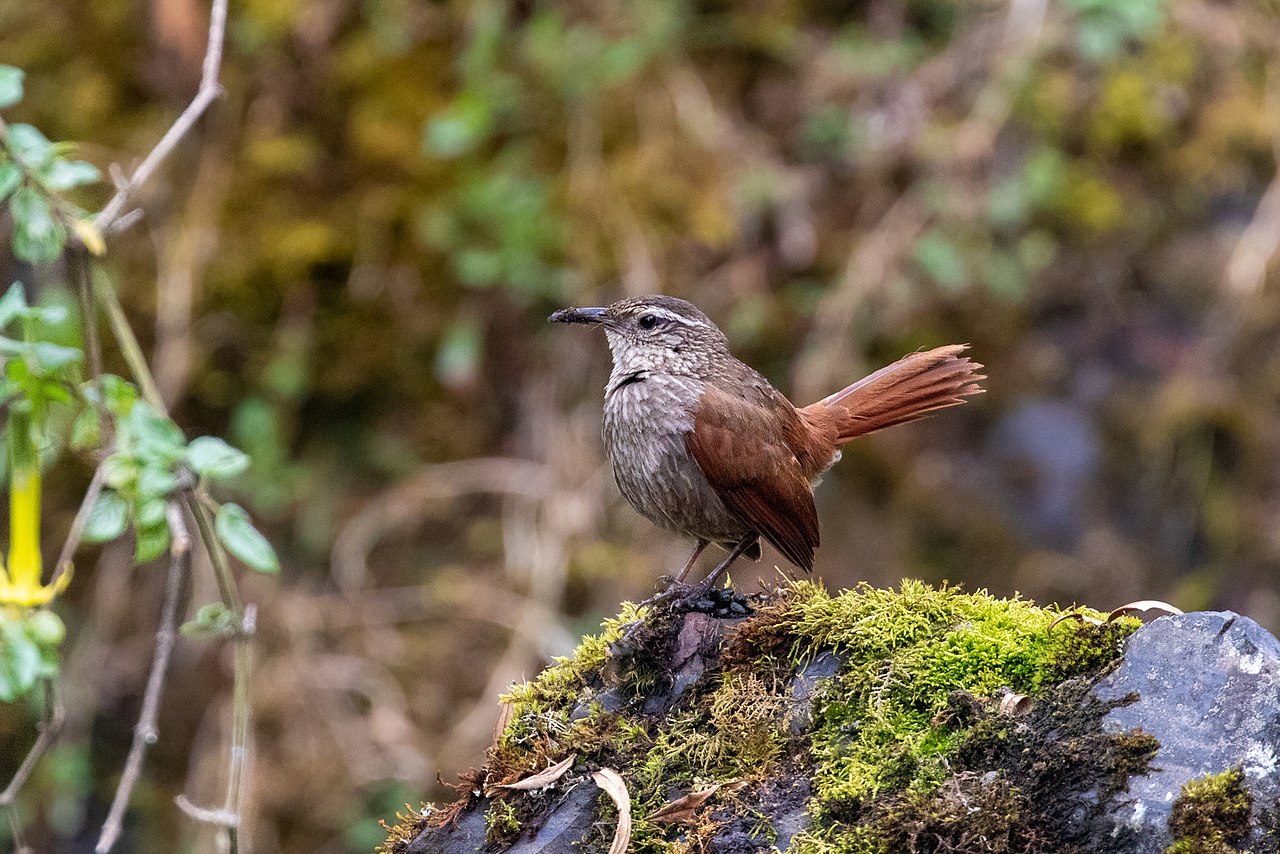
The striated earthcreeper is a species of bird in the Furnariinae subfamily of the ovenbird family Furnariidae. It is endemic to Peru.
Region
Andes Mountains
Typical Environment
Endemic to the dry, mid- to high-elevation slopes of the Peruvian Andes, where it occupies rocky scrub, arid montane shrublands, and edges of Polylepis woodlands. It favors steep, sparsely vegetated hillsides, canyon walls, and gullies with scattered bushes and boulders. The species often works along earthen cutbanks and rock crevices, rarely venturing into dense forest. It is a local but fairly regular resident wherever suitable arid montane habitat persists.
Altitude Range
2500–4500 m
Climate Zone
Highland
Ease of Keeping
Beginner friendly: 1/5
This unobtrusive ovenbird creeps along rocky slopes and earthen banks, probing for insects with its slightly decurved bill. It is typically seen singly or in pairs and is more often heard than seen, thanks to a clear whistled song that carries across Andean valleys. Its fine streaking and bold pale supercilium help separate it from other earthcreepers. It is closely tied to dry, high-elevation habitats in Peru.


Temperament
solitary and territorial
Flight Pattern
short rapid wingbeats with low, direct flights between rocks and shrubs
Social Behavior
Usually encountered alone or in pairs, maintaining territories year-round. Nests are typically placed in cavities or earthen banks, with both members of the pair involved in nesting duties. It forages methodically along slopes, often pausing to probe crevices and leaf litter.
Migratory Pattern
Resident
Song Description
A clear series of high, whistled notes that may speed up into a brief trill; calls include sharp chips and thin seep notes. Song is most frequent at dawn and carries well across open, rocky terrain.
Plumage
Brown upperparts with fine pale streaking transitioning to strongly streaked buffy underparts; slightly rufescent tail and wings. A clean, pale supercilium contrasts with a darker eyestripe and crown. Feathers appear tight and smooth, with subtle rufous tones in the remiges and tail.
Diet
Primarily consumes arthropods such as beetles, ants, spiders, and insect larvae. It probes into soil, leaf litter, and rock crevices, and gleans from low shrubs. Occasional small invertebrates are taken from earthen banks and along stream margins in arid valleys.
Preferred Environment
Feeds on the ground and low vegetation in rocky scrub, eroded banks, and open Polylepis edges. Often forages along slopes with scattered boulders and sparse bush cover.


