
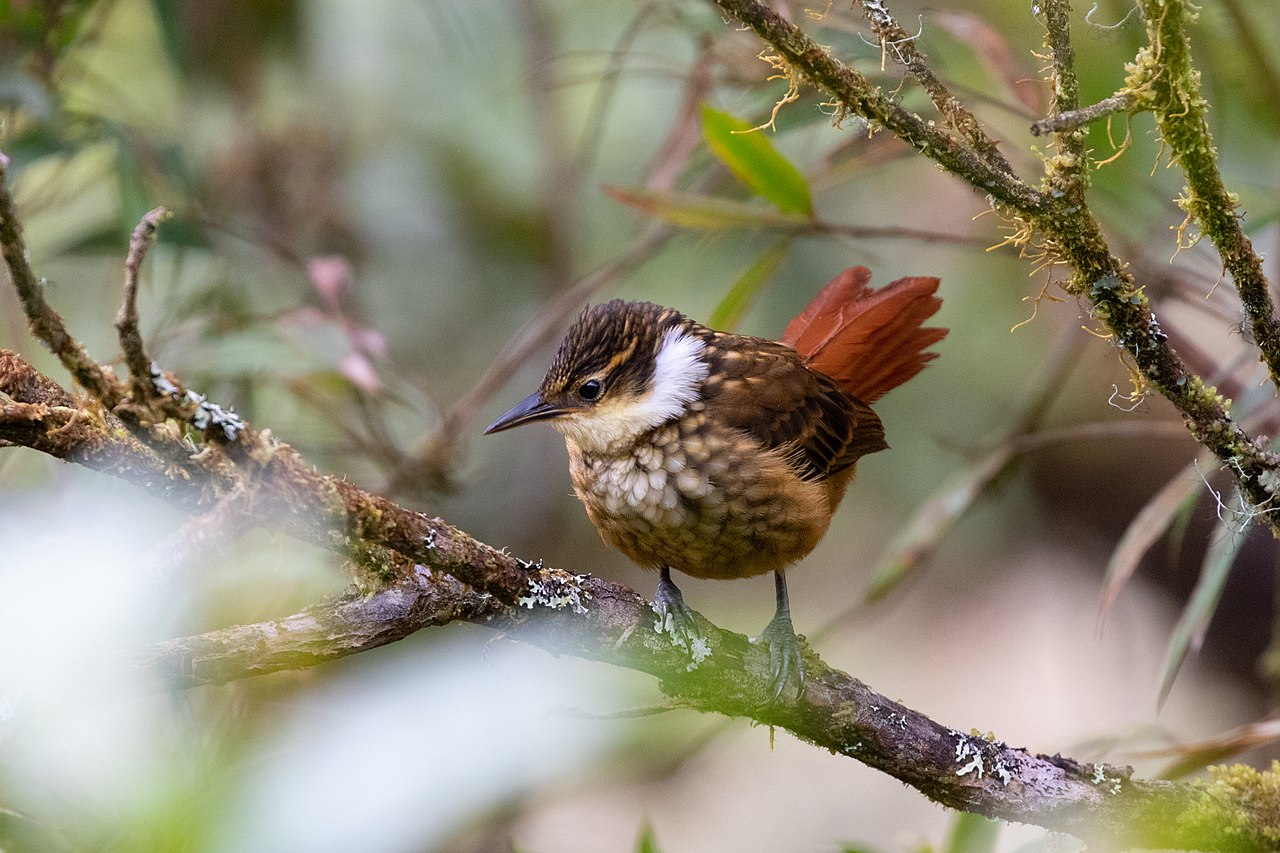
The streaked tuftedcheek is a passerine bird in the Furnariinae subfamily of the ovenbird family Furnariidae. It is found in Bolivia, Colombia, Ecuador, Peru, and Venezuela.
Region
Andes Mountains
Typical Environment
Occurs in humid montane and cloud forests from Venezuela through Colombia and Ecuador to Peru and Bolivia. Favors mature, mossy forest with abundant epiphytes, but also uses forest edges and elfin forest. Typically forages from the mid-story to the canopy, probing bromeliads, moss mats, and dead-leaf clusters. Often accompanies mixed-species flocks as it moves along trunks and limbs.
Altitude Range
1200–3500 m
Climate Zone
Highland
Ease of Keeping
Beginner friendly: 1/5
The streaked tuftedcheek is an Andean ovenbird famed for the fluffy, pale feather tufts on its cheeks. It forages methodically in moss and epiphyte-laden branches, often joining mixed-species flocks in cloud forests. Its specialized probing of bromeliads and dead leaf clusters helps control arboreal insects in montane forests.


Temperament
active and methodical
Flight Pattern
short rapid wingbeats between perches
Social Behavior
Usually found singly or in pairs, frequently joining mixed-species foraging flocks. Forages by creeping along trunks and larger branches, probing epiphytes and bark crevices. Breeding pairs maintain territories and nest in concealed, protected tree sites.
Migratory Pattern
Resident
Song Description
Vocalizations include a sharp, rattling series of notes and harsh, buzzy calls. Songs are short, somewhat metallic trills delivered from mid-canopy perches.
Plumage
Warm brown upperparts with rufous tones on wings and tail; underparts are heavily streaked buff on a brown ground. Cheeks show fluffy pale feather tufts giving a “tufted” look, and the crown is darker with fine streaking.
Diet
Primarily consumes arthropods such as beetles, caterpillars, spiders, and other insects taken from epiphytes and dead-leaf clusters. It probes bromeliads, moss mats, and bark for hidden prey. Occasionally snatches small invertebrates flushed by mixed flocks.
Preferred Environment
Feeds in the mid to upper levels of humid montane forest where epiphytes are abundant. Often works along mossy trunks, large limbs, and dense tangles near forest edges and in elfin forest.


