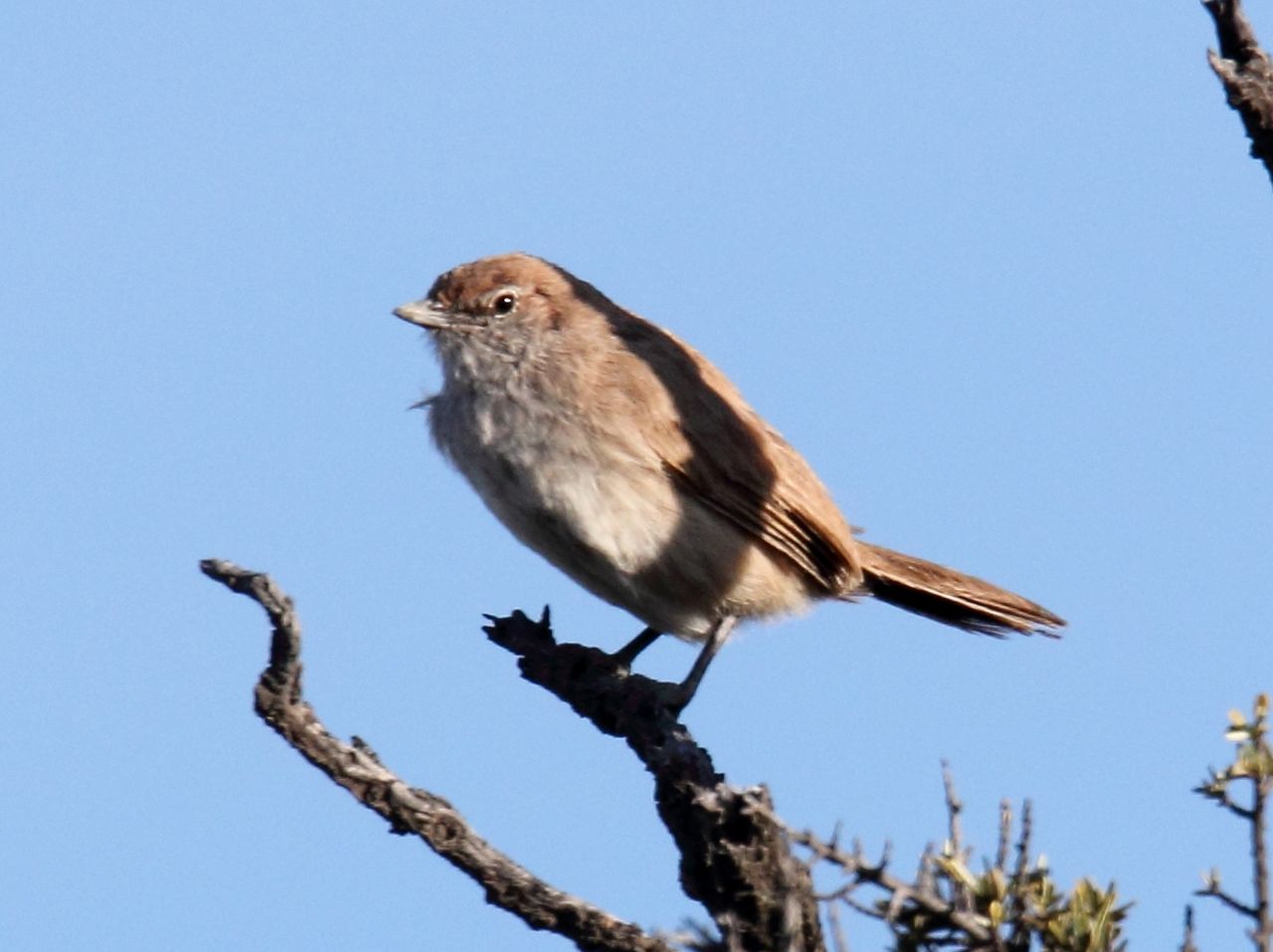
The sandhill grasswren is an insectivorous bird in the Australasian wren family Maluridae. It is found in sandplain deserts and mallee of central Western Australia to central Queensland as well as northwest and southern South Australia. It was formerly considered to be conspecific with the Pilbara grasswren.
Region
Australian arid interior
Typical Environment
Occurs patchily across arid sandplain and dune systems from central Western Australia through the Great Victoria Desert and adjacent mallee-heath into northwestern and southern South Australia, including the Gawler Ranges and Yellabinna. It favors habitats dominated by spinifex (Triodia) with scattered shrubs and low mallee. Birds keep close to dense hummock grass for cover, using low shrubs and logs as vantage points. Range is fragmented by unsuitable intervening habitats and shaped by fire history.
Altitude Range
50–700 m
Climate Zone
Arid
Ease of Keeping
Beginner friendly: 1/5
Sandhill grasswrens are highly specialized birds of Australia’s arid spinifex (Triodia) dunes and sandplains, where they spend most of their time on or near the ground. They were formerly treated as part of the Striated Grasswren complex but are now recognized as distinct, with the Pilbara Grasswren split off as a separate species. Their cryptic streaked plumage and skulking habits make them challenging to observe, but they advertise territories with sharp calls from atop spinifex hummocks.
Temperament
skulking and wary
Flight Pattern
short rapid wingbeats in low, direct dashes between cover
Social Behavior
Typically found in pairs or small family groups, maintaining year-round territories within suitable spinifex. Nests are well-concealed, dome-shaped structures placed low within dense hummocks. Courtship involves soft duets and display postures atop spinifex clumps.
Migratory Pattern
Resident
Song Description
Song is a series of thin, tinkling trills and high-pitched phrases delivered from low perches. Calls include sharp ticking notes and soft contact chips used to keep in touch while foraging.
Plumage
Densely streaked upperparts with rufous-brown tones and pale buff to whitish shaft-streaks; underparts paler with fine streaking on the breast and flanks. Long, graduated tail with warm rufous tones and darker subterminal markings. Fine, slightly decurved bill and compact, rounded wings.
Diet
Primarily consumes insects and other small arthropods, including beetles, ants, spiders, and larvae. Forages by gleaning from the bases of spinifex tussocks, probing leaf litter, and picking prey from low shrubs. May occasionally take small seeds, especially in dry periods when invertebrates are less available.
Preferred Environment
Feeds within dense spinifex hummocks, along the edges of dunes, and among scattered mallee-heath shrubs. Often stays under cover, briefly hopping into open patches before retreating to vegetation.