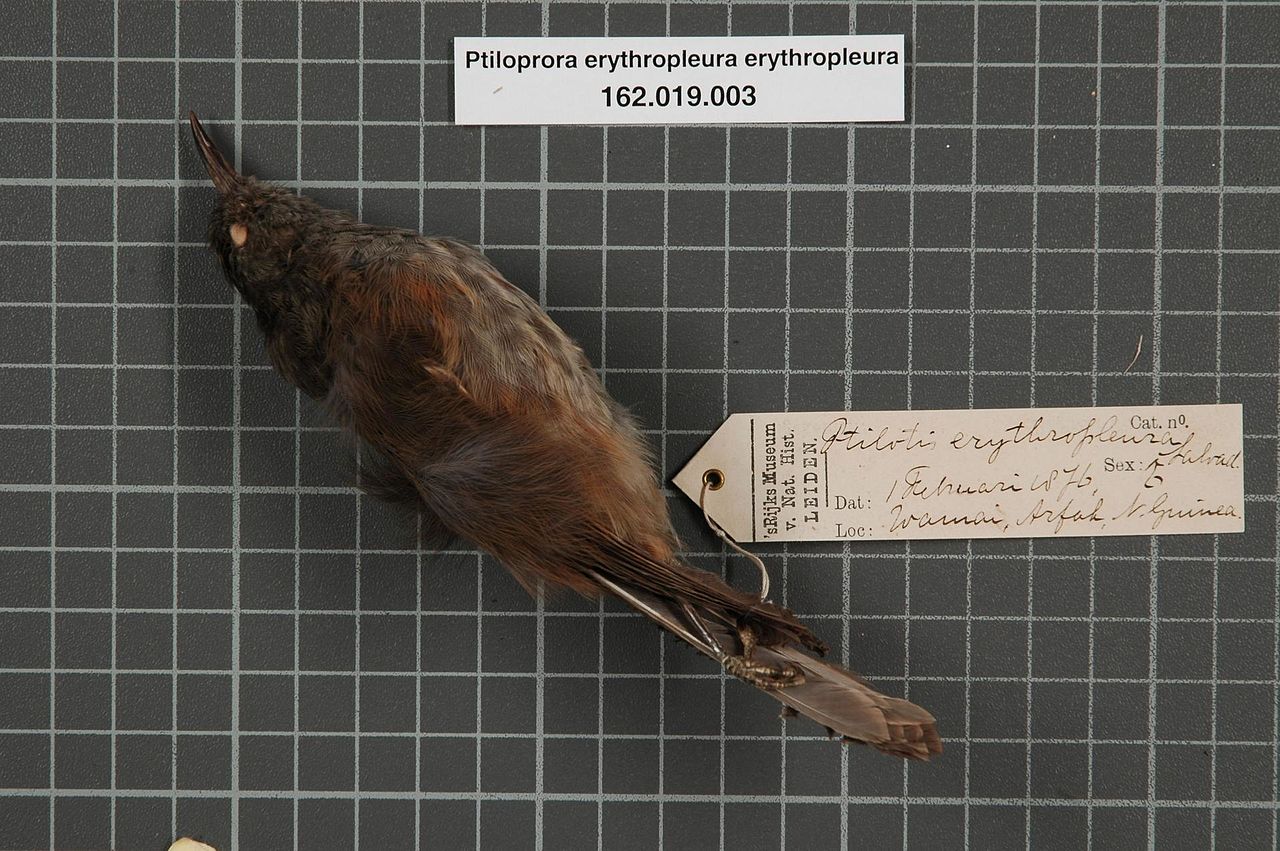
The rufous-sided broadbill is a species of bird in the family Calyptomenidae.
Region
Lower Guinea and Congo Basin (West-Central Africa)
Typical Environment
Found in evergreen and semi-evergreen lowland rainforests from southeastern Nigeria and Cameroon through Equatorial Guinea (including Bioko), Gabon, the Republic of the Congo, and into the Democratic Republic of the Congo; also locally in the Central African Republic and Cabinda (Angola). It favors primary forest but also uses well-developed secondary forest with a shaded understory. Most records are from dense interior forest and along quiet forest streams. It may occur near forest edges where canopy cover remains substantial.
Altitude Range
Sea level to 1500 m
Climate Zone
Tropical
Ease of Keeping
Beginner friendly: 1/5
A compact forest bird of the African broadbill family Calyptomenidae, the rufous-sided broadbill is named for its warm chestnut flanks. Males perform short display flights accompanied by sharp wing snaps that create a distinctive mechanical sound in the dim forest understory. It is typically quiet and easily overlooked, often perching motionless before sallying out to catch insects.

Temperament
shy and inconspicuous
Flight Pattern
short rapid wingbeats with brief sallies
Social Behavior
Usually solitary or in pairs within the forest understory. Pairs maintain small territories and nest low to mid-level in dense vegetation, often overhanging paths or streams. Courtship includes display flights and mechanical wing snaps by the male.
Migratory Pattern
Resident
Song Description
Song is a soft series of whistles and short phrases delivered from a concealed perch. Mechanical wing snaps and whirrs during display are often the most noticeable sounds in its territory.
Plumage
Compact, large-headed bird with a very broad, flat bill; upperparts olive-brown to dark brown, underparts buffy with prominent rufous flanks and sides; short tail and rounded wings.
Diet
Primarily insectivorous, taking beetles, flies, bugs, and other small arthropods. Hunts by sallying from shaded perches and by gleaning from leaves and twigs in the understory. Occasionally takes spiders and may rarely sample small fruits when available.
Preferred Environment
Feeds in dense understory and lower midstory of mature rainforest, especially along quiet trails and stream margins. Often forages from low perches with short, direct sallies to capture prey.