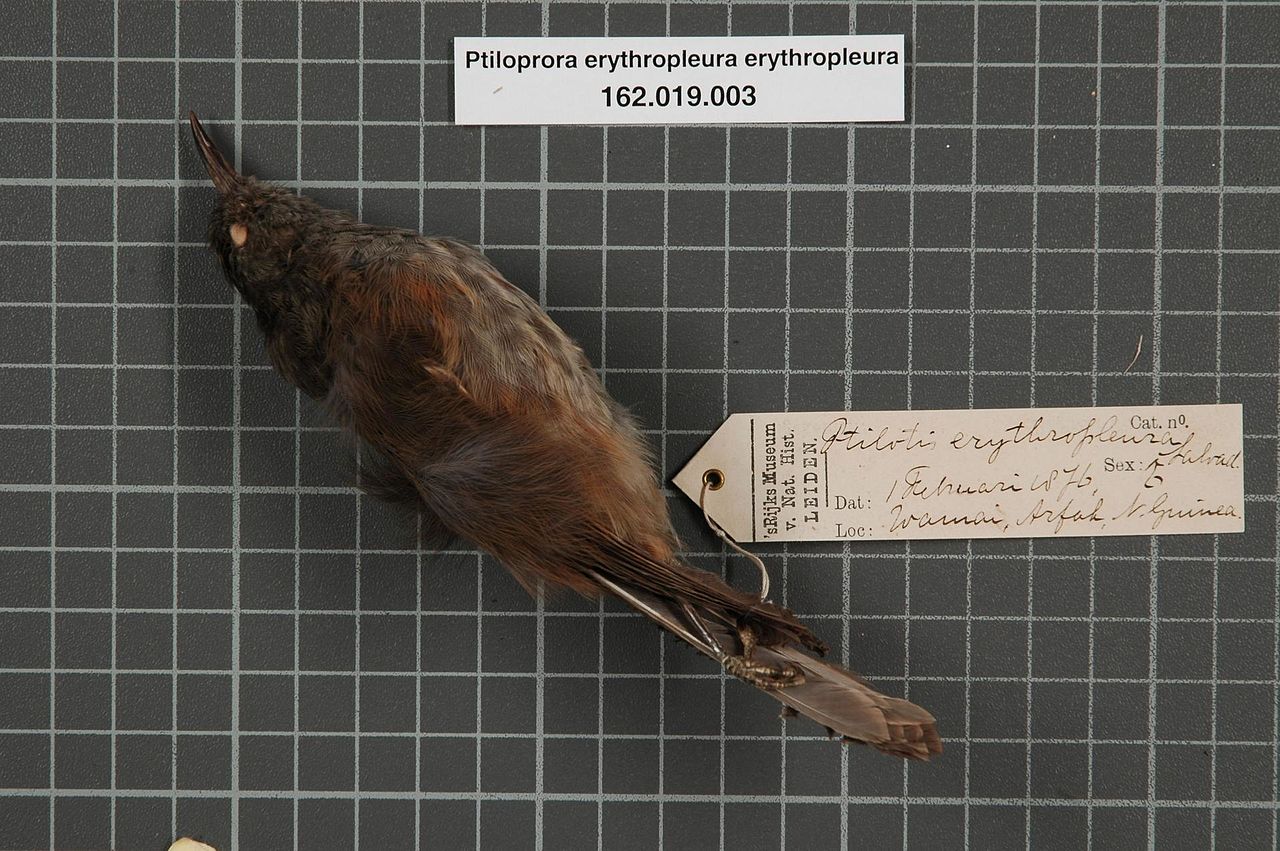
The rufous-sided gerygone is a species of bird in the family Acanthizidae. It is found in the eastern Lesser Sunda Islands and Kai Islands.
Region
Wallacea
Typical Environment
Occurs on the eastern Lesser Sunda Islands and the Kai Islands, favoring lowland and foothill habitats. It frequents open forests, secondary growth, coastal scrub, and mangroves, as well as edges of monsoon woodland. The species is adaptable and often uses plantations, village gardens, and thickets near water. It forages from the understory to mid-canopy, especially along forest edges and clearings.
Altitude Range
Sea level to 1200 m
Climate Zone
Tropical
Ease of Keeping
Beginner friendly: 2/5
A small member of the Australasian warbler family Acanthizidae, the rufous-sided gerygone is named for the warm rufous wash along its flanks. It weaves a neat, domed, pendant nest suspended from slender branches or palm fronds. The species is often encountered in pairs or small family groups and readily joins mixed-species foraging flocks. Its high, tinkling song carries well through open woodland and coastal scrub.


Temperament
active and inquisitive
Flight Pattern
short rapid wingbeats with brief, fluttering dashes between perches
Social Behavior
Usually seen in pairs or small family parties and often joins mixed-species flocks with other small insectivores. Both sexes construct a domed, pendant nest suspended from fine branches or palm fronds. Nests are well concealed and placed in lightly wooded or edge habitats.
Migratory Pattern
Resident
Song Description
A high, tinkling series of thin trills and repeated phrases, delivered steadily from low to mid-level perches. Calls are soft chips and twitters used to keep contact while foraging.
Plumage
Olive-brown upperparts with paler, creamy underparts highlighted by warm rufous flanks; throat whitish and subtly contrasting with the breast. The plumage is smooth and fairly plain, with delicate, fine-textured feathers suited to foliage gleaning.
Diet
Feeds primarily on small insects and other arthropods, including caterpillars, beetles, and spiders. It gleans prey from leaves and twigs, often hovering briefly to pick items from the outer foliage. Occasionally sallies short distances to snatch flying insects. Foraging is focused on fine branch tips and leaf clusters.
Preferred Environment
Most often forages along forest edges, secondary growth, coastal scrub, and mangroves. Also uses gardens and plantations where native thickets remain, working the understory to mid-canopy.