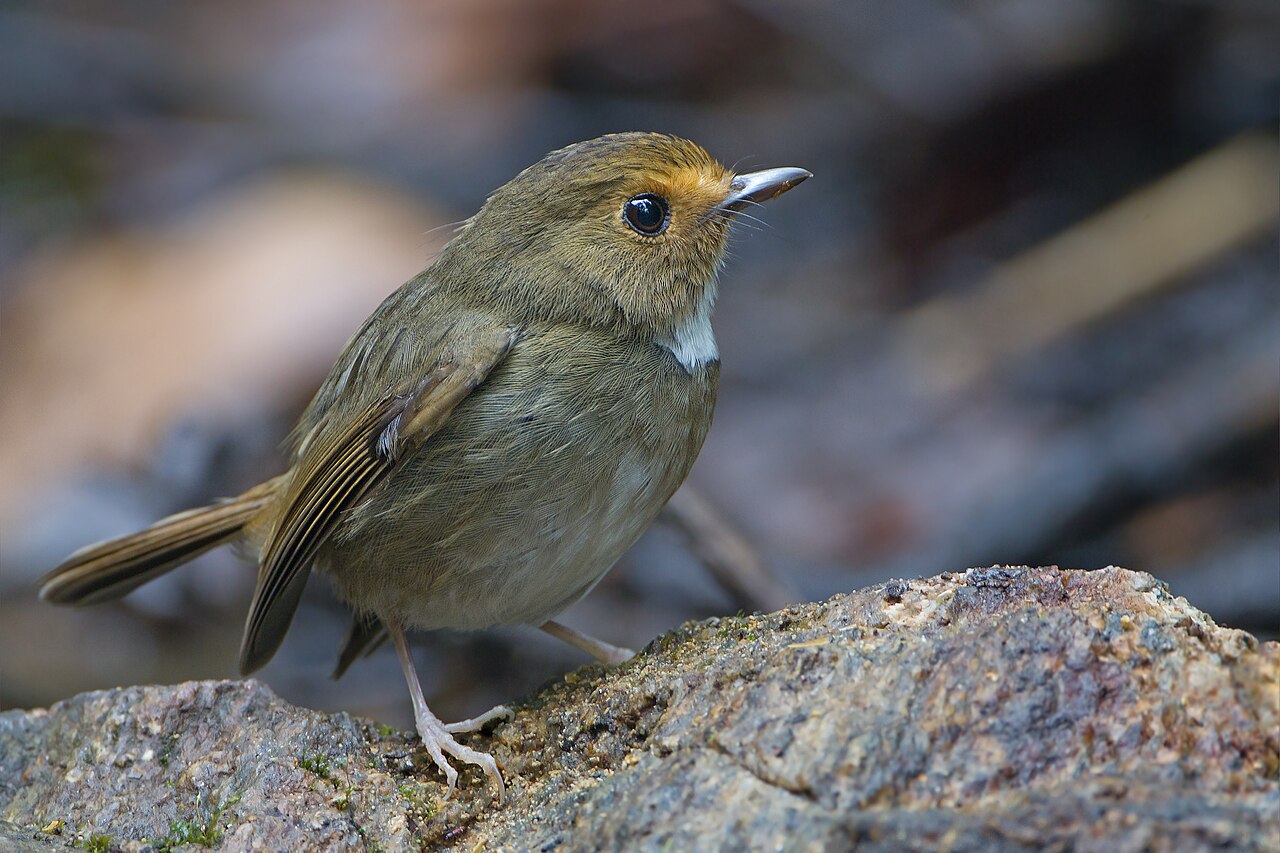
The rufous-breasted wood quail is a species of bird in the family Odontophoridae. It is found in Bolivia, Ecuador, and Peru primarily on the east side of the Andes between 800 and 2000m in elevation.
Region
East slope of the Andes
Typical Environment
Occurs from eastern Ecuador through Peru to northern Bolivia, primarily on the Amazonian foothills and lower montane forests. It favors dense, humid understory with abundant leaf litter and often uses bamboo (Chusquea) thickets and secondary growth. Birds keep close to cover along ridges, stream gullies, and forest edges. It is largely sedentary within well-vegetated territories.
Altitude Range
800–2000 m
Climate Zone
Subtropical
Ease of Keeping
Beginner friendly: 1/5
A shy, ground-dwelling quail of humid foothill forests on the east slope of the Andes, it often travels in small coveys that keep to dense understory. Its far-carrying, whistled chorus at dawn and dusk helps locate groups otherwise hidden in thick cover. It plays an important role in the forest floor ecosystem by dispersing seeds and consuming invertebrates.


Temperament
shy and skulking
Flight Pattern
short rapid wingbeats with explosive flushes
Social Behavior
Typically found in coveys of 4–10 birds that move quietly along the forest floor. Pairs are likely monogamous, and nests are placed on the ground under dense cover with a clutch laid in a shallow leaf-lined scrape. Coveys maintain contact with soft calls and reunite for communal roosting in sheltered spots.
Migratory Pattern
Resident
Song Description
At dawn and dusk, covey members deliver a loud, far-carrying series of clear, whistled notes that rise and fall in a rhythmic chorus. Duets between pair members may initiate the chorus, followed by overlapping whistles from the group.
Plumage
Rich rufous lower throat and breast contrasting with dark olive-brown upperparts that are mottled and scalloped with buff and black. Underparts otherwise dusky with faint barring on the flanks; tail very short. Texture is dense and smooth, suited for moving through brush.
Diet
Feeds by scratching through leaf litter for seeds, fallen fruits, and a variety of invertebrates such as insects, spiders, and small snails. It also takes tender shoots and occasionally small vertebrates. Seasonal availability of fruits can influence diet composition, with more arthropods taken in wetter periods.
Preferred Environment
Forages on the shaded forest floor of humid foothill and lower montane forests, especially in dense understory and bamboo patches. Often works along trails, stream edges, and forest gaps where leaf litter accumulates.