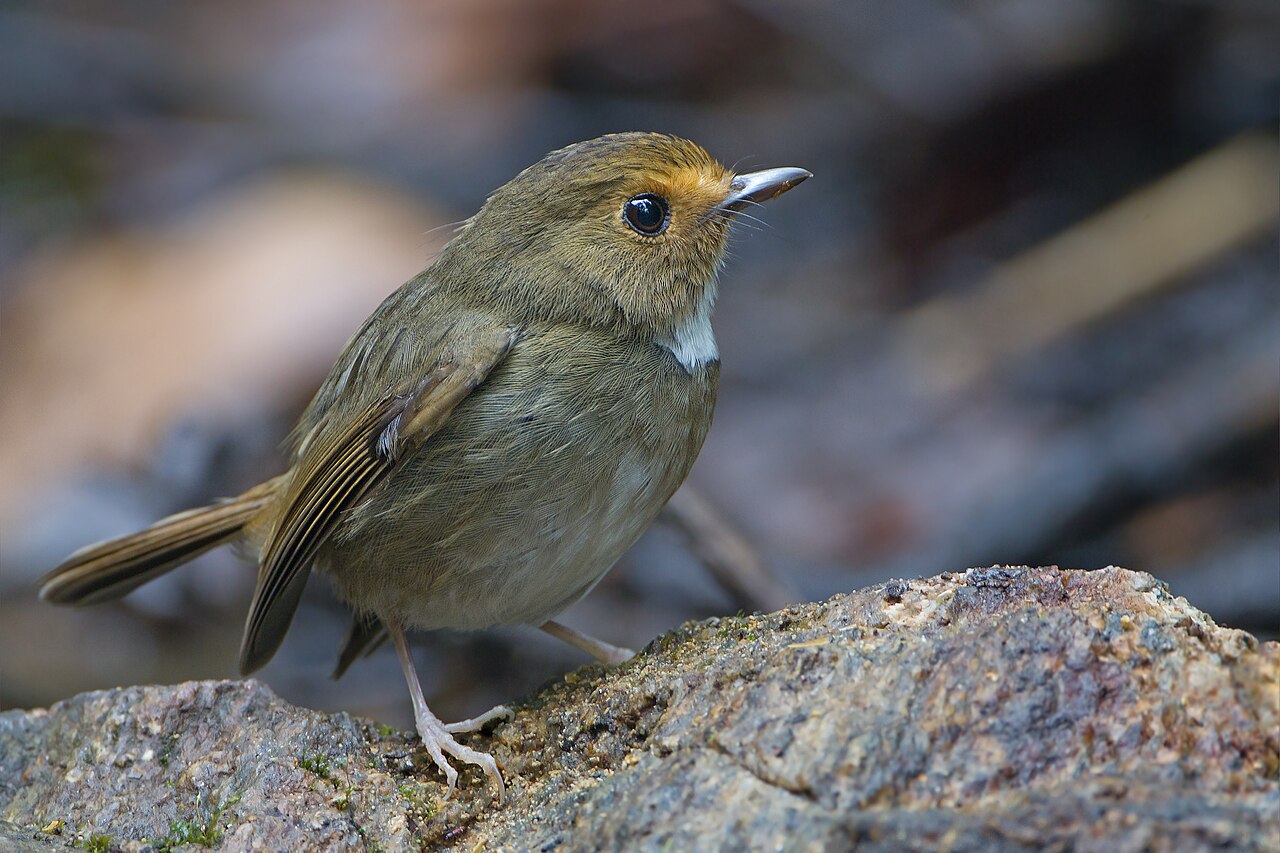
The rufous-breasted wren is a small songbird of the family Troglodytidae. It is found in Colombia, Costa Rica, Panama, Trinidad and Tobago, and Venezuela.
Region
Central America and northern South America
Typical Environment
Occurs from Costa Rica and Panama through northern Colombia and Venezuela, and on Trinidad and Tobago. It inhabits forest edges, secondary growth, riverine thickets, coffee and cacao plantations, and dense shrubbery near human settlements. The species prefers tangled understory and viney growth where it can move under cover. It is generally non-migratory and maintains territories year-round within suitable habitat.
Altitude Range
0–1500 m
Climate Zone
Tropical
Ease of Keeping
Beginner friendly: 2/5
This wren is noted for its loud, complex duets, with males and females alternating phrases so tightly that it can sound like a single bird. It favors dense thickets and edges where it stays low and skulks, but its voice often gives it away. Nests are typically domed structures placed low in vegetation. Its adaptability to second growth and gardens helps it remain common in much of its range.


Temperament
skulking yet vocal
Flight Pattern
short rapid wingbeats, usually low and brief between cover
Social Behavior
Typically found in pairs or small family groups that defend territories. Pairs perform tight antiphonal duets that reinforce pair bonds and territory. Nests are domed and placed low in dense vegetation; both sexes may participate in nest building and care.
Migratory Pattern
Resident
Song Description
Loud, musical whistles and trills delivered as coordinated duets between mates. Calls include sharp chips and scolds when alarmed, while the primary song is rich and carries well through dense cover.
Plumage
Warm rufous underparts with a paler throat, brown upperparts with fine barring on the wings and tail, and faint barring or mottling on the flanks. The crown and nape are brownish, contrasting with a clean whitish supercilium. Tail is often held cocked and shows dark barring. Overall appearance is compact with dense, smooth plumage suited to moving through thickets.
Diet
Primarily consumes insects and other small arthropods such as beetles, spiders, and caterpillars. It occasionally takes small fruits or berries, especially when insect prey is less abundant. Foraging involves probing leaf litter, dead leaves, vine tangles, and crevices for hidden prey.
Preferred Environment
Feeds in dense understory, brushy edges, and vine tangles, often near forest margins and streams. It also forages in hedgerows, gardens, and plantations where cover is ample.