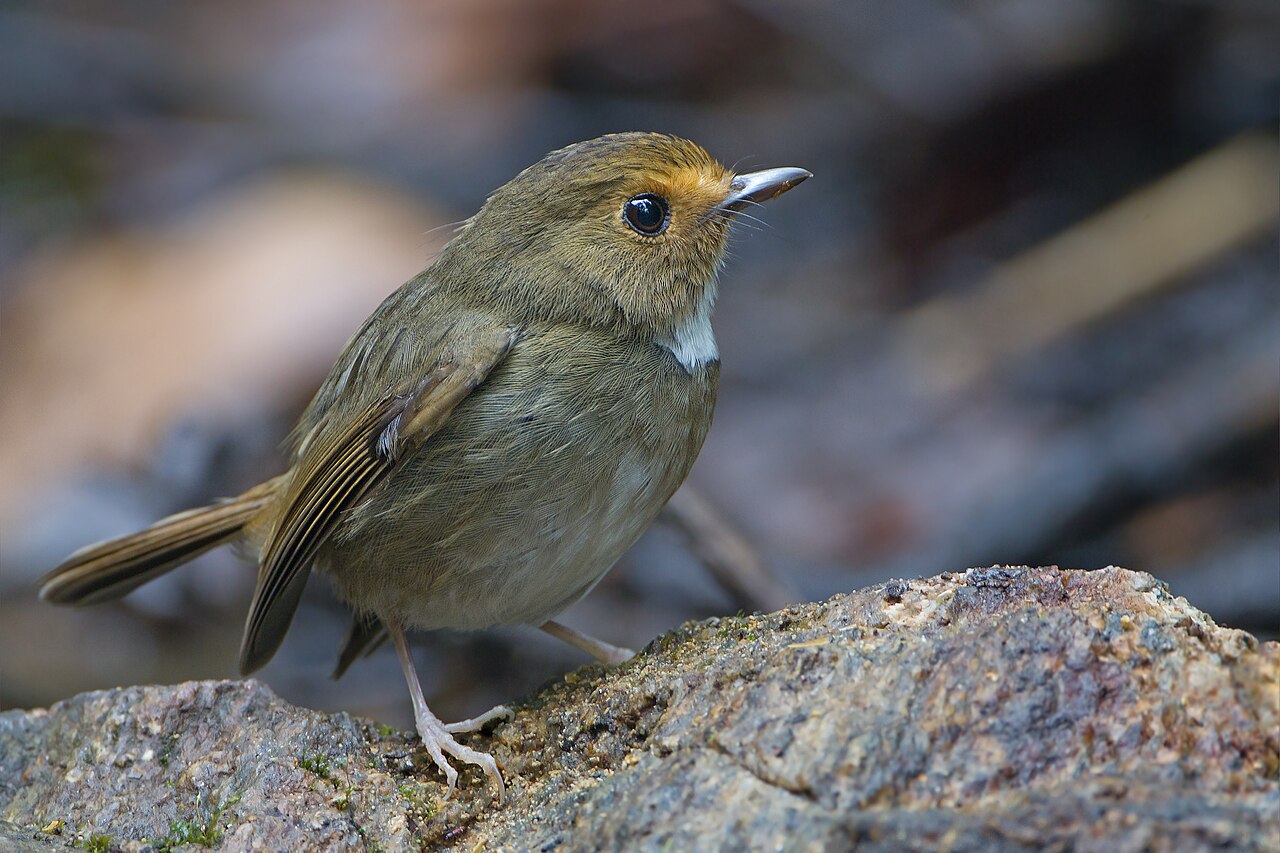
The rufous-browed conebill is a species of bird in the family Thraupidae. It is found in Colombia and far western Venezuela. Its natural habitats are subtropical or tropical moist montane forests and subtropical or tropical high-altitude shrubland.
Region
Northern Andes
Typical Environment
Occurs in the Andean highlands of central and eastern Colombia and reaches far western Venezuela (e.g., Táchira). It inhabits humid montane forest edges, elfin forest, and high-elevation shrublands, including secondary growth. Birds frequently forage in the outer canopy and along scrubby ridges and clearings. It tolerates some habitat disturbance where patches of shrubs and forest edge remain.
Altitude Range
2000–3500 m
Climate Zone
Highland
Ease of Keeping
Beginner friendly: 1/5
A small Andean tanager, the rufous-browed conebill is named for its distinctive rusty eyebrow. It is an active foliage-gleaner that often joins mixed-species flocks in montane forests and shrublands. The fine, pointed bill is adapted for picking tiny arthropods and occasionally probing flowers for nectar.


showing back feathers
Temperament
social and active
Flight Pattern
short rapid wingbeats
Social Behavior
Often found in pairs or small groups and commonly joins mixed-species flocks moving through forest edges and shrubby slopes. Breeding pairs likely build cup-shaped nests in dense shrubs or low trees and defend small territories during the nesting period.
Migratory Pattern
Resident
Song Description
Gives thin, high-pitched chips and a light, tinkling series of notes. Song is a soft, rapid twitter that can be easily overlooked amid mixed-flock activity.
Plumage
Compact, small tanager with a fine pointed conical bill; upperparts mostly slaty to grayish with paler underparts and clean contrasts at the face.
Diet
Primarily gleans small insects and other arthropods from leaves, buds, and fine twigs. It occasionally probes flowers for nectar and may take tiny fruits when available. Foraging is rapid and methodical along outer foliage and shrub tops.
Preferred Environment
Feeds along forest edges, in elfin forest, and in high montane shrublands, especially in areas with dense foliage. Frequently forages within mixed-species flocks to exploit disturbed edges and secondary growth.