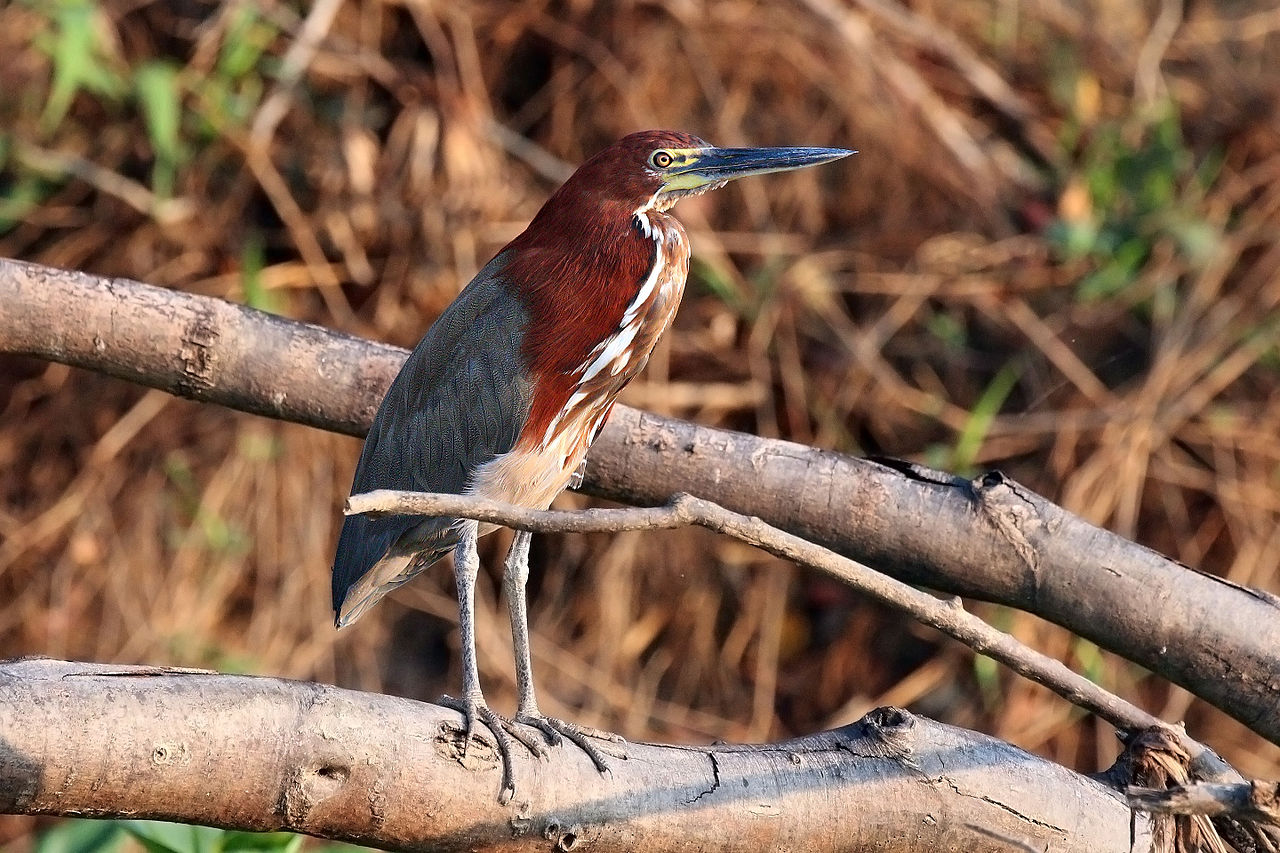
The rufescent antshrike is a passerine bird in subfamily Myrmornithinae of family Thamnophilidae, the "typical antbirds". It is found in Bolivia and Peru.
Region
Andes Mountains
Typical Environment
Occurs on the eastern Andean foothills of southeastern Peru and northern Bolivia. It inhabits humid evergreen and foothill montane forests, forest edges, and secondary growth with dense understory. Birds often keep to the midstory and vine tangles, especially where there are dead-leaf clusters. Locally, it can be fairly common within suitable elevational bands.
Altitude Range
500–1800 m
Climate Zone
Highland
Ease of Keeping
Beginner friendly: 1/5
The rufescent antshrike is a small Andean foothill antbird that forages quietly in pairs and often joins mixed-species flocks. It specializes in gleaning insects from foliage and dead-leaf clusters in the midstory. Its warm rufous tones blend into sunlit understory tangles, making it easier to hear than to see.
Temperament
secretive but active
Flight Pattern
short rapid wingbeats between perches
Social Behavior
Usually found in pairs that maintain small territories and frequently integrate into mixed-species foraging flocks. Likely monogamous, with both sexes participating in nesting duties. Nests are typically cup-shaped and placed low to midstory in dense vegetation.
Migratory Pattern
Resident
Song Description
Song is a short, clear series of whistles that may accelerate slightly, carrying well through the understory. Calls include sharp chips and soft scolding notes given while foraging with mixed flocks.
Plumage
Overall warm rufous to cinnamon-brown with slightly paler underparts and contrasting pale wingbars. Wings and tail are richer rufous, and the back is more subdued. Feathers appear smooth and neatly groomed, aiding a sleek profile in dense foliage.
Diet
Feeds primarily on arthropods, including caterpillars, beetles, orthopterans, and spiders. Gleans prey from leaves, twigs, and bark, and frequently inspects dead-leaf clusters. Occasionally makes short sallies to snatch flushed insects.
Preferred Environment
Forages in the midstory of humid foothill and montane forests, at edges, along trails, and in secondary growth. Often accompanies mixed-species flocks, taking advantage of prey disturbed by other birds.