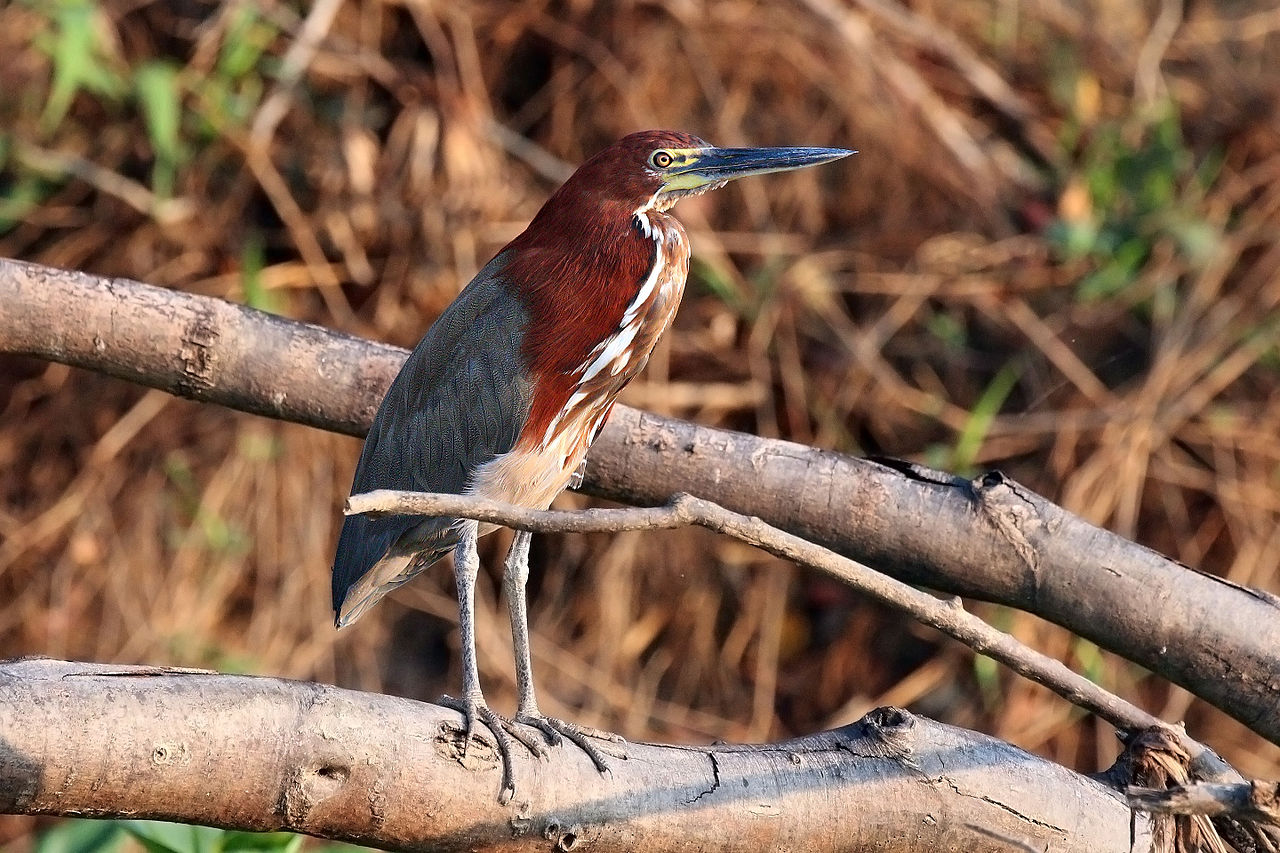
The rufescent prinia is a species of bird in the family Cisticolidae. It is found in Southeast Asia, the Indian subcontinent and southern Yunnan. Its natural habitat is subtropical or tropical dry forest.
Region
South and Southeast Asia
Typical Environment
Occurs across the Indian subcontinent east into Myanmar, Thailand, Laos, Cambodia, Vietnam, and southern China (including southern Yunnan). Prefers subtropical or tropical dry forest, forest edge, and scrubby secondary growth. Frequently uses bamboo thickets, open woodland with dense understory, and overgrown clearings. It also ventures into hedgerows and shrubby agricultural margins where cover is available.
Altitude Range
0–1500 m
Climate Zone
Tropical
Ease of Keeping
Beginner friendly: 2/5
A small, active warbler of the undergrowth, the rufescent prinia often cocks and fans its long, graduated tail as it moves through scrub. Its warm rufous tones help distinguish it from plainer prinias. Pairs keep in close contact with sharp calls and will pop up briefly to scold intruders. Though secretive, it often responds to pishing or playback by approaching curiously.

Temperament
skulking yet active
Flight Pattern
short rapid wingbeats
Social Behavior
Typically found singly or in pairs during the breeding season, maintaining small territories within dense scrub. Outside breeding, it may join loose mixed flocks in low vegetation. Nests are deep cups of grasses and fibers placed low in shrubs or dense thickets. Both adults participate in territory defense and feeding young.
Migratory Pattern
Resident
Song Description
Song is a fast, repetitive series of thin trills and ticking notes delivered from low perches within cover. Calls include sharp chips and scolds used for contact and alarm. The voice is high-pitched and carries surprisingly well for such a small bird.
Plumage
Warm rufescent-brown upperparts with a slightly paler rump and a long, graduated tail often held cocked. Underparts are buffy to greyish-buff with a whitish throat; faint streaking may be present on the breast. A subtle pale supercilium and fine, slender bill give a delicate look.
Diet
Primarily takes small insects and other arthropods, including caterpillars, beetles, and spiders. It gleans prey from leaves and twigs and occasionally makes short sallies to snatch flying insects. Small seeds or berries may be taken opportunistically but form a minor part of the diet.
Preferred Environment
Forages in dense shrubs, bamboo clumps, and low tangles along forest edges and secondary growth. Often works 0–3 meters above ground, moving methodically through foliage. Will also feed along hedgerows and overgrown field margins.