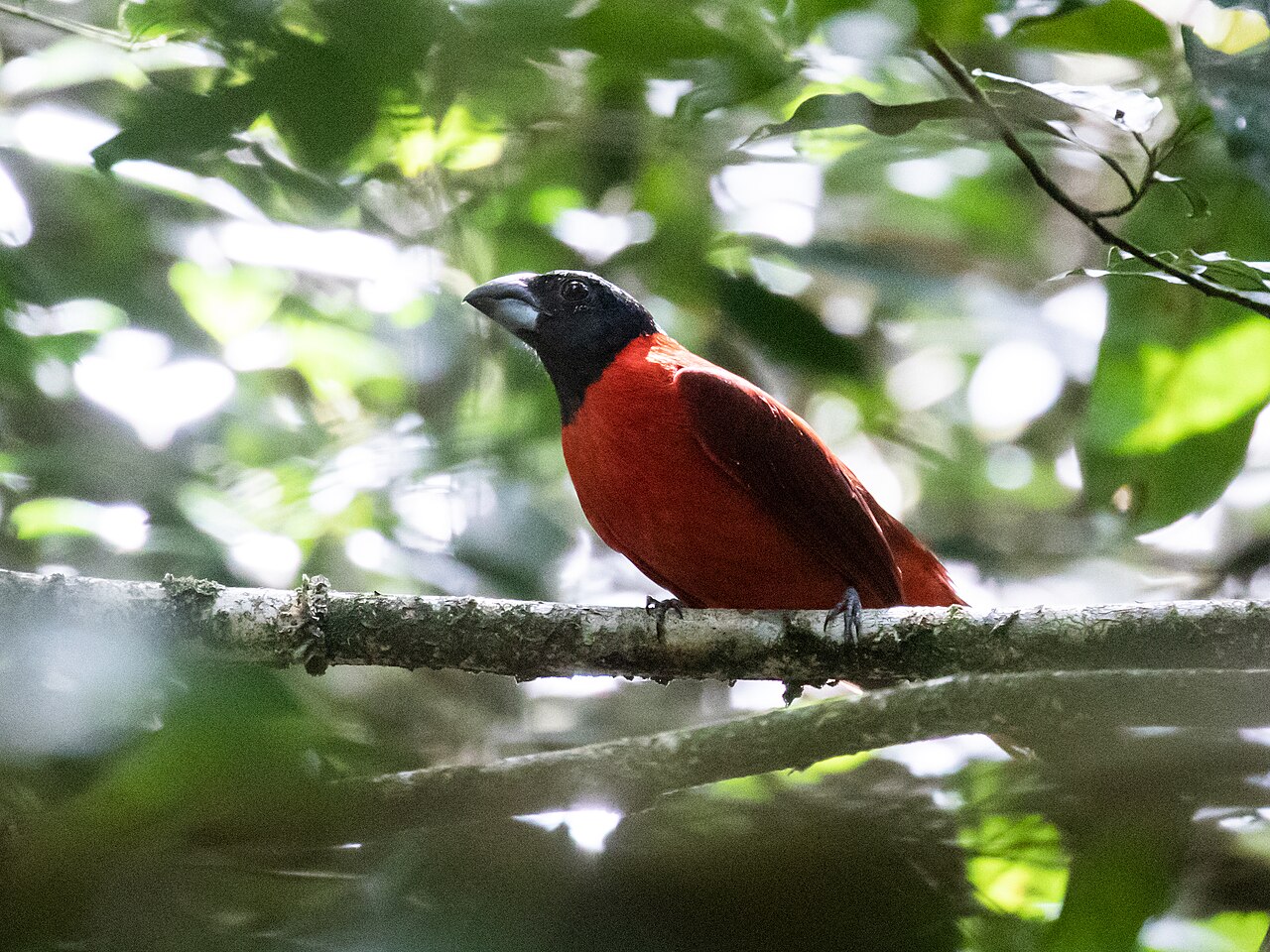
The red weaver is a species of bird in the weaver family Ploceidae. It is found in southern Somalia and northeastern Kenya.
Region
Horn of Africa
Typical Environment
Occurs in arid and semi-arid lowlands of southern Somalia and northeastern Kenya. Typical habitats include Acacia-Commiphora bushland, open savanna, and riverine woodland along systems such as the Jubba and Tana rivers. It frequents edges of cultivation and seasonal floodplains where grass seeds are abundant. Colonies often situate nests in thorny trees or palms near water to deter predators.
Altitude Range
0–1500 m
Climate Zone
Arid
Ease of Keeping
Beginner friendly: 1/5
Red weavers are members of the Ploceidae, famous for their intricate, woven nests suspended from branches, often over water for protection. Males typically construct several nests during the breeding season to attract females, performing display flights and calls. They often breed in loose colonies, which helps reduce predation risk. Outside breeding, they may join mixed flocks to forage.
Temperament
social and active
Flight Pattern
short rapid wingbeats
Social Behavior
Often forms loose colonies during breeding, with several nests clustered in the same tree. Males weave and display at partially built nests to entice females. Nesting is typically timed with seasonal rains when food is plentiful.
Migratory Pattern
Resident
Song Description
A busy series of chatters, buzzes, and chirps delivered from exposed perches near the nest. Males intensify calling during courtship, interspersing song with wing-flicks and short display flights.
Plumage
Breeding males show bright red body tones with darker wings and contrasting facial markings; non-breeding males and females are duller brown to buff with fine streaking. The plumage is sleek with a compact, sparrow-like build typical of weavers.
Diet
Feeds primarily on grass seeds and grains, taking advantage of seeding grasses after rains. During the breeding season, it supplements with insects such as beetles, caterpillars, and termites for protein. It may also glean small arthropods from foliage and occasionally visits crops at field edges.
Preferred Environment
Forages on the ground in open savanna and at the margins of scrub, and in low shrubs or trees along riverine corridors. Frequently uses edges of cultivation and fallow fields where seed abundance is high.