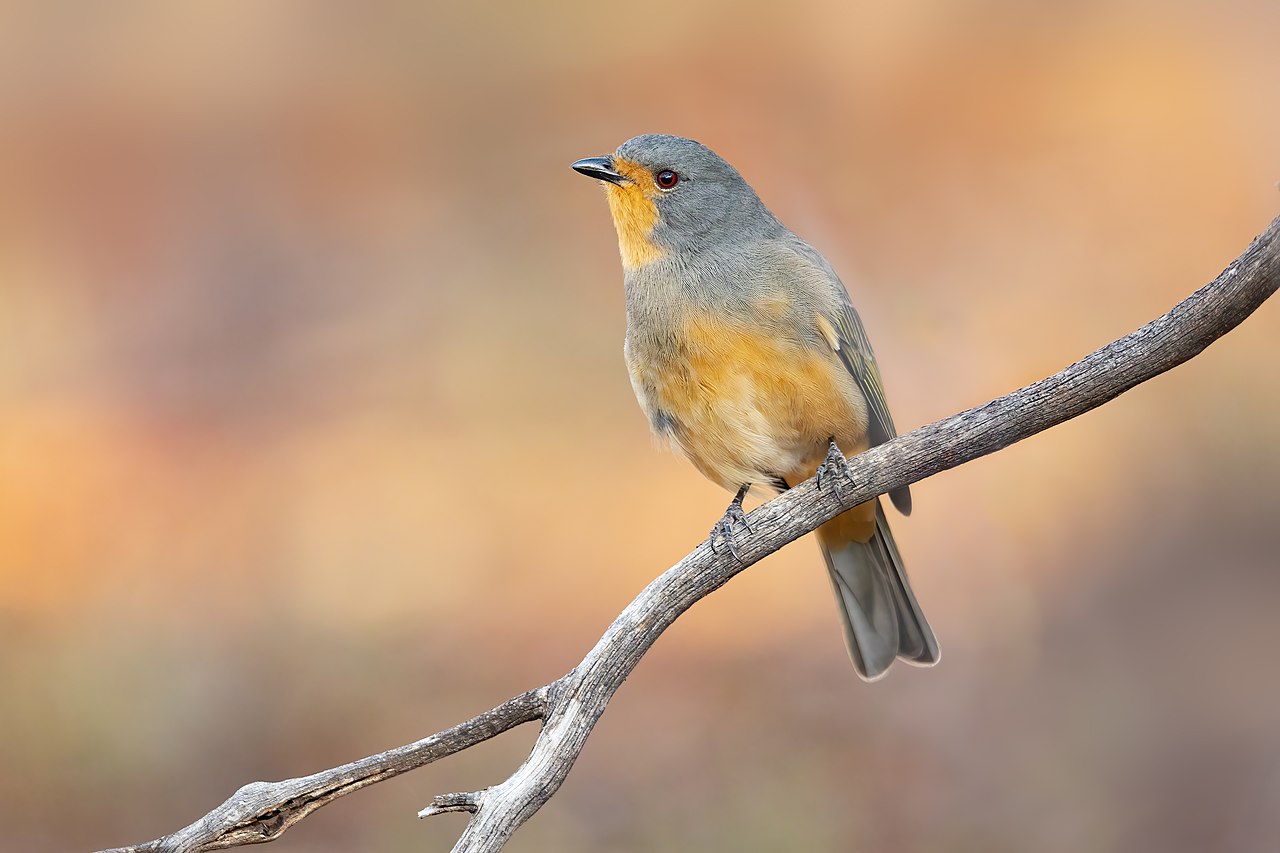
The red-legged thrush is a species of bird in the family Turdidae. Native to the Caribbean, it is found in the Bahamas, Cayman Islands, Cuba, Dominica, Hispaniola and Puerto Rico. It formerly occurred on the Swan Islands, Honduras, but was extirpated there.
Region
Caribbean
Typical Environment
Occurs on the Bahamas, Cayman Islands, Cuba, Hispaniola, Puerto Rico, and Dominica; formerly on the Swan Islands (Honduras), where it was extirpated. It inhabits forests, forest edges, scrub, mangroves, and shaded plantations, and readily visits suburban gardens. The species is mostly terrestrial in its foraging, using the understory and leaf-litter. It tolerates moderate habitat disturbance but benefits from fruiting trees and dense cover.
Altitude Range
Sea level to 2000 m
Climate Zone
Tropical
Ease of Keeping
Beginner friendly: 2/5
A handsome Caribbean thrush, the red-legged thrush is named for its bright reddish legs and orange-red eye-ring and bill base. It adapts well to gardens and plantations and often forages by flipping leaf litter on the ground. Several island subspecies vary subtly in tone and throat markings. Though generally common, it can be vulnerable to habitat loss and introduced predators on small islands.


Temperament
alert and inquisitive, moderately shy but can be confiding near humans
Flight Pattern
short rapid wingbeats with low, direct flights through the understory
Social Behavior
Usually seen singly or in pairs; strongly territorial during the breeding season. Builds a cup nest in shrubs or low trees; both parents feed the young. Outside breeding, may join loose groups at fruiting trees and water sources.
Migratory Pattern
Resident
Song Description
Rich, melodious thrush-like song of clear, fluty whistles and varied phrases, often delivered from a perch at dawn and dusk. Calls include sharp chucks and thin seep notes when alarmed.
Plumage
Smooth, slate-gray to bluish-gray overall with paler gray underparts; throat whitish with dark streaking and a contrasting dark facial mask. Some subspecies show cleaner white belly and more distinct malar stripes. Underwings can show warm tones, and the tail is plain gray.
Diet
Omnivorous, taking a wide variety of fruits and berries along with insects, spiders, snails, and small invertebrates. Will glean from foliage, hop along the ground flipping leaves, and pluck fruit directly from branches. Occasionally takes small vertebrates or fallen fruit in gardens and plantations.
Preferred Environment
Forages in leaf-litter of forests, thickets, and shaded plantations, as well as along paths and lawns in parks and gardens. Frequently visits fruiting trees and edges where cover is nearby.