

The red-masked parakeet is a medium-sized parrot from Ecuador and Peru. It is popular as a pet and are better known in aviculture as the cherry-headed conure or the red-headed conure. They are also considered the best talkers of all the conures.
Region
Tumbesian region
Typical Environment
Occupies tropical dry forests, semi-deciduous woodlands, and scrub in southwestern Ecuador and northwestern Peru. Often uses forest edges, riparian corridors, and agricultural mosaics with scattered tall trees. In many cities outside its native range, it adapts readily to parks, gardens, and urban tree-lined streets. Roosts communally in tall trees and palms and nests in tree cavities. Tolerates human-modified landscapes where mature trees remain.
Altitude Range
Sea level to 1500 m
Climate Zone
Tropical
Ease of Keeping
Beginner friendly: 3/5
Also known as the cherry-headed conure, this parakeet is native to southwestern Ecuador and northwestern Peru. It is popular in aviculture and is considered one of the best talkers among conures. Well-known feral populations occur in several cities, including San Francisco, featured in “The Wild Parrots of Telegraph Hill.”


Juvenile starting to get a few red feathers on its head

San Francisco's Financial District
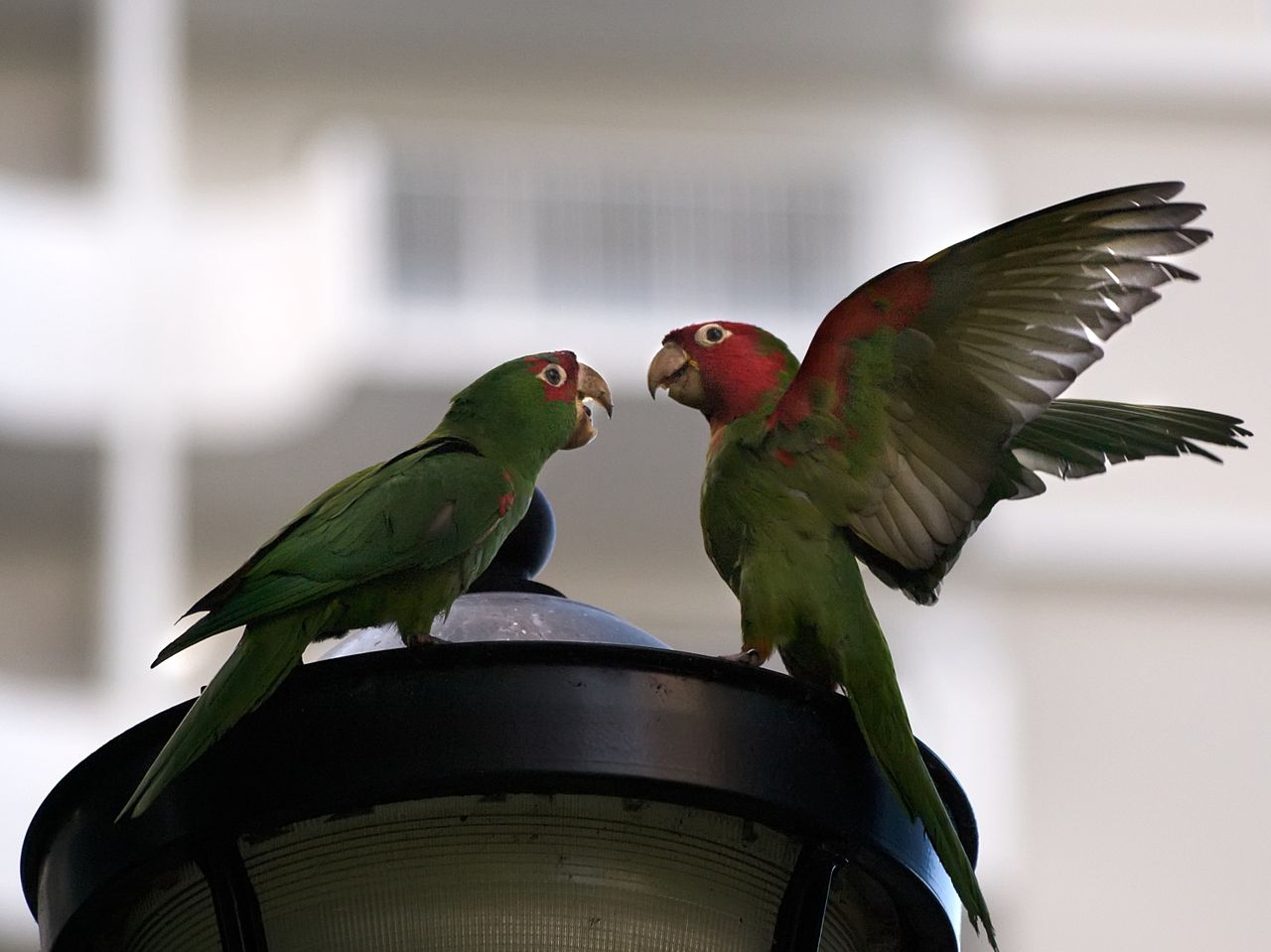
Ferals, San Francisco
Temperament
social and noisy
Flight Pattern
strong, direct flight with rapid wingbeats
Social Behavior
Forms tight pair bonds and forages in small to medium-sized flocks, gathering in larger groups at communal roosts. Nests in natural tree cavities or sometimes in palm crowns. Pairs may show mutual preening and remain together year-round. In urban areas, flocks establish predictable daily routes between feeding sites and roosts.
Migratory Pattern
Resident
Song Description
Calls are loud, piercing screeches and chatter used to keep contact in flight. At roosts or when relaxed, they produce softer rattles and nasal notes. Vocal activity can be intense during pre-roost gatherings.
Plumage
Mostly bright green with a vivid red mask on the face and forehead; some red patches on the shoulders and scattered body feathers. Flight feathers show bluish tones; underwings green. Bill is pale horn-colored with a bare white eye ring.
Diet
Feeds on fruits, seeds, berries, flower buds, and nectar from a variety of native and cultivated plants. Common foods include figs, guava, mango, and seeds from legumes and ornamental trees. In agricultural areas, it may take maize or other crops opportunistically. Urban flocks exploit street and park trees, especially when in season.
Preferred Environment
Typically forages in the canopy and upper midstory of dry forests and along forest edges. Frequently visits orchards, farmlands with scattered large trees, and urban parks and gardens. Uses tall trees for both feeding and lookout perches.


