

The red junglefowl, also known as the Indian red junglefowl, is a species of tropical, galliform bird in the phasianid family, found across much of Southeast and parts of South Asia.
Region
South and Southeast Asia
Typical Environment
Occurs from northern India and Nepal through Bangladesh, Myanmar, Thailand, Laos, Cambodia, and Vietnam, and into southern China and peninsular Malaysia. It frequents forest edges, secondary growth, bamboo thickets, scrub, and agricultural mosaics near villages. The species prefers dense understory for cover and roosts in trees at night. It also persists in plantations and along forest trails where food is abundant.
Altitude Range
0–1800 m
Climate Zone
Tropical
Ease of Keeping
Beginner friendly: 3/5
The red junglefowl is the wild ancestor of the domestic chicken, with domestication events beginning thousands of years ago in Asia. Males display striking, glossy plumage and a prominent red comb and wattles, while females are cryptically colored for camouflage. It remains common in much of its native range but faces genetic dilution through hybridization with free-ranging domestic chickens.


Male red junglefowl in Kaeng Krachan, Phetchaburi, Thailand

Female red junglefowl in Kaeng Krachan, Phetchaburi, Thailand
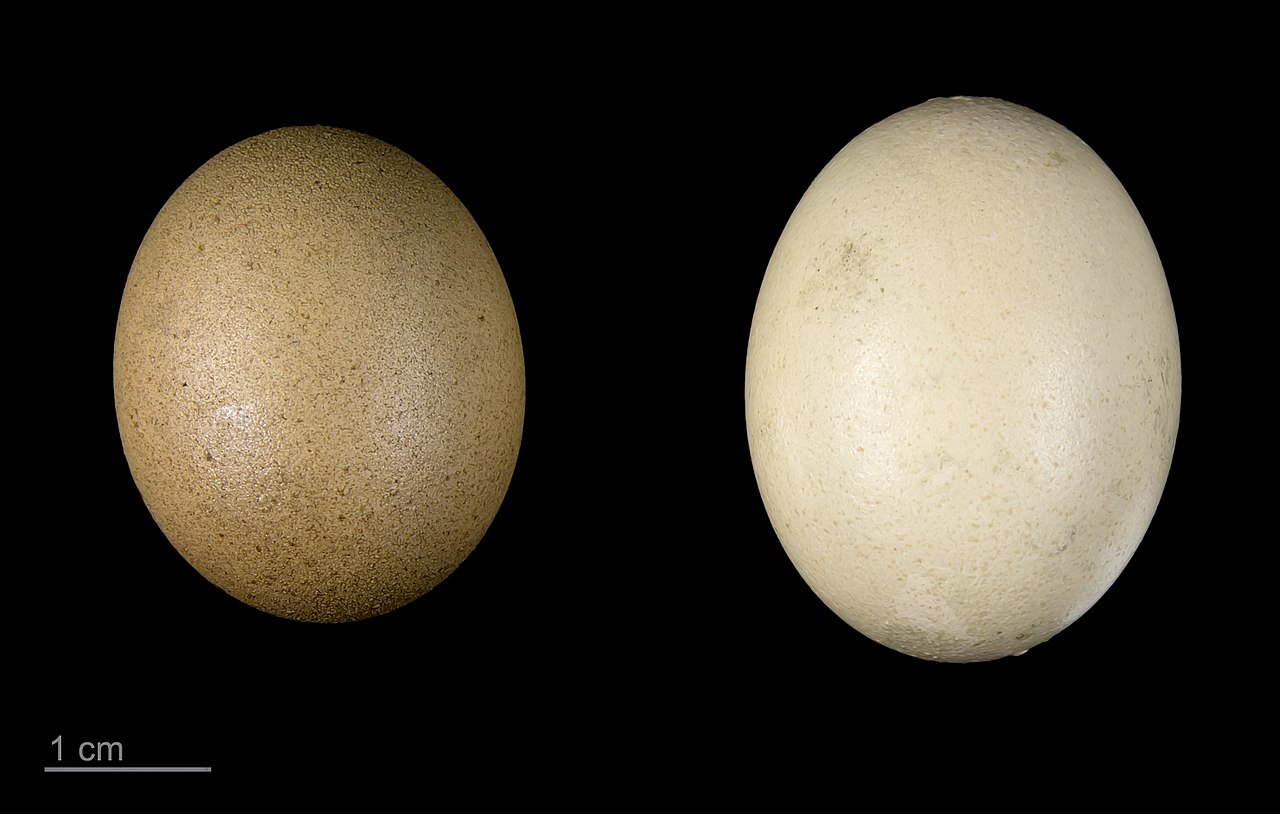
Egg of G. gallus (left) and that of G. gallus domesticus (right) at the Muséum de Toulouse
Temperament
wary and alert, social in small groups
Flight Pattern
short rapid wingbeats with brief, explosive bursts; low glides to roost
Social Behavior
Typically forms small groups with one dominant male and several females; breeding is largely polygynous. They roost communally in trees and nest on the ground in concealed scrapes. Chicks are precocial and follow the hen soon after hatching, foraging in family parties.
Migratory Pattern
Resident
Song Description
The male’s crow is a sharp, ringing series of notes reminiscent of a domestic rooster but often shorter and harsher. Both sexes give clucks and cackles during foraging and loud alarm calls when disturbed.
Plumage
Males have glossy blackish-green bodies with fiery orange to golden hackles and long, iridescent sickle-shaped tail feathers; females are mottled brown with fine barring for camouflage.
Diet
An opportunistic omnivore that scratches leaf litter for seeds, fallen grains, tender shoots, fruits, and berries. It also consumes insects, spiders, and other small invertebrates, especially during the breeding season. Occasionally takes small vertebrates or carrion when available.
Preferred Environment
Feeds along forest edges, clearings, and paths where cover is nearby. Often forages in agricultural fields, plantations, and village margins, especially in early morning and late afternoon.


