

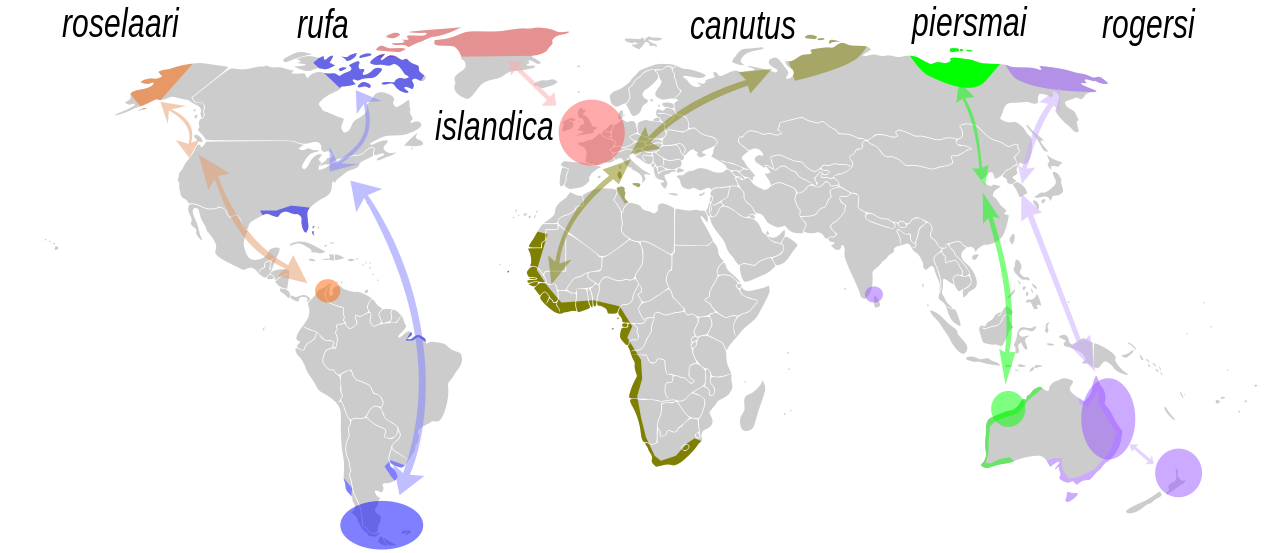
The red knot or just knot is a medium-sized shorebird which breeds in tundra and the Arctic Cordillera in the far north of Canada, Europe, and Russia. It is a large member of the Calidris sandpipers, second only to the great knot. Six subspecies are recognised.
Region
Circumpolar Arctic (breeding) and worldwide coasts (nonbreeding)
Typical Environment
Breeds on dry, stony Arctic tundra near wetlands and moist lowlands. Outside the breeding season it uses intertidal mudflats, sandflats, estuaries, and sheltered bays. Major stopover sites include the Wadden Sea in Europe, Delaware Bay in North America, and Bahía Lomas in South America. In winter it roosts on open beaches, sand spits, and saltmarsh edges, often in dense flocks.
Altitude Range
Sea level to 800 m
Climate Zone
Other
Ease of Keeping
Beginner friendly: 1/5
The red knot is a record-setting long‑distance migrant, flying between Arctic breeding grounds and temperate or subtropical coasts thousands of kilometers away. It undergoes a striking molt, turning brick-red below in breeding season and gray in winter. Some populations rely heavily on horseshoe crab eggs during stopovers, notably in Delaware Bay, making them sensitive to changes in that resource.



Large flocks of C. c. islandica winter in the coastal marshes of Britain, along with other waders. The Wash, Norfolk

Nonbreeding adult

Calidris canutus egg, Muséum de Toulouse

Red knot in breeding plumage


