

The red-eared firetail, also known as the boorin, is a small finch-like species of bird. It occurs in dense wetland vegetation of coastal to sub-coastal regions in Southwest Australia. Its appearance is considered appealing, with white spots, black barring and vivid crimson marks at the ear and upper tail. Red-eared firetails are usually only glimpsed briefly, if at all, as they move rapidly and discreetly through their habitat. Most observations occur when their soft voice is heard, or in flight when flushed from the dense scrub. Males and females are similar in colouring and bond as lifelong pairs that occupy a territory centred on their roosting and brooding nest site. The species occupies a similar ecological niche to the beautiful firetail found in the east of Australia, although unlike other species of the genus they only occasionally group together and are almost never seen in large flocks.
Region
Southwest Australia
Typical Environment
Occurs patchily in dense understorey of coastal to sub-coastal habitats from the Swan Coastal Plain and Darling Range to the south coast. Prefers riparian thickets, paperbark swamps, sedgelands, and coastal heath with abundant cover. Frequently uses ecotones of jarrah, marri, and karri forests, especially near water. Typically keeps within a meter or two of the ground and avoids open areas, moving rapidly between clumps of vegetation.
Altitude Range
Sea level to 600 m
Climate Zone
Temperate
Ease of Keeping
Beginner friendly: 2/5
Also known as the boorin, the red-eared firetail is a secretive Australian finch that keeps close to dense cover. Pairs form long-term bonds and maintain a roost nest year-round, often near their breeding site. Its vivid crimson ear patch and rump are striking field marks, but the bird is often only detected by its soft, tinkling calls.


Lithograph showing a male and female from Gould's Birds of Australia, 1848.

Lepidosperma squamatum
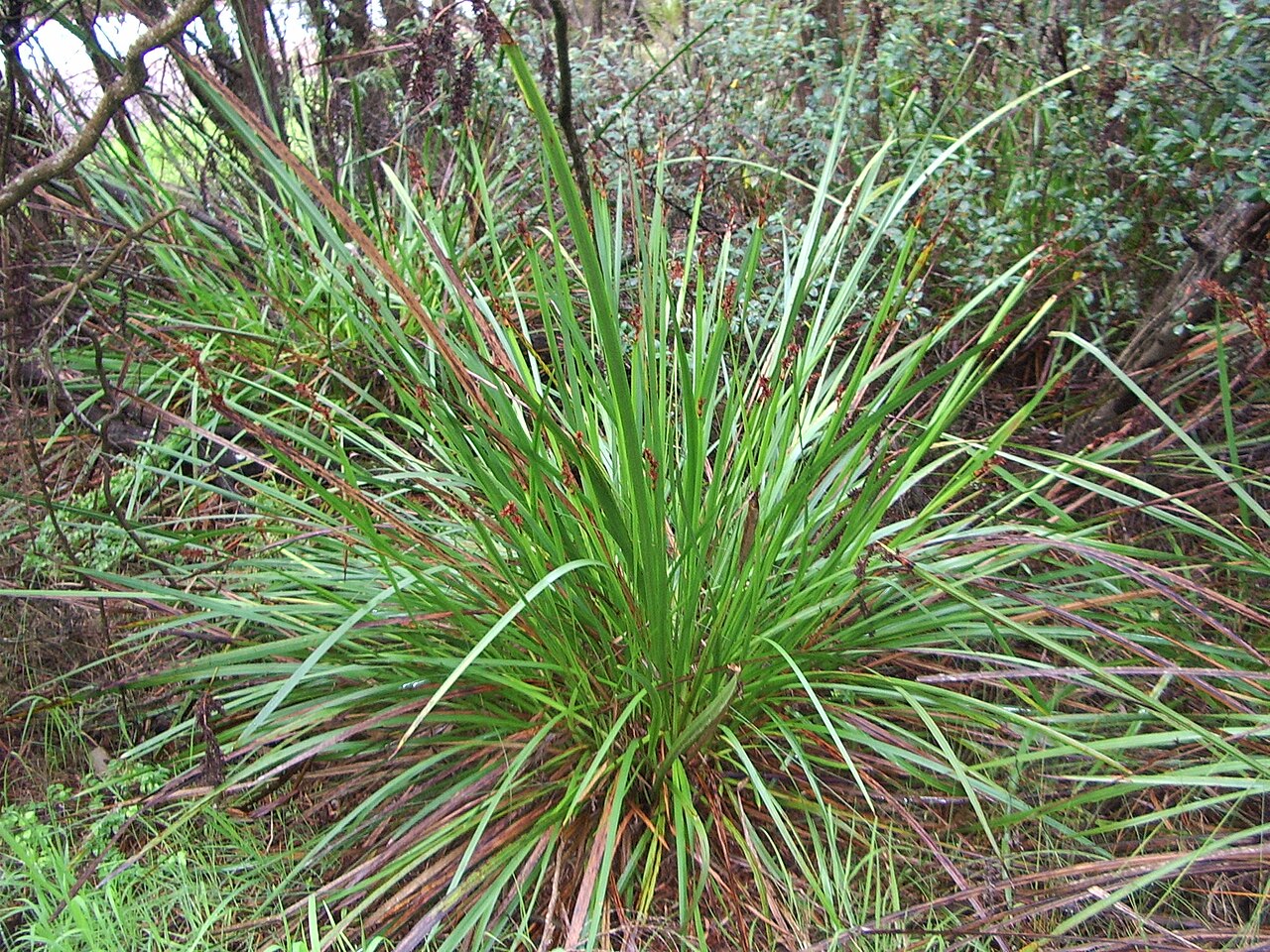
Lepidosperma gladiatum
Temperament
secretive and skulking
Flight Pattern
short rapid wingbeats; low, direct dashes between cover
Social Behavior
Usually seen singly, in pairs, or small family groups rather than large flocks. Pairs often maintain lifelong bonds and defend a small territory centered on a roost/breeding nest. Nests are domed structures tucked into dense shrubs or sedges; both sexes participate in nesting duties.
Migratory Pattern
Resident
Song Description
A soft, high-pitched tinkling series of notes, often delivered from within cover. Contact calls are thin, sibilant see-see phrases; alarms are sharper, zip-like notes.
Plumage
Compact finch with finely spotted and barred underparts, darker upperparts, and a vivid red rump. The face shows a bright red ear patch contrasting with dusky to blackish tones. Feathers appear crisp with neat white spotting along the flanks and lower breast.
Diet
Primarily takes small seeds of sedges and grasses, gleaned on or near the ground. Supplements with small insects and larvae, especially during the breeding season. Will also take tender plant material and occasionally small berries when available.
Preferred Environment
Feeds low in dense vegetation along stream margins, swamp edges, and sedgelands. Often forages on the ground or on seed heads within thickets, rarely venturing into open spaces.


