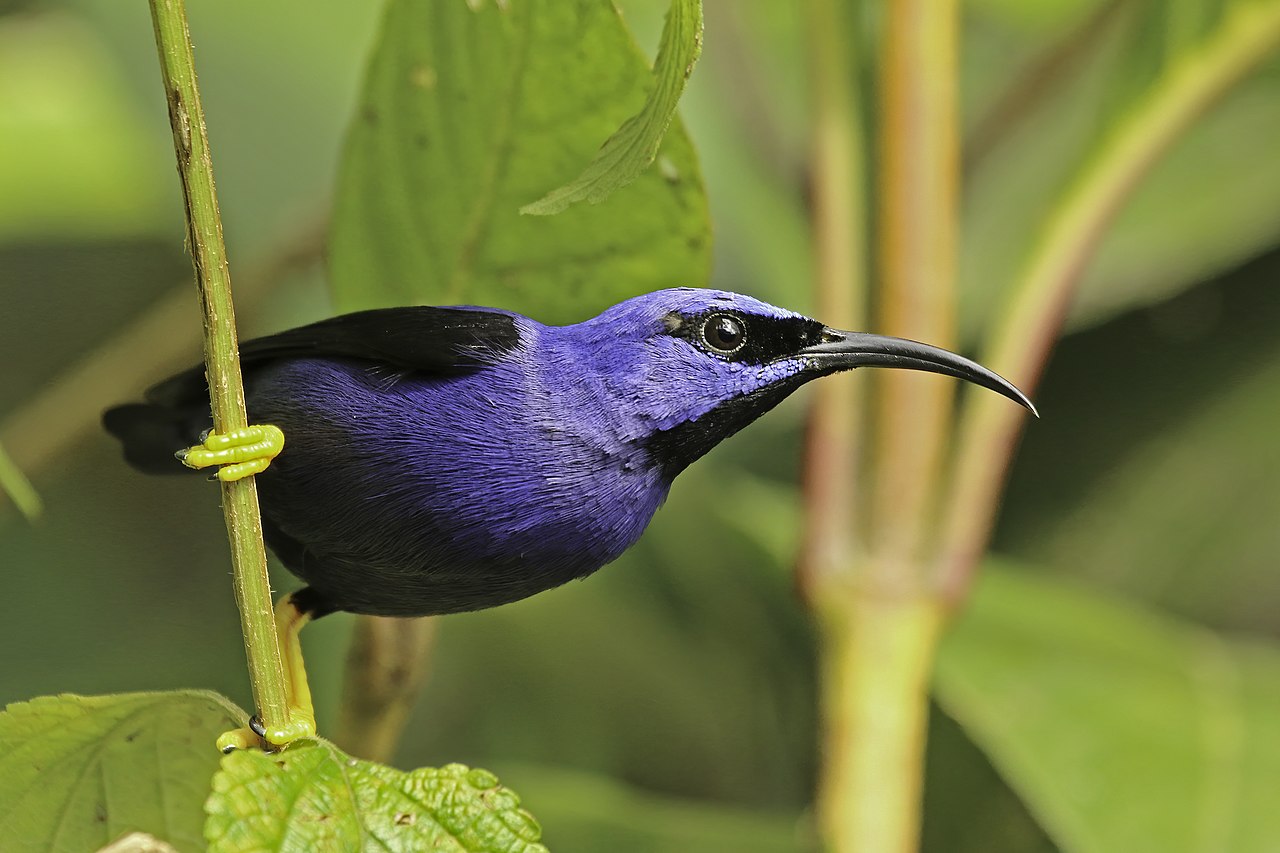
The purple finch is a bird in the finch family, Fringillidae. It breeds in the northern United States, southern Canada, and the west coast of North America.
Region
North America
Typical Environment
Breeds across southern Canada, the northeastern United States, and along the Pacific Coast, with scattered populations in montane forests of the West. Winters through much of the eastern and southern United States and into parts of northern Mexico. Prefers coniferous and mixed woodlands, forest edges, and second-growth, but readily uses parks, orchards, and suburban areas with mature trees. In winter it concentrates where seed and berry resources are abundant, including backyard feeding stations.
Altitude Range
Sea level to 2500 m
Climate Zone
Temperate
Ease of Keeping
Beginner friendly: 2/5
Despite its name, the male purple finch is more of a raspberry-red than truly purple, while females are brown and heavily streaked. It often visits backyard feeders, where it can be confused with the House Finch; look for the male’s more extensive, washed-in red and the female’s bold white eyebrow. Populations can be irruptive in some years, moving farther south or to lower elevations when food crops fail. Two subspecies occur: a brighter eastern form and a browner western form.


Male purple finch
Temperament
social and active
Flight Pattern
undulating flight with short rapid wingbeats
Social Behavior
Outside the breeding season, forms small to medium flocks that may join mixed-species groups at food sources. During breeding, pairs are territorial; the female builds a cup nest on horizontal branches, usually in conifers. Clutches typically contain 3–5 eggs, and both parents feed the young.
Migratory Pattern
Partial migrant
Song Description
The male delivers a rich, sweet, warbling song with tumbling phrases, often from a high perch. Calls include a sharp 'pik' and softer chips given in flight and at feeders.
Plumage
Male shows a diffuse, raspberry-red wash over head, breast, and back with brownish wings; female is brown and white with strong streaking below and a bold pale supercilium. Both sexes have a relatively heavy, conical bill typical of finches.
Diet
Eats a variety of seeds (especially from conifers), buds, and berries such as cherries and blackberries. Also takes flower parts and sap from buds in spring. Insects and other small invertebrates are consumed more frequently during the breeding season to feed nestlings.
Preferred Environment
Forages in forest canopies, woodland edges, and shrubby areas, often gleaning from twigs and cones. Regularly visits backyard feeders, favoring sunflower seeds and other oil-rich offerings.