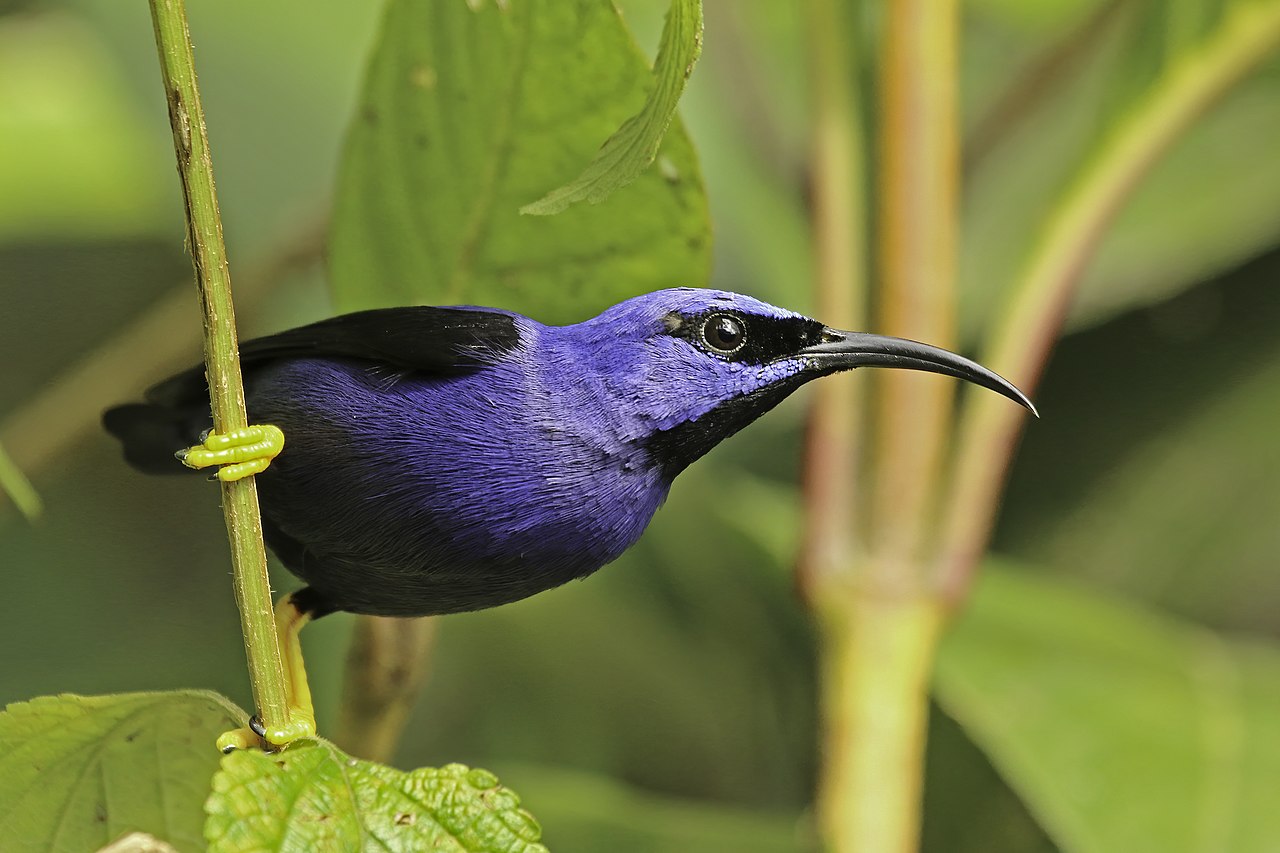
The purple heron is a wide-ranging heron species. It breeds in Africa, central and southern Europe, and southern and eastern Palearctic. The Western Palearctic populations migrate between breeding and wintering habitats whereas the African and tropical-Asian populations are primarily sedentary, except for occasional dispersive movements. It is similar in appearance to the more common grey heron but is slightly smaller, more slender and has darker plumage. It is also a more evasive bird, favouring densely vegetated habitats near water, particularly reed beds. It hunts for a range of prey including fish, rodents, frogs and insects, either stalking them or standing waiting in ambush.
Region
Afro-Eurasia
Typical Environment
Breeds across parts of Africa, central and southern Europe, and through southern and eastern Palearctic into South and Southeast Asia. Western Palearctic populations winter largely in sub-Saharan Africa, while many tropical populations are resident. It is strongly tied to freshwater and brackish wetlands with extensive reedbeds and other emergent vegetation. Habitats include marshes, floodplains, slow rivers, lagoons, rice paddies, and lakes with dense margins. It tends to avoid open shorelines, keeping within cover.
Altitude Range
Sea level to 2000 m
Climate Zone
Other
Ease of Keeping
Beginner friendly: 1/5
A slender, secretive heron that prefers dense reedbeds, the purple heron often hunts by standing motionless and striking with a rapid thrust of its dagger-like bill. It is smaller and darker than the grey heron and can be surprisingly hard to spot despite its size. Western Palearctic birds migrate to Africa for winter, while many African and tropical Asian populations are resident. It nests colonially in tall emergent vegetation, building platforms of reeds above shallow water.


3D scan of the skeleton
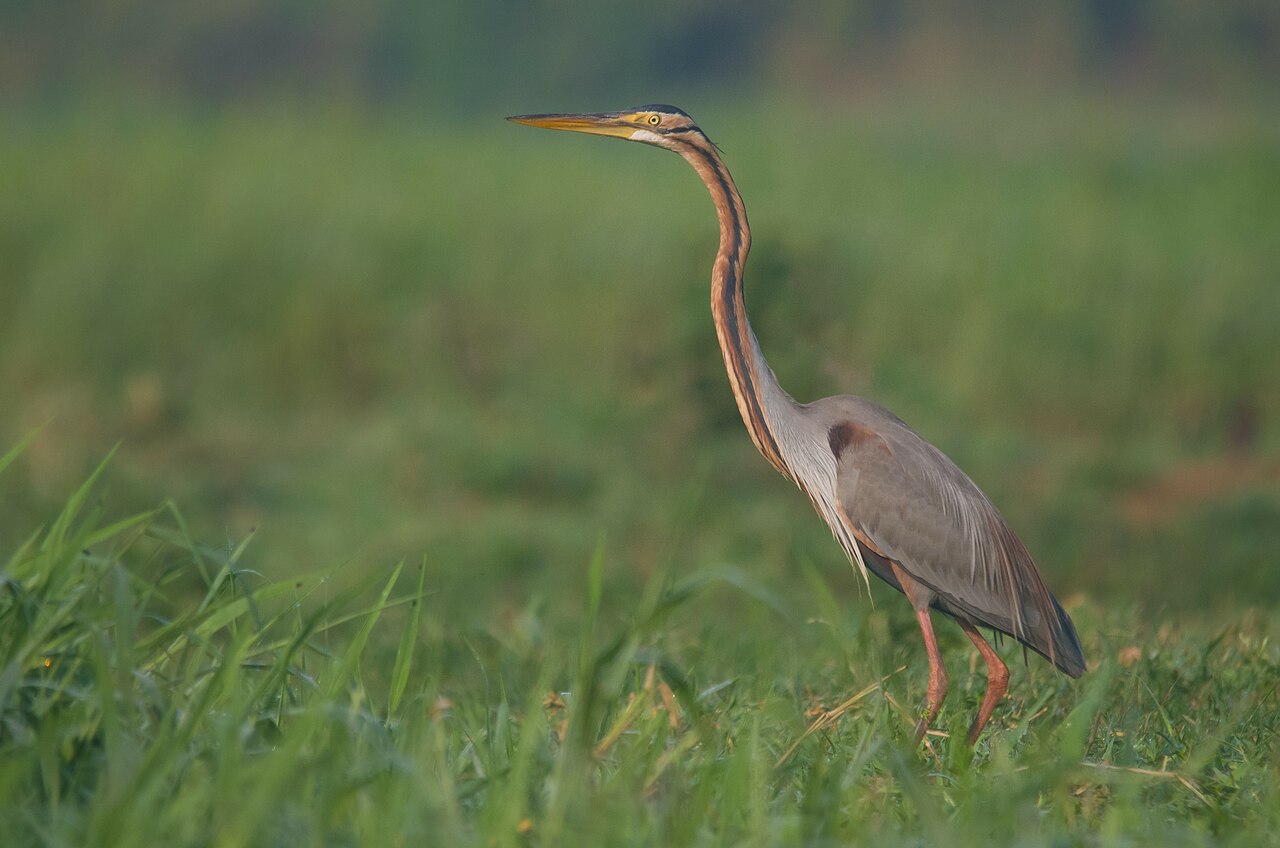
A purple heron at Powai Lake, Maharashtra, India

Adult A. p. purpurea with chicks at Lake Baringo, Kenya

Immature A. p. manilensis, Maharashtra, India

juvenile A. p. purpurea, Danube delta, Romania

A. p. manilensis in North Sulawesi, Indonesia showing long toes
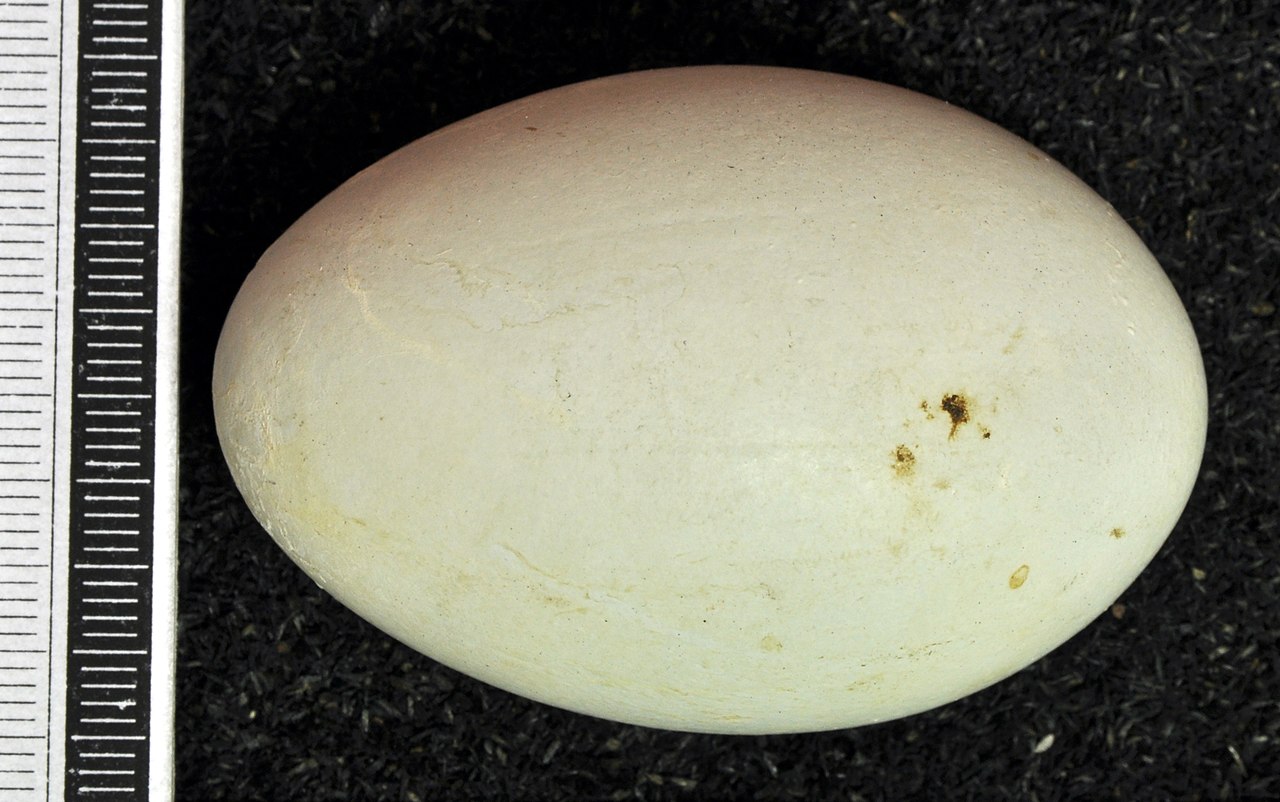
Egg, Collection Museum Wiesbaden

Watercolour illustration of Ardea purpurea Linnaeus: purple heron
Temperament
solitary and secretive
Flight Pattern
slow deep wingbeats with neck retracted and legs trailing
Social Behavior
Often forages alone or in loose spacing within suitable reedbeds. Nests colonially, typically in dense reeds or low shrubs over water, with both adults sharing incubation and chick-rearing. Breeding pairs form seasonally; nests are platforms of stems and leaves concealed in vegetation.
Migratory Pattern
Partial migrant
Song Description
Generally quiet; gives low grunts and harsh croaks, especially at colonies. In flight or when alarmed, it may utter a deep, nasal bark-like call.
Plumage
Slender heron with dark, rufous-chestnut and grey tones; long, narrow neck with bold black and chestnut streaking; elongated scapular plumes. Upperparts greyish with darker flight feathers; underparts brownish with streaks.
Diet
Takes fish, amphibians, aquatic insects, small reptiles, and small mammals such as rodents. Hunts by slow stalking or standing motionless for long periods before a rapid spear-like strike. Will also seize prey along the margins of reedbeds and shallow pools. Diet varies with habitat and season.
Preferred Environment
Feeds in shallow freshwater or brackish wetlands with thick emergent vegetation, especially reedbeds. Also uses rice fields, flooded meadows, and quiet backwaters of rivers and lakes where cover is available.