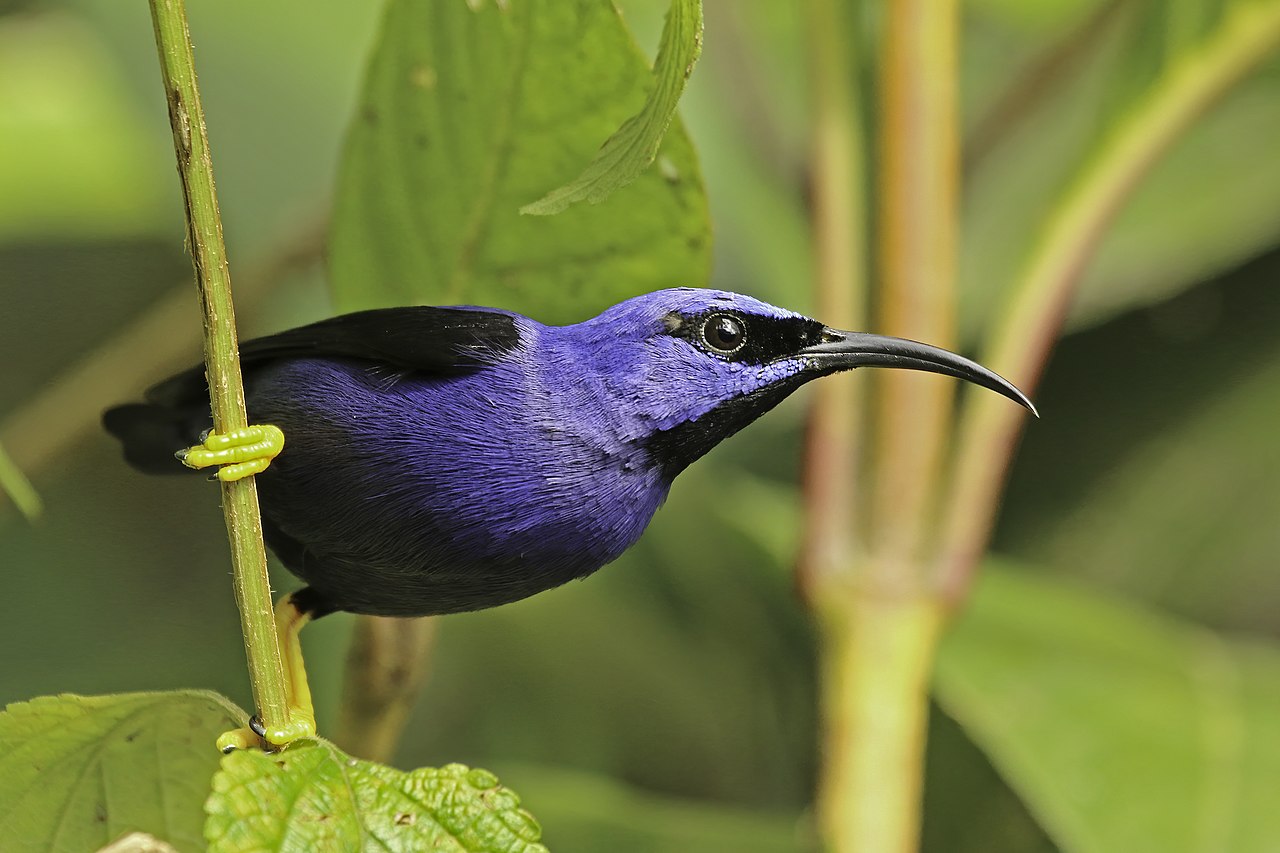
The purple gallinule is a species of swamphen found in the Americas. It is in the order Gruiformes, meaning "crane-like", an order which also contains cranes, rails, and crakes. The purple gallinule is a rail species, placing it into the family Rallidae. It is also known locally as the yellow-legged gallinule. The specific name martinica denotes "of Martinique".
Region
Americas
Typical Environment
Found from the southeastern United States through the Caribbean, Central America, and much of northern South America in freshwater wetlands. It frequents marshes, swamps, rice fields, canals, and edges of lakes with abundant emergent and floating vegetation. Birds often use dense stands of sedges, reeds, and water lilies for foraging and nesting. In human-modified landscapes, it adapts readily to managed wetlands and agricultural impoundments.
Altitude Range
Sea level to 2000 m
Climate Zone
Tropical
Ease of Keeping
Beginner friendly: 2/5
The purple gallinule is a vividly colored swamphen of the Americas with exceptionally long toes that let it walk atop floating vegetation like lily pads. Adults show an iridescent mix of purple-blue and green with a red bill tipped yellow and a pale blue frontal shield. Northern populations are migratory and can wander widely, with occasional vagrants reaching Europe. They build platform nests in dense marsh vegetation over water.


Temperament
alert and active
Flight Pattern
short rapid wingbeats; weak, labored flights with dangling legs
Social Behavior
Typically seen singly, in pairs, or small family groups in marshes. Pairs build platform nests anchored to emergent vegetation and may raise multiple broods in a season. In some areas, helpers may assist at the nest. Birds often walk across floating plants using their long toes to distribute weight.
Migratory Pattern
Partial migrant
Song Description
Vocalizations include sharp clucks, cackles, and high-pitched squawks, often given from cover. Calls can be loud and carry over marshes, especially at dawn and dusk. Song is not musical but consists of varied chattering and alarm notes.
Plumage
Iridescent purple-blue head, neck, and underparts with green to bronze upperparts and wings; white undertail coverts.
Diet
Eats seeds and leaves of aquatic plants, fruits, and grains, complemented by insects, snails, and other invertebrates. It will also take small fish, tadpoles, and occasionally eggs or nestlings of other species. Uses its bill and feet together to grasp, tear, and manipulate food, often plucking plant stems to reach tender parts.
Preferred Environment
Forages on floating vegetation mats, among emergent reeds and sedges, and along marsh edges. Frequently feeds in rice fields, canals, and shallow ponds with abundant cover. Will climb on stems and lily pads to reach food.