
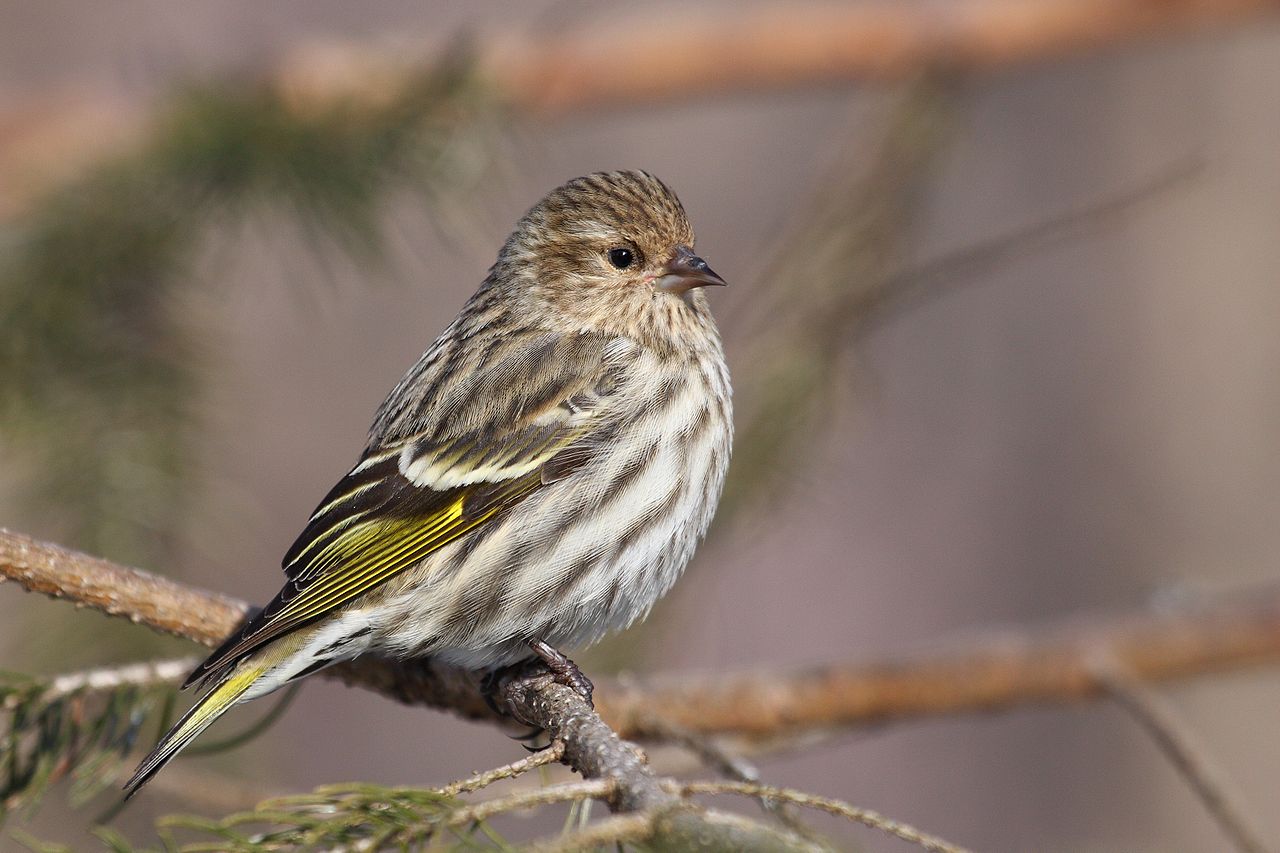
The pine siskin is a North American bird in the finch family. It is a migratory bird with an extremely sporadic winter range.
Region
North America
Typical Environment
Breeds widely across the boreal forest of Canada and Alaska and in montane conifer forests of the western United States. In winter, it irrupts southward and eastward across much of the United States and into northern Mexico, with occasional vagrants reaching Bermuda and the Caribbean. Favors coniferous and mixed woodlands, especially spruce, fir, pine, alder, and birch stands. Also uses parks, shelterbelts, weedy fields, and suburban areas with feeders when food is abundant.
Altitude Range
Sea level to 3300 m
Climate Zone
Temperate
Ease of Keeping
Beginner friendly: 1/5
Pine siskins are irruptive migrants, moving south and east in some winters when cone crops fail in the boreal forest. They readily visit backyard feeders, especially for nyjer and sunflower seeds, and often arrive in large, chattering flocks. Their subtle brown streaking hides bright flashes of yellow in the wings and tail that show in flight. They are highly nomadic and their numbers at any one location can vary dramatically year to year.


Pine siskins feeding on thistle seeds
Temperament
social and active
Flight Pattern
short rapid wingbeats with an undulating finch-like flight
Social Behavior
Typically forms noisy flocks outside the breeding season and often mixes with other finches. Pairs form in late winter or spring; nests are placed high on horizontal branches in conifers. The female builds the nest and incubates while the male brings food. Breeding can occur in loose colonies when food is abundant.
Migratory Pattern
Partial migrant
Song Description
Song is a lively, rambling series of buzzy trills, twitters, and rising zree notes. Calls include a distinctive harsh, ascending buzz and constant chattering given in flight and at feeders.
Plumage
Heavily streaked brown and buff overall with fine, dark streaking; wings and tail show bright yellow edgings and patches that are most visible in flight. Plumage is variable, with some individuals showing more yellow or paler underparts. Tail is short and notched.
Diet
Primarily eats seeds from conifers such as spruce, fir, and pine, as well as alder and birch catkins and various weed seeds including thistle and dandelion. Frequently consumes nyjer and sunflower chips at feeders. In the breeding season, also takes small insects such as aphids and caterpillars to provide protein. Will glean from cones and catkins and can hang acrobatically to reach seeds.
Preferred Environment
Feeds in the canopy of coniferous and mixed forests, often moving through treetops in flocks. Also forages in weedy fields, along roadsides, and at backyard feeders. During irruptive winters, it concentrates where seed crops or feeders are abundant.


