

The pink-backed pelican is a bird of the pelican family. It is a resident breeder in the swamps and shallow lakes of Africa and southern Arabia; it has also been extirpated from Madagascar.
Region
Sub-Saharan Africa and southern Arabian Peninsula
Typical Environment
Found widely in freshwater and brackish wetlands, including shallow lakes, slow rivers, floodplains, estuaries, and mangroves. It favors calm, shallow waters where groups can herd fish toward the surface. Nesting colonies occur on trees or bushes overhanging water, on reedbeds, or on small islets, often with mixed waterbird assemblages. The species generally avoids open ocean coasts and deep pelagic waters, preferring sheltered inshore habitats.
Altitude Range
Sea level to 2000 m
Climate Zone
Tropical
Ease of Keeping
Beginner friendly: 1/5
This small pelican breeds in colonies across sub-Saharan Africa and into southern Arabia, and has been extirpated from Madagascar. It often nests in trees over water or within reedbeds, frequently alongside herons and cormorants. The species gets its name from the subtle pinkish wash on its back, most visible in good light. It is highly social and commonly feeds cooperatively in shallow waters.


Dorsal view showing characteristic pink back

Pelecanus rufescens – MHNT
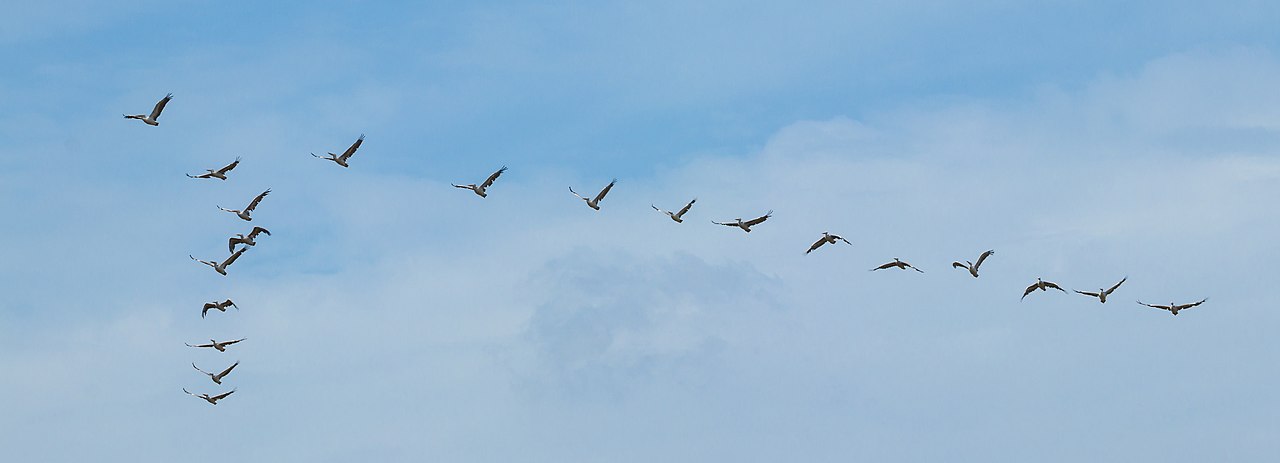
Formation flying
Temperament
social and gregarious
Flight Pattern
strong flier and soaring glider
Social Behavior
Breeds colonially, often in mixed heronries, building stick nests in trees, bushes, or reedbeds over water. Pairs are seasonally monogamous, and both adults share incubation and chick-rearing. Outside the breeding season, birds roost communally and forage in coordinated groups.
Migratory Pattern
Resident
Song Description
Generally quiet away from colonies. At nesting sites it gives deep grunts, croaks, and low growls during displays and interactions. Young beg with rasping calls.
Plumage
Pale grey to off-white overall with a soft pinkish wash across the back and upperwing coverts; hindneck often brownish-streaked with a short shaggy crest.
Diet
Primarily piscivorous, taking small to medium fish such as tilapias and catfish caught near the surface. It also consumes amphibians and occasional crustaceans when available. Birds often feed cooperatively, forming lines or semicircles to concentrate fish before scooping them with the pouch.
Preferred Environment
Feeds in shallow, calm waters of lakes, lagoons, and river backwaters, as well as mangrove channels and estuaries. Often forages near emergent vegetation or along gently sloping shorelines where fish schools gather.


