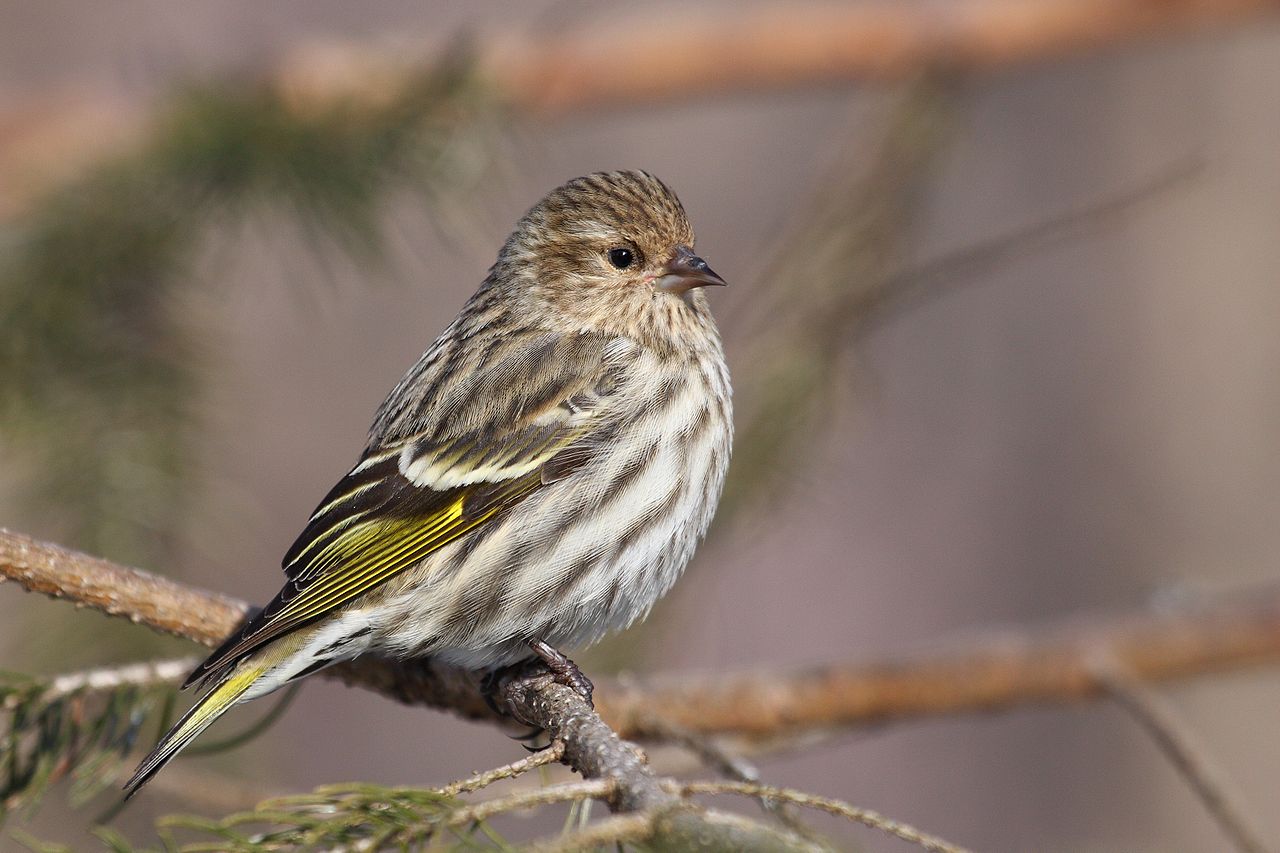
The pine flycatcher is a species of bird in the family Tyrannidae, the tyrant flycatchers. It is found in Guatemala and Mexico. It has also been recorded as a vagrant to Arizona in the U.S.A.
Region
Mexican and Guatemalan Highlands
Typical Environment
Primarily inhabits montane pine–oak and mixed coniferous forests, often near forest edges, clearings, and along stream corridors. It favors mid-story perches from which it sallies to catch flying insects. The species can also use second-growth and selectively logged forests where suitable perch structure remains. It is generally local but can be fairly common where habitat is intact.
Altitude Range
1500–3200 m
Climate Zone
Highland
Ease of Keeping
Beginner friendly: 1/5
A small tyrant flycatcher of high-elevation pine–oak and conifer forests in Mexico and Guatemala, it is notoriously tricky to identify among Empidonax flycatchers. Voice and habitat are key: its thin, high, two-part song often gives it away. It was recorded as a rare vagrant to Arizona, marking the first U.S. record. Subtle field marks include a pale lower mandible and buffy wingbars.


Temperament
solitary and territorial
Flight Pattern
short rapid wingbeats with frequent sallies from a perch
Social Behavior
Typically observed alone or in pairs during the breeding season, defending small territories. Nests are cup-shaped and placed on horizontal branches or in forks within conifers or pines. Pairs are presumed monogamous in a season, and clutch sizes are small, typical of Empidonax.
Migratory Pattern
Partial migrant
Song Description
Song is a thin, high, two-part whistle, often rendered as a soft 'pi-tseet' or 'pit-see' repeated at intervals. Calls are sharp, dry chips used during foraging and territory defense.
Plumage
Olive-green upperparts with grayish-olive breast and whitish throat and belly; two buffy wingbars on dusky wings. Typical Empidonax structure with a relatively short, broad bill and slight rounded crown. Subtle contrast between pale underparts and darker upperparts.
Diet
Feeds mainly on flying insects such as flies, beetles, moths, and wasps, which it captures in short aerial sallies. It also gleans small arthropods from foliage and twigs. Occasionally takes small berries or other soft fruits, especially outside the peak insect season.
Preferred Environment
Forages from mid-level perches in pine–oak and mixed conifer forests, often along edges, glades, and riparian openings. Prefers open understory or gaps that allow clear sallying flights to intercept prey.