

The orange-footed scrubfowl, also known as orange-footed megapode or just scrubfowl, is a small megapode of the family Megapodiidae native to many islands in the Lesser Sunda Islands as well as southern New Guinea and northern Australia.
Region
Australasia
Typical Environment
Occurs on many islands of the Lesser Sundas and across southern New Guinea to northern Australia, including the Top End and the Kimberley. Favors coastal and lowland habitats such as monsoon forests, vine thickets, beach scrub, and mangroves, but also uses open woodland edges. Often found near sandy or loamy soils suitable for mound construction, including dunes and islets. Freely enters gardens, village fringes, and disturbed forest where cover and foraging are available.
Altitude Range
Sea level to 800 m
Climate Zone
Tropical
Ease of Keeping
Beginner friendly: 1/5
This mound‑building megapode incubates its eggs using heat from large piles of decaying vegetation, sun‑warmed sand, or geothermal soils rather than body heat. The eggs are proportionally large, and chicks hatch fully feathered and independent, often capable of strong flight shortly after emerging. Mounds may be tended for years and can be used by multiple females.


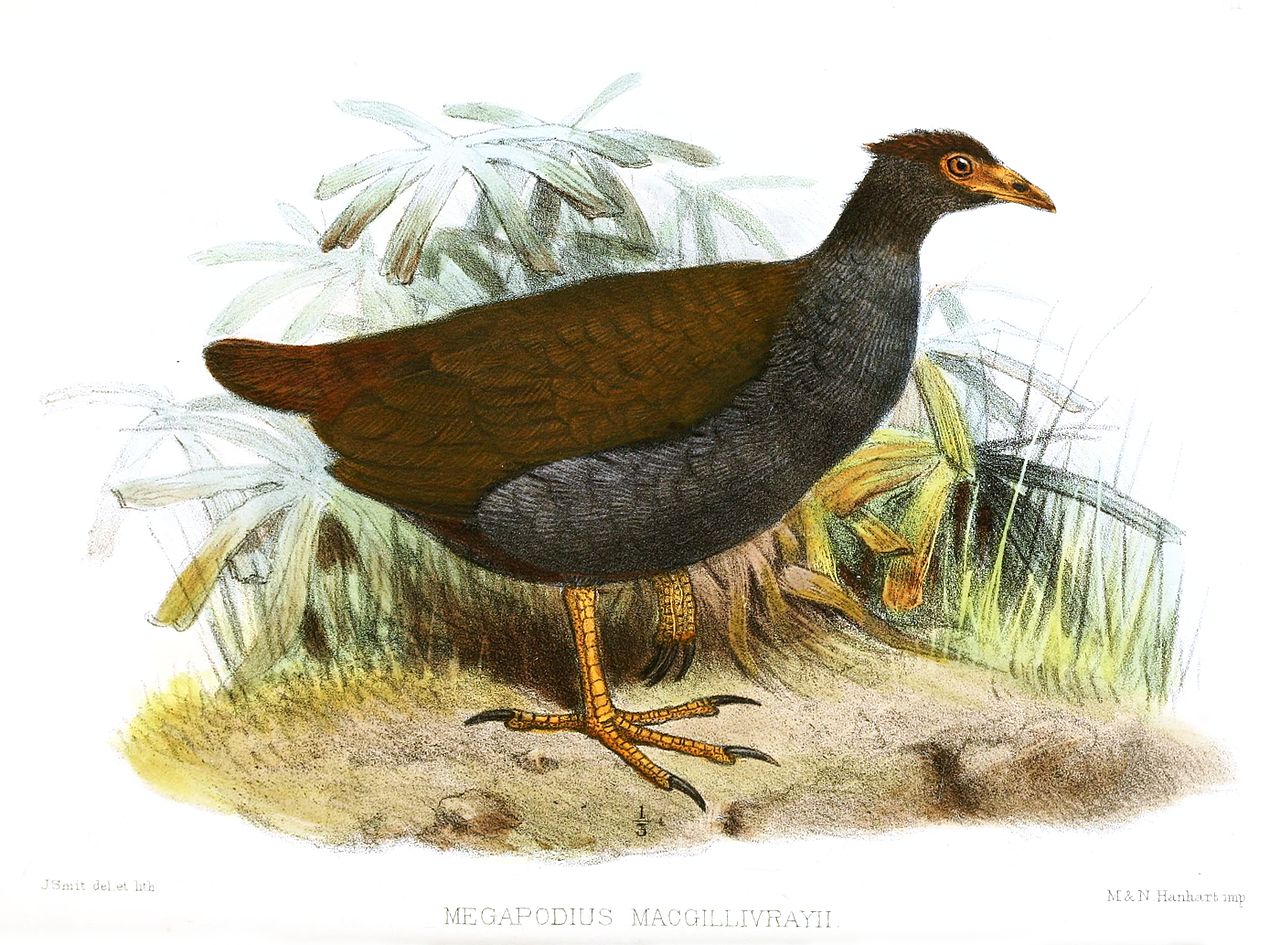
M. r. macgillivrayi
Temperament
shy but adaptable
Flight Pattern
short rapid wingbeats; reluctant flier
Social Behavior
Typically found in pairs or small groups; males often maintain large incubation mounds that may be used by several females. Mound temperature is carefully regulated by adding or removing material. Chicks hatch fully developed and receive no parental care, dispersing immediately.
Migratory Pattern
Resident
Song Description
Loud, far-carrying duets and calls, often given at dawn and dusk. Vocalizations include repetitive cackles and wails that can sound harsh and abrupt, used for territory advertisement and pair contact.
Plumage
Mostly dark grey-brown to blackish upperparts with warmer rufous-brown underparts; feathers appear plain and slightly glossy. Throat and upper breast can be paler grey-brown, with a rufous undertail. Plumage is smooth and uniform without strong patterning.
Diet
Omnivorous, scratching through leaf litter for fallen fruits, seeds, shoots, and a variety of invertebrates such as beetles, ants, termites, and worms. Will take small snails and other soft-bodied prey when available. Diet shifts with seasonal fruiting and invertebrate abundance.
Preferred Environment
Forages on the ground in shaded forest floors, thickets, mangrove margins, and along edges of monsoon woodland. Frequently feeds near its mound sites and readily uses human-modified edges, including gardens and village fringes.


